Education
Expert-driven articles and videos about saving and investing.
Go to topic
Most Recent Posts
-
How to course correct when you simply can't stay the course
How to course correct when you simply can't stay the course De-risking during market volatility can be costly. Here’s how to do it without breaking the bank. The best course of action during market volatility is often inaction. That’s because selling riskier assets at a loss locks in those losses. It foregoes their potential for future growth, and it might also trigger capital gains taxes in the process. But if taking some sort of action feels necessary, then modestly reducing your overall risk exposure can be a reasonable alternative. Consider dialing down your existing stock allocation by a few percentage points, or lower the costs of recalibrating by using your future deposits instead. Either way, the solution may be the same: sprinkling in more bonds. Consider bonds to calm your investing nerves When people talk about diversification, equities like international stocks get most of the attention. But no less important in the role of managing risk are bonds. These are the loans given to governments and companies by investors, and while they're not completely risk-free (no asset is), the relatively-modest interest they tend to pay out can feel like a windfall when stock values are plunging. They won’t negate all of the volatility of stocks, but they can help smooth things out and preserve capital. This is why all of our recommended allocations include holding at least some bonds. One way to de-risk some of your future investing is with one of our portfolios made up of both stocks and bonds (Core, Value Tilt, etc.). We’ll recommend a risk level based on your goal, but we make it easy to dial up the bond allocation to your preference. Over time, you can slowly finetune things until your collective risk feels right. Or you can let us automatically adjust it based on your target date. We also offer two portfolios comprised entirely of bonds, each one designed for a different use: Target Income built with BlackRock, designed to help you limit market volatility, preserve wealth, and generate income. The Goldman Sachs Tax-Smart Bonds portfolio, designed for high-income individuals seeking a higher after-tax yield compared to a cash account. Don’t forget about the role of cash One of the best ways to mitigate your overall financial risk is by shoring up your emergency fund, which may include a high-yield cash account like our Cash Reserve. Imagine losing your income stream, and how much time you'd want to get back on your feet. A good place to start is 3-6 months' worth of your essential expenses, but your right amount is whatever helps you sleep more soundly at night. Cash Reserve offered by Betterment LLC and requires a Betterment Securities brokerage account. Betterment is not a bank. FDIC insurance provided by Program Banks, subject to certain conditions. Learn more. Steadying the ship during unsteady times As we mentioned up front, right-sizing your risk during downturns isn’t always cheap. But there are ways to minimize the costs. Lowering your risk profile incrementally is one of them, and stretching out your safety net is another. Either way, it’s okay to recalibrate your risk tolerance from time-to-time, and you can do it wisely with Betterment.
-
Betterment's tax-loss harvesting methodology
Betterment's tax-loss harvesting methodology Tax loss harvesting is a sophisticated technique to get more value from your investments—but doing it well requires expertise. TABLE OF CONTENTS Navigating the “Wash Sale” rule The Betterment solution Tax loss harvesting model calibration Best practices for TLH How we calculate the value of tax loss harvesting Your personalized Estimated Tax Savings tool Conclusion There are many ways to get your investments to work harder for you— diversification, downside risk management, and an appropriate mix of asset classes tailored to your recommended allocation. Betterment does this automatically via its ETF portfolios. But there is another way to help you get more out of your portfolio—using investment losses to improve your after-tax returns with a method called tax loss harvesting. In this article, we introduce Betterment’s tax loss harvesting (TLH): a sophisticated, fully automated tool that Betterment customers can choose to enable. Betterment’s tax loss harvesting service scans portfolios regularly for opportunities (temporary dips that result from market volatility) for opportunities to realize losses which can be valuable come tax time. While the concept of tax loss harvesting is not new for wealthy investors, tax loss harvesting utilizes a number of innovations that typical implementations may lack. It takes a holistic approach to tax-efficiency, seeking to optimize user-initiated transactions in addition to adding value through automated activity, such as rebalances. What is tax loss harvesting? Capital losses can lower your tax bill by offsetting gains, but the only way to realize a loss is to sell the depreciated asset. However, in a well-allocated portfolio, each asset plays an essential role in providing a piece of total market exposure. For that reason, an investor should not want to give up potential expected returns associated with each asset just to realize a loss. At its most basic level, tax loss harvesting is selling a security that has experienced a loss—and then buying a correlated asset (i.e. one that provides similar exposure) to replace it. The strategy has two benefits: it allows the investor to “harvest” a valuable loss, and it keeps the portfolio balanced at the desired allocation. How can it lower your tax bill? Capital losses can be used to offset capital gains you’ve realized in other transactions over the course of a year—gains on which you would otherwise owe tax. Then, if there are losses left over (or if there were no gains to offset), you can offset up to $3,000 of ordinary income for the year. If any losses still remain, they can be carried forward indefinitely. Tax loss harvesting is primarily a tax deferral strategy, and its benefit depends entirely on individual circumstances. Over the long run, it can add value through some combination of these distinct benefits that it seeks to provide: Tax deferral: Losses harvested can be used to offset unavoidable gains in the portfolio, or capital gains elsewhere (e.g., from selling real estate), deferring the tax owed. Savings that are invested may grow, assuming a conservative growth rate of 5% over a 10-year period, a dollar of tax deferred would be worth $1.63. Even after belatedly parting with the dollar, and paying tax on the $0.63 of growth, you’re ahead. Pushing capital gains into a lower tax rate: If you’ve realized short-term capital gains (STCG) this year, they’ll generally be taxed at your highest rate. However, if you’ve harvested losses to offset them, the corresponding gain you owe in the future could be long-term capital gain (LTCG). You’ve effectively turned a gain that would have been taxed up to 50% today into a gain that will be taxed more lightly in the future (up to 30%). Converting ordinary income into long-term capital gains: A variation on the above: offsetting up to $3,000 from your ordinary income shields that amount from your top marginal rate, but the offsetting future gain will likely be taxed at the LTCG rate. Permanent tax avoidance in certain circumstances: tax loss harvesting provides benefits now in exchange for increasing built-in gains, subject to tax later. However, under certain circumstances (charitable donation, bequest to heirs), these gains may avoid taxation entirely. Navigating the "Wash Sale" rule Summary: Wash sale rule management is at the core of any tax loss harvesting strategy. Unsophisticated approaches can detract from the value of the harvest or place constraints on customer cash flows in order to function. At a high level, the so-called "Wash Sale” rule disallows a loss from selling a security if a “substantially identical” security is purchased 30 days after or before the sale. The rationale is that a taxpayer should not enjoy the benefit of deducting a loss if they did not truly dispose of the security. The wash sale rule applies not just to situations when a “substantially identical” purchase is made in the same account, but also when the purchase is made in the individual’s IRA/401(k) account, or even in a spouse’s account. This broad application of the wash sale rule seeks to ensure that investors cannot utilize nominally different accounts to maintain their ownership, and still benefit from the loss. A wash sale involving an IRA/401(k) account is particularly unfavorable. Generally, a “washed” loss is postponed until the replacement is sold, but if the replacement is purchased in an IRA/401(k) account, the loss is permanently disallowed. If not managed correctly, wash sales can undermine tax loss harvesting. Handling proceeds from the harvest is not the sole concern—any deposits made in the following 30 days (whether into the same account, or into the individual’s IRA/401(k)) also need to be allocated with care. Minimizing the wash The simplest way to avoid triggering a wash sale is to avoid purchasing any security at all for the 30 days following the harvest, keeping the proceeds (and any inflows during that period) in cash. This approach, however, would systematically keep a portion of the portfolio out of the market. Over the long term, this “cash drag” could hurt the portfolio’s performance. More advanced strategies repurchase an asset with similar exposure to the harvested security that is not “substantially identical” for purposes of the wash sale rule. In the case of an individual stock, it is clear that repurchasing stock of that same company would violate the rule. Less clear is the treatment of two index funds from different issuers (e.g., Vanguard and Schwab) that track the same index. While the IRS has not issued any guidance to suggest that such two funds are “substantially identical,” a more conservative approach when dealing with an index fund portfolio would be to repurchase a fund whose performance correlates closely with that of the harvested fund, but tracks a different index. Tax loss harvesting is generally designed around this index-based logic and generally seeks to reduce wash sales, although it cannot avoid potential wash sales arising from transactions in tickers that track the same index where one of the tickers is not currently a primary, secondary, or tertiary ticker (as those terms are defined in this white paper). This situation could arise, for example, when other tickers are transferred to Betterment or where they were previously a primary, secondary, or tertiary ticker. Additionally, for some portfolios constructed by third parties (e.g., Vanguard, Blackrock, or Goldman Sachs), certain secondary and tertiary tickers track the same index. Certain asset classes in portfolios constructed by third parties (e.g., Vanguard, Blackrock, or Goldman Sachs) do not have tertiary tickers, such that permanently disallowed losses could occur if there were overlapping holdings in taxable and tax-advantaged accounts. Betterment’s TLH feature may also permit wash sales where the anticipated tax benefit of the overall harvest transaction sufficiently outweighs the impact of expected washed losses . Selecting a viable replacement security is just one piece of the accounting and optimization puzzle. Manually implementing a tax loss harvesting strategy is feasible with a handful of securities, little to no cash flows, and infrequent harvests. Assets may however dip in value but potentially recover by the end of the year, therefore annual strategies or infrequent harvests may leave many losses on the table. The wash sale management and tax lot accounting necessary to support more frequent harvesting quickly becomes overwhelming in a multi-asset portfolio—especially with regular deposits, dividends, and rebalancing. An effective loss harvesting algorithm should be able to maximize harvesting opportunities across a full range of volatility scenarios, without sacrificing the investor’s global asset allocation. It should reinvest harvest proceeds into correlated alternate assets, all while handling unforeseen cash inflows from the investor without ever resorting to cash positions. It should also be able to monitor each tax lot individually, harvesting individual lots at an opportune time, which may depend on the volatility of the asset. Tax loss harvesting was created because no available implementations seemed to solve all of these problems. Existing strategies and their limitations Every tax loss harvesting strategy shares the same basic goal: to maximize a portfolio’s after-tax returns by realizing built-in losses while minimizing the negative impact of wash sales. Approaches to tax loss harvesting differ primarily in how they handle the proceeds of the harvest to avoid a wash sale. Below are the three strategies commonly employed by manual and algorithmic implementations. After selling a security that has experienced a loss, existing strategies would likely have you: Existing strategy Problem Delay reinvesting the proceeds of a harvest for 30 days, thereby ensuring that the repurchase will not trigger a wash sale. While it’s the easiest method to implement, it has a major drawback: no market exposure—also called cash drag. Cash drag hurts portfolio returns over the long term, and could offset any potential benefit from tax loss harvesting. Reallocate the cash into one or more entirely different asset classes in the portfolio. This method throws off an investor’s desired asset allocation. Additionally, such purchases may block other harvests over the next 30 days by setting up potential wash sales in those other asset classes. Switch back to original security after 30 days from the replacement security. Common manual approach, also used by some automated investing services. A switchback can trigger short-term capital gains when selling the replacement security, reducing the tax benefit of the harvest. Even worse, this strategy can leave an investor owing more tax than if it did nothing. The hazards of switchbacks In the 30 days leading up to the switchback, two things can happen: the replacement security can drop further, or go up. If it goes down, the switchback will realize an additional loss. However, if it goes up, which is what any asset with a positive expected return is expected to do over any given period, the switchback will realize short-term capital gains (STCG)—kryptonite to a tax-efficient portfolio management strategy. An attempt to mitigate this risk could be setting a higher threshold based on volatility of the asset class—only harvesting when the loss is so deep that the asset is unlikely to entirely recover in 30 days. Of course, there is still no guarantee that it will not, and the price paid for this buffer is that your lower-yielding harvests will also be less frequent than they could be with a more sophisticated strategy. Examples of negative tax arbitrage Negative tax arbitrage with automatic 30-day switchback An automatic 30-day switchback can destroy the value of the harvested loss, and even increase tax owed, rather than reduce it. A substantial dip presents an excellent opportunity to sell an entire position and harvest a long-term loss. Proceeds will then be re-invested in a highly correlated replacement (tracking a different index). 30 days after the sale, the dip proved temporary and the asset class more than recovered. The switchback sale results in STCG in excess of the loss that was harvested, and actually leaves the investor owing tax, whereas without the harvest, they would have owed nothing. Due to a technical nuance in the way gains and losses are netted, the 30- day switchback can result in negative tax arbitrage, by effectively pushing existing gains into a higher tax rate. When adding up gains and losses for the year, the rules require netting of like against like first. If any long-term capital gain (LTCG) is present for the year, you must net a long-term capital loss (LTCL) against that first, and only then against any STCG. Negative tax arbitrage when unrelated long-term gains are present Now let’s assume the taxpayer realized a LTCG. If no harvest takes place, the investor will owe tax on the gain at the lower LTCG rate. However, if you add the LTCL harvest and STCG switchback trades, the rules now require that the harvested LTCL is applied first against the unrelated LTCG. The harvested LTCL gets used up entirely, exposing the entire STCG from the switchback as taxable. Instead of sheltering the highly taxed gain on the switchback, the harvested loss got used up sheltering a lower-taxed gain, creating far greater tax liability than if no harvest had taken place. In the presence of unrelated transactions, unsophisticated harvesting can effectively convert existing LTCG into STCG. Some investors regularly generate significant LTCG (for instance, by gradually diversifying out of a highly appreciated position in a single stock). It’s these investors, in fact, who would benefit the most from effective tax loss harvesting. Negative tax arbitrage with dividends Negative tax arbitrage can result in connection with dividend payments. If certain conditions are met, some ETF distributions are treated as “qualified dividends”, taxed at lower rates. One condition is holding the security for more than 60 days. If the dividend is paid while the position is in the replacement security, it will not get this favorable treatment: under a rigid 30-day switchback, the condition can never be met. As a result, up to 20% of the dividend is lost to tax (the difference between the higher and lower rate). The Betterment solution Summary: Betterment’s tax loss harvesting approaches tax-efficiency holistically, seeking to optimize transactions, including customer activity. The benefits tax loss harvesting seeks to deliver, include: No exposure to short-term capital gains in an attempt to harvest losses. Through our proprietary Parallel Position Management (PPM) system, a dual-security asset class approach enforces preference for one security without needlessly triggering capital gains in an attempt to harvest losses, all without putting constraints on customer cash flows. No negative tax arbitrage traps associated with less sophisticated harvesting strategies (e.g., 30-day switchback), making tax loss harvesting especially suited for those generating large long-term capital gains on an ongoing basis. Zero cash drag. With fractional shares and seamless handling of all inflows during wash sale windows, every dollar of your ETF portfolio is invested. Tax loss preservation logic extended to user-realized losses, not just harvested losses, automatically protecting both from the wash sale rule. In short, user withdrawals always sell any losses first. No disallowed losses through overlap with a Betterment IRA/401(k). We use a tertiary ticker system to eliminate the possibility of permanently disallowed losses triggered by subsequent IRA/401(k) activity.² This makes TLH ideal for those who invest in both taxable and tax-advantaged accounts. Harvests also take the opportunity to rebalance across all asset classes, rather than re-invest solely within the same asset class. This further reduces the need to rebalance during volatile stretches, which means fewer realized gains, and higher tax alpha. Through these innovations, tax loss harvesting creates significant value over manually-serviced or less sophisticated algorithmic implementations. Tax loss harvesting is accessible to investors —fully automated, effective, and at no additional cost. Parallel securities To ensure that each asset class is supported by optimal securities in both primary and alternate (secondary) positions, we screened by expense ratio, liquidity (bid-ask spread), tracking error vs. benchmark, and most importantly, covariance of the alternate with the primary.1 While there are small cost differences between the primary and alternate securities, the cost of negative tax arbitrage from tax-agnostic switching vastly outweighs the cost of maintaining a dual position within an asset class. Tax loss harvesting features a special mechanism for coordination with IRAs/401(k)s that requires us to pick a third (tertiary) security in each harvestable asset class (except in municipal bonds, which are not in the IRA/401(k) portfolio). While these have a higher cost than the primary and alternate, they are not expected to be utilized often, and even then, for short durations (more below in IRA/401(k) protection). Parallel position management As demonstrated, the unconditional 30-day switchback to the primary security is problematic for a number of reasons. To fix those problems, we engineered a platform to support tax loss harvesting, which seeks to tax-optimize user and system-initiated transactions: the Parallel Position Management (PPM) system. PPM allows each asset class to contain a primary security to represent the desired exposure while maintaining alternate and tertiary securities that are closely correlated securities, should that result in a better after-tax outcome. PPM provides several improvements over the switchback strategy. First, unnecessary gains are minimized. Second, the parallel security (could be primary or alternate) serves as a safe harbor to reduce potential wash sales—not just from harvest proceeds, but any cash inflows. Third, the mechanism seeks to protect not just harvested losses, but losses realized by the customer as well. PPM not only facilitates effective opportunities for tax loss harvesting, but also extends maximum tax-efficiency to customer-initiated transactions. Every customer withdrawal is a potential harvest (losses are sold first). And every customer deposit and dividend is routed to the parallel position that would reduce wash sales, while shoring up the target allocation. PPM has a preference for the primary security when rebalancing and for all cash flow events—but always subject to tax considerations. This is how PPM behaves under various conditions: Transaction PPM behavior Withdrawals and sales from rebalancing Sales default out of the alternate position (if such a position exists), but not at the expense of triggering STCG—in that case, PPM will sell lots of the primary security first. Rebalancing will attempt to stop short of realizing STCG. Taxable gains are minimized at every decision point—STCG tax lots are the last to be sold on a user withdrawal. Deposits, buys from rebalancing, and dividend reinvestments PPM directs inflows to underweight asset classes, and within each asset class, into the primary, unless doing so incurs greater wash sale costs than buying the alternate. Harvest events TLH harvests can come out of the primary into the alternate, or vice versa, depending on which harvest has a greater expected value. After an initial harvest, it could make sense at some point to harvest back into the primary, to harvest more of the remaining primary into the alternate, or to do nothing. Wash sale management Managing cash flows across both taxable and IRA/401(k) accounts without washing realized losses is a complex problem. Tax loss harvesting operates without constraining the way that customers prefer contributing to their portfolios, and without resorting to cash positions. With the benefit of parallel positions, Betterment weighs wash sale implications of deposits,withdrawals and dividend reinvestment This system protects not just harvested losses, but also losses realized through withdrawals. Minimizing wash sale through tertiary tickers in IRA/401(k) Because IRA/401(k) wash sales are particularly unfavorable—the loss is disallowed permanently—tax loss harvesting ensures that no loss realized in the taxable account is washed by a subsequent deposit into a Betterment IRA/401(k) with a tertiary ticker system in IRA/401(K) and no harvesting is done in IRA/401(k). Let’s look at an example of how tax loss harvesting handles a potentially disruptive IRA inflow with a tertiary ticker when there are realized losses to protect, using real market data for a Developed Markets asset class. The customer starts with a position in VEA, the primary security, in both the taxable and IRA accounts. We harvest a loss by selling the entire taxable position, and then repurchasing the alternate security, SCHF. Loss harvested in VEA Two weeks pass, and the customer makes a withdrawal from the taxable account (the entire SCHF position, for simplicity), intending to fund the IRA. In those two weeks, the asset class dropped more, so the sale of SCHF also realized a loss. The VEA position in the IRA remains unchanged. Customer withdrawal sells SCHF at a loss A few days later, the customer contributes to his IRA, and $1,000 is allocated to the Developed Markets asset class, which already contains some VEA. Despite the fact that the customer no longer holds any VEA or SCHF in his taxable account, buying either one in the IRA would permanently wash a valuable realized loss. The Tertiary Ticker System automatically allocates the inflow into the third option for developed markets, IEFA. IRA deposit into tertiary Ticker Both losses have been preserved, and the customer now holds VEA and IEFA in his IRA, maintaining desired allocation at all times. Because no capital gains are realized in an IRA/401(k), there is no harm in switching out of the IEFA position and consolidating the entire asset class in VEA when there is no danger of a wash sale. The result: Customers using TLH who also have their IRA/401(k) assets with Betterment can know that Betterment will seek to protect valuable realized losses whenever they deposit into their IRA/401(k), whether it’s lump rollover, auto-deposits or even dividend reinvestments. Smart rebalancing Lastly, tax loss harvesting directs the proceeds of every harvest to rebalance the entire portfolio, the same way that a Betterment account handles any incoming cash flow (deposit, dividend). Most of the cash is expected to stay in that asset class and be reinvested into the parallel asset, but some of it may not. Recognizing every harvest as a rebalancing opportunity further reduces the need for additional selling in times of volatility, further reducing tax liability. As always, fractional shares allow the inflows to be allocated with precision. Tax loss harvesting model calibration Summary: To make harvesting decisions, tax loss harvesting optimizes around multiple inputs, derived from rigorous Monte Carlo simulations. The decision to harvest is made when the benefit, net of cost, exceeds a certain threshold. The potential benefit of a harvest is discussed in detail below (“Results”). Unlike a 30-day switchback strategy, tax loss harvesting does not incur the expected STCG cost of the switchback trade. Therefore, “cost” consists of three components: trading expense, execution expense, and increased cost of ownership for the replacement asset (if any). Trading costs are included in the wrap fee paid by Betterment customers. Tax loss harvesting is engineered to factor in the other two components, configurable at the asset level, and the resulting cost approaches negligible. Bid-ask spreads for the bulk of harvestable assets are narrow. We seek funds with expense ratios for the major primary/alternate ETF pairs that are close, and in the case where a harvest back to the primary ticker is being evaluated, that difference is actually a benefit, not a cost. There are two general approaches to testing a model’s performance: historical backtesting and forward-looking simulation. Optimizing a system to deliver the best results for only past historical periods is relatively trivial, but doing so would be a classic instance of data snooping bias. Relying solely on a historical backtest of a portfolio composed of ETFs that allow for 10 to 20 years of reliable data when designing a system intended to provide 40 to 50 years of benefit would mean making a number of indefensible assumptions about general market behavior. The superset of decision variables driving tax loss harvesting is beyond the scope of this paper—optimizing around these variables required exhaustive analysis. Tax loss harvesting was calibrated via Betterment’s rigorous Monte Carlo simulation framework, spinning up thousands of server instances in the cloud to run through tens of thousands of forward-looking scenarios testing model performance. We have calibrated tax loss harvesting in a way that we believe optimizes its effectiveness given expected future returns and volatility, but other optimizations could result in more frequent harvests or better results depending on actual market conditions. Best practices for tax loss harvesting Summary: Tax loss harvesting can add some value for most investors, but high earners with a combination of long time horizons, ongoing realized gains, and plans for some charitable disposition will reap the largest benefits. This is a good point to reiterate that tax loss harvesting delivers value primarily due to tax deferral, not tax avoidance. A harvested loss can be beneficial in the current tax year to varying degrees, but harvesting that loss generally means creating an offsetting gain at some point in the future. If and when the portfolio is liquidated, the gain realized will be higher than if the harvest never took place. Let’s look at an example: Year 1: Buy asset A for $100. Year 2: Asset A drops to $90. Harvest $10 loss, repurchase similar Asset B for $90. Year 20: Asset B is worth $500 and is liquidated. Gains of $410 realized (sale price minus cost basis of $90) Had the harvest never happened, we’d be selling A with a basis of $100, and gains realized would only be $400 (assuming similar performance from the two correlated assets.) Harvesting the $10 loss allows us to offset some unrelated $10 gain today, but at a price of an offsetting $10 gain at some point in the future. The value of a harvest largely depends on two things. First, what income, if any, is available for offset? Second, how much time will elapse before the portfolio is liquidated? As the deferral period grows, so does the benefit—the reinvested savings from the tax deferral have more time to grow. While nothing herein should be interpreted as tax advice, examining some sample investor profiles is a good way to appreciate the nature of the benefit of tax loss harvesting. Who benefits most? The Bottomless Gains Investor: A capital loss is only as valuable as the tax saved on the gain it offsets. Some investors may incur substantial capital gains every year from selling highly appreciated assets—other securities, or perhaps real estate. These investors can immediately use all the harvested losses, offsetting gains and generating substantial tax savings. The High Income Earner: Harvesting can have real benefits even in the absence of gains. Each year, up to $3,000 of capital losses can be deducted from ordinary income. Earners in high income tax states (such as New York or California) could be subject to a combined marginal tax bracket of up to 50%. Taking the full deduction, these investors could save $1,500 on their tax bill that year. What’s more, this deduction could benefit from positive rate arbitrage. The offsetting gain is likely to be LTCG, taxed at around 30% for the high earner—less than $1,000—a real tax savings of over $500, on top of any deferral value. The Steady Saver: An initial investment may present some harvesting opportunities in the first few years, but over the long term, it’s increasingly unlikely that the value of an asset drops below the initial purchase price, even in down years. Regular deposits create multiple price points, which may create more harvesting opportunities over time. (This is not a rationale for keeping money out of the market and dripping it in over time—tax loss harvesting is an optimization around returns, not a substitute for market exposure.) The Philanthropist: In each scenario above, any benefit is amplified by the length of the deferral period before the offsetting gains are eventually realized. However, if the appreciated securities are donated to charity or passed down to heirs, the tax can be avoided entirely. When coupled with this outcome, the scenarios above deliver the maximum benefit of TLH. Wealthy investors have long used the dual strategy of loss harvesting and charitable giving. Even if an investor expects to mostly liquidate, any gifting will unlock some of this benefit. Using losses today, in exchange for built-in gains, offers the partial philanthropist a number of tax-efficient options later in life. Who benefits least? The Aspiring Tax Bracket Climber: Tax deferral is undesirable if your future tax bracket will be higher than your current. If you expect to achieve (or return to) substantially higher income in the future, tax loss harvesting may be exactly the wrong strategy—it may, in fact, make sense to harvest gains, not losses. In particular, we do not advise you to use tax loss harvesting if you can currently realize capital gains at a 0% tax rate. Under 2025 tax brackets, this may be the case if your taxable income is below $48,350 as a single filer or $96,700 if you are married filing jointly. See the IRS website for more details. Graduate students, those taking parental leave, or just starting out in their careers should ask “What tax rate am I offsetting today” versus “What rate can I reasonably expect to pay in the future?” The Scattered Portfolio: Tax loss harvesting is carefully calibrated to manage wash sales across all assets managed by Betterment, including IRA assets. However, the algorithms cannot take into account information that is not available. To the extent that a Betterment customer’s holdings (or a spouse’s holdings) in another account overlap with the Betterment portfolio, there can be no guarantee that tax loss harvesting activity will not conflict with sales and purchases in those other accounts (including dividend reinvestments), and result in unforeseen wash sales that reverse some or all of the benefits of tax loss harvesting. We do not recommend tax loss harvesting to a customer who holds (or whose spouse holds) any of the ETFs in the Betterment portfolio in non-Betterment accounts. You can ask Betterment to coordinate tax loss harvesting with your spouse’s account at Betterment. You’ll be asked for your spouse’s account information after you enable tax loss harvesting so that we can help optimize your investments across your accounts. The Portfolio Strategy Collector: Electing different portfolio strategies for multiple Betterment goals may cause tax loss harvesting to identify fewer opportunities to harvest losses than it might if you elect the same portfolio strategy for all of your Betterment goals. The Rapid Liquidator: What happens if all of the additional gains due to harvesting are realized over the course of a single year? In a full liquidation of a long-standing portfolio, the additional gains due to harvesting could push the taxpayer into a higher LTCG bracket, potentially reversing the benefit of tax loss harvesting. For those who expect to draw down with more flexibility, smart automation will be there to help optimize the tax consequences. The Imminent Withdrawal: The harvesting of tax losses resets the one-year holding period that is used to distinguish between LTCG and STCG. For most investors, this isn’t an issue: by the time that they sell the impacted investments, the one-year holding period has elapsed and they pay taxes at the lower LTCG rate. This is particularly true for Betterment customers because our TaxMin feature automatically realizes LTCG ahead of STCG in response to a withdrawal request. However, if you are planning to withdraw a large portion of your taxable assets in the next 12 months, you should wait to turn on tax loss harvesting until after the withdrawal is complete to reduce the possibility of realizing STCG. Other impacts to consider Investors with assets held in different portfolio strategies should understand how it impacts the operation of tax loss harvesting. To learn more, please see Betterment’s SRI disclosures, Flexible portfolio disclosures, the Goldman Sachs smart beta disclosures, and Target Income built with BlackRock disclosures for further detail. Clients in Advisor-designed custom portfolios through Betterment for Advisors should consult their Advisors to understand the limitations of tax loss harvesting with respect to any custom portfolio. Additionally, as described above, electing one portfolio strategy for one or more goals in your account while simultaneously electing a different portfolio for other goals in your account may reduce opportunities for TLH to harvest losses, as TLH is calibrated to seek to reduce wash sales. Due to Betterment’s monthly cadence for billing fees for advisory services, through the liquidation of securities, tax loss harvesting opportunities may be adversely affected for customers with particularly high stock allocations, third party portfolios, or flexible portfolios. As a result of assessing fees on a monthly cadence for a customer with only equity security exposure, which tends to be more opportunistic for tax loss harvesting, certain securities may be sold that could have been used to tax loss harvest at a later date, thereby delaying the harvesting opportunity into the future. This delay would be due to the TLH tool’s effort to reduce instances of triggering the wash sale rule, which forbids a security from being sold only to be replaced with a “substantially similar” security within a 30-day period. Factors which will determine the actual benefit of tax loss harvesting include, but are not limited to, market performance, the size of the portfolio, the stock exposure of the portfolio, the frequency and size of deposits into the portfolio, the availability of capital gains and income which can be offset by losses harvested, the tax rates applicable to the investor in a given tax year and in future years, the extent to which relevant assets in the portfolio are donated to charity or bequeathed to heirs, and the time elapsed before liquidation of any assets that are not disposed of in this manner. All of Betterment’s trading decisions are discretionary and Betterment may decide to limit or postpone TLH trading on any given day or on consecutive days, either with respect to a single account or across multiple accounts. Tax loss harvesting is not suitable for all investors. Nothing herein should be interpreted as tax advice, and Betterment does not represent in any manner that the tax consequences described herein will be obtained, or that any Betterment product will result in any particular tax consequence. Please consult your personal tax advisor as to whether TLH is a suitable strategy for you, given your particular circumstances. The tax consequences of tax loss harvesting are complex and uncertain and may be challenged by the IRS. You and your tax advisor are responsible for how transactions conducted in your account are reported to the IRS on your personal tax return. Betterment assumes no responsibility for the tax consequences to any client of any transaction. See Betterment’s tax loss harvesting disclosures for further detail. How we calculate the value of tax loss harvesting Over 2022 and 2023, we calculated that 69% of Betterment customers who employed the strategy saw potential savings in excess of the Betterment fees charged on their taxable accounts for the year. To reach this conclusion, we first identified the accounts to consider, defined as taxable investing accounts that had a positive balance and tax loss harvesting turned on throughout 2022 and 2023. We excluded trust accounts because their tax treatments can be highly-specific and they made up less than 1% of the data. For each account’s taxpayer, we pulled the short and long term capital gain/loss in the relevant accounts realized in 2022 and 2023 using our trading and tax records. We then divided the gain/loss into those caused by a TLH transaction and those not caused by a TLH transaction. Then, for each tax year, we calculated the short-term gains offset by taking the greater of the short-term loss realized by tax loss harvesting and the short-term gain caused by other transactions. We did the same for long-term gain/loss. If there were any losses leftover, we calculated the amount of ordinary income that could be offset by taking the greater of the customer’s reported income and $3,000 ($1,500 if the customer is married filing separately) and then taking the greater of that number and the sum of the remaining long-term and short-term losses (after first subtracting any non-tax loss harvesting losses from ordinary income). If there were any losses leftover in 2022 after all that, we carried those losses forward to 2023. At this point, we had for each customer the amount of short-term gains, long-term gains and ordinary income offset by tax loss harvesting for each tax year. We then calculated the short-term and long-term capital gains rates using the federal tax brackets for 2022 and 2023 and the reported income of the taxpayer, their reported tax filing status, and their reported number of dependents. We assumed the standard deduction and conservatively did not include state capital gains taxes because some states do not have capital gains tax. We calculated the ordinary income rate including federal taxes, state taxes, and Medicare and Social Security taxes using the user’s reported income, filing status, number of dependents, assumed standard deduction, and age (assuming Medicare and Social Security taxes cease at the retirement age of 67). We then applied these tax rates respectively to the offsets to get the tax bill reduction from each type of offset and summed them up to get the total tax reduction. Then, we pulled the total fees charged to the users on the account in question that were accrued in 2022 and 2023 from our fee accrual records and compared that to the tax bill reduction. If the tax bill reduction was greater than the fees, we considered tax loss harvesting to have indirectly paid for the fees in the account in question for the taxpayer in question. This was the case for 69% of customers. Your personalized Estimated Tax Savings tool Overview: Betterment’s TLH Estimated Tax Savings Tool is found in your online account and designed to quantify the tax-saving potential of our tax loss harvesting (TLH) feature. By leveraging both transactional data from Betterment accounts and your self-reported demographic and financial profile information, the tool generates dynamic estimates of realized and potential tax savings. These calculations provide both current-year and cumulative ("all-time") tax savings estimates. Client-centric tax modeling: To personalize estimates, the tool takes into account client financial profile information: your self-reported annual pre-tax income, state of residence, tax filing status (e.g. individual, married filing jointly), and number of dependents. This information helps Betterment create a comprehensive tax profile, estimating your federal and state income tax rates, long-term capital gains (LTCG) rates, and applicable standard deductions. Betterment’s estimated tax savings methodology also incorporates the IRS' cap on ordinary income offsets for capital losses—$3,000 for most individuals or $1,500 if married filing separately, and also incorporates any available carryforward losses. Tax lot analysis and offsetting hierarchy: At the heart of Betterment’s estimated tax savings tool is a detailed analysis of tax-lot level trading data. Betterment tallys TLH-triggered losses (short- and long-term) from other realized capital gains or losses, grouping them by year, and calculates your potential tax benefit by offsetting losses and gains by type according to IRS rules, and allowing excess losses to offset other income types or carry forward to future years. The IRS offset order is applied: Short-term losses offset short-term gains Long-term losses offset long-term gains Remaining short-term losses offset long-term gains Remaining long-term losses offset short-term gains Remaining short-term losses offset ordinary income Remaining long-term losses offset ordinary income Any further losses are carried forward Current year estimated tax savings: Betterment calculates your current year estimated tax savings from TLH based on the IRS numbered offset list above, which is the sum of: Short-term offset represents the tax savings from subtracting your short-term harvested losses and cross-offset long-term harvested losses from current-year short-term capital gains (numbers 1 and 4 above), then multiplying by your estimated federal plus state tax rate. Long-term offset represents the savings from subtracting long-term harvested losses and cross-offset short-term harvested losses from current-year long-term capital gains (numbers 2 and 3 above), multiplied by your estimated long-term capital gains rate. Ordinary income offset captures the savings from applying any remaining harvested losses to your ordinary income up to the allowable limit (numbers 5 and 6 above), multiplied by your estimated federal plus state tax rate. Both short-term and long-term harvested losses may include banked losses from prior years that couldn’t be used at the time. These carryforward losses (number 7 above) are applied in the same way as current-year harvested losses when calculating your tax savings. For the tool, Harvested Losses are all time short- and long-term harvested losses i.e., all harvested losses to date through TLH. Savings from the Short-term offset, long-term offset, and ordinary income offset are summed to yield the current year estimated tax savings. All-time estimated tax savings : Betterment calculates your all-time estimated tax savings from TLH based on the sum of: All-time Long-term harvested losses × LTCG rate All-time Short-term harvested losses × (Federal + State tax rate) For the all-time estimated tax figure, the all-time figures used are all your harvested losses through Betterment’s TLH feature to the present date, and rather than calculate offsets, Betterment assumes that you are able to fully offset your long-term harvested losses and short-term harvested losses with gains. Therefore, we apply the long term capital gains rates and marginal ordinary income rate (which is the sum of your federal and state tax rates) by your total long-term harvested losses and short-term losses, respectively. There is no ordinary income offset in the All-Time Estimate. This simplification does not track when the loss occurred, and therefore, assumes current estimated tax rates were applicable throughout prior years. Assumptions: While this tool provides a powerful estimate of your potential tax benefits from tax loss harvesting, it is important to understand the assumptions and limitations underlying the estimated tax savings calculations. Estimated tax savings figures presented are estimates—not guarantees—and rely on the information you’ve provided to Betterment. Actual tax outcomes may vary based on your actual tax return and situation when filing. The tool evaluates only the activity within your Betterment accounts and does not take into account any investment activity from external accounts. For the current year calculation, the tool also assumes that you have sufficient ordinary income to fully benefit from capital loss offsets, and for the all-time calculation, the tool provides a tax-dollar estimate of all harvested losses, based on type (short- or long-term) and current tax rates. Additionally, the estimated tax savings calculation simplifies the treatment of certain entities; for example, trusts, business accounts, or other specialized tax structures are not handled distinctly. State-level tax estimates exclude city tax rates and municipal taxes, which may also affect your overall tax situation. The “all-time estimate” shown reflects an approximation of the total tax impact of harvested losses to date—including benefits that have not yet been realized or claimed. While the estimate has its limitations, it provides a clear and actionable view into how tax-smart investing can add value over time. It helps show how harvested losses may lower your tax bill and boost after-tax returns—bringing transparency to a strategy that’s often hard to see in dollar terms. For many investors, it highlights the long-term financial benefits of managing taxes proactively. Conclusion Summary: Tax loss harvesting can be an effective way to improve your investor returns without taking additional downside risk.
-
How to hedge your bond bets in the face of oil-induced inflation
How to hedge your bond bets in the face of oil-induced inflation Conflict in the Middle East is causing oil prices to spike—underscoring the value of diversifying not just with bonds, but within them. Key takeaways Oil price shocks from the war with Iran could drive inflation, keep borrowing costs elevated, and pressure stock valuations. Diversifying within asset classes, not just across them, can offer a crucial second layer of potential protection. Inflation-protected bonds, for example, are designed to hold up when other bonds don't, making them a powerful potential hedge in volatile markets. Despite the rise of renewable energy and natural gas, oil still makes the world—and markets—go round. Roughly a third of global energy comes from the fossil fuel, much of it from the Middle East. So while the conflict in the Middle East is less than a month old, and the Trump administration could try to unwind it sooner than later, even a temporary squeeze on the global oil supply can still impact the broader economy. The pain is first felt at the pump. But higher oil prices also increase costs downstream and can delay or reduce interest rate cuts by the Federal Reserve, which has the potential to weigh on stock valuations over time. All of this serves as a good reminder of why diversification matters, not just across asset classes like stocks and bonds, but within them. Take bonds, the loans investors make to companies, governments, and other entities. We offer more than five varieties in our portfolios, and it's one sub-asset class in particular—inflation-protected bonds (aka TIPS)—that has performed well since fears of persistent inflation took hold in 2022. TIPS are U.S. government bonds whose face value and twice-yearly interest payments rise with inflation. Crucially, they tend to perform well when other bond types don't, adding an extra layer of protection during market downturns. This double-layered diversification is central to our investing philosophy, and how we seek to deliver not only financial benefits to investors but psychological ones too. It’s why most of our stock and bond portfolios include some allocation to TIPS, as high as 20% in the most conservative of cases. We also make it easy to adjust your bond allocation over time and to view your portfolio's exact holdings—so you always know where you stand. Because when the world's most essential commodity becomes unpredictable, knowing your portfolio is built for more than one kind of storm can make all the difference.
Explore our article library
Cash
-
Three steps to size up your emergency fund
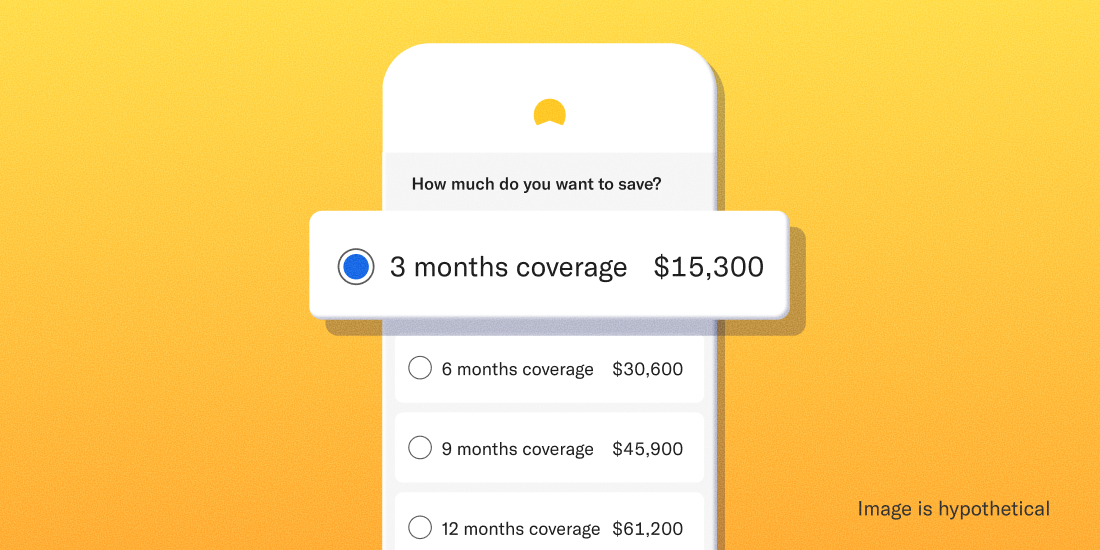
Three steps to size up your emergency fund Strive for at least three months of expenses while taking these factors into consideration. Imagine losing your job, totaling your car, or landing in the hospital. How quickly would your mind turn from the shock of the event itself to worrying about paying your bills? If you’re anything like the majority of Americans recently surveyed by Bankrate, finances would add insult to injury pretty fast: Only around 2 in 5 Americans would pay for an emergency from their savings In these scenarios, an emergency fund can not only help you avoid taking on high-interest debt or backtracking on other money goals, it can give you one less thing to worry about in trying times. So how much should you have saved, and where should you put it? Follow these three steps. 1. Tally up your monthly living expenses — or use our shortcut. Coming up with this number isn’t always easy. You may have dozens of regular expenses falling into one of a few big buckets: Food Housing Transportation Medical When you create an Emergency Fund goal at Betterment, we automatically estimate your monthly expenses based on two factors from your financial profile: Your self-reported household annual income Your zip code’s estimated cost of living You’re more than welcome to use your own dollar figure, but don’t let math get in the way of getting started. 2. Decide how many months make sense for you We recommend having at least three months’ worth of expenses in your emergency fund. A few scenarios that might warrant saving more include: You support others with your income Your job security is iffy You don’t have steady income You have a serious medical condition But it really comes down to how much will help you sleep soundly at night. According to Bankrate’s survey, nearly ⅔ of people say that total is six months or more. Whatever amount you land on, we’ll suggest a monthly recurring deposit to help you get there. We’ll also project a four-year balance based on your initial and scheduled deposits and your expected return and volatility. Why four years? We believe that’s a realistic timeframe to save at least three months of living expenses through recurring deposits. If you can get there quicker and move on to other money goals, even better! 3. Pick a place to keep your emergency fund We recommend keeping your emergency fund in one of two places: cash—more specifically a low-risk, high-yield cash account—or a bond-heavy investing account. A low-risk, high-yield cash account like our Cash Reserve may not always keep pace with inflation, but it comes with no investment risk. Cash Reserve offered by Betterment LLC and requires a Betterment Securities brokerage account. Betterment is not a bank. FDIC insurance provided by Program Banks, subject to certain conditions. Learn more. An investing account is better suited to keep up with inflation but is relatively riskier. Because of this volatility, we currently suggest adding a 30% buffer to your emergency fund’s target amount if you stick with the default stock/bond allocation. There also may be tax implications should you withdraw funds. Your decision will again come down to your comfort level with risk. If the thought of seeing your emergency fund’s value dip, even for a second, gives you heartburn, you might consider sticking with a cash account. Or you can always hedge and split your emergency fund between the two. There’s no wrong answer here! Remember to go with the (cash) flow There’s no final answer here either. Emergency funds naturally ebb and flow over the years. Your monthly expenses could go up or down. You might have to withdraw (and later replace) funds. Or you simply might realize you need a little more saved to feel secure. Revisit your numbers on occasion—say, once a year or anytime you get a raise or big new expense like a house or baby—and rest easy knowing you’re tackling one of the most important financial goals out there. -
How much cash is too much cash to be in savings?
How much cash is too much cash to be in savings? Cash is great. But can you have too much? And what should you do with it? Let’s find out. The main point: If you have too much cash in savings, you may be missing out on growth from stock or bond investments. Consider having cash in savings for short-term needs and putting the rest into investing accounts. Facts about cash in savings: Cash in savings is liquid, meaning it is easy to access when you need to withdraw it for spending. Cash in savings is also low risk, meaning your money should not decrease in value like stocks if you stay within FDIC insurance limits. But—cash in savings does not have the opportunity to grow compared to cash in stocks and bonds, especially when savings rates are not keeping up with inflation. Finding a balance: To strike the right balance between cash and investments, consider the following: Cash is a secure option for your emergency fund. Most experts recommend having three to six months of living expenses saved. Cash is the lowest-risk option but you can use a mix of bonds and stock too. Take a close look at your situation and save what feels right for you. After that, take a look at your extra cash. Cash and investments can also be right for your short-term goals. Having cash in savings can be wise for short-term goals (we consider anything under 12 months short-term). But depending on how you’re defining short-term and your risk tolerance, you may consider putting some cash for shorter-term goals in bonds and stocks. Investments can support your long-term goals. For most goals longer than 12 months, consider putting your cash into stock and bond investments. While investing involves more risk, stocks have had greater long-term gains historically than leaving your cash in savings. We have options for you: Open a Cash Reserve account if you’re looking for a secure way to save. It’s a high-yield cash account that helps grow your savings while offering FDIC insurance up to $2 million ($4 million for joint accounts) through our program banks (up to $250,000 of coverage for each insurable capacity—e.g., individual or joint—at up to eight Program Banks), subject to certain conditions. We, Betterment, are not a bank ourselves. Cash Reserve offered by Betterment LLC and requires a Betterment Securities brokerage account. Betterment is not a bank. FDIC insurance provided by Program Banks, subject to certain conditions. Learn more. Open an investing account for your long-term goals. We’ll help assess your risk tolerance, provide investment recommendations, and make it easy to access expert-built portfolios to get you closer to your goals.
Investing
-
Betterment's asset allocation methodology
Betterment's asset allocation methodology Betterment helps you meet your goals by providing allocation advice. Our allocation methodology and the assumptions behind it are worth exploring. When you sign up with Betterment, you can set up investment goals you wish to save towards. You can set up countless investment goals. While creating a new investment goal, we will ask you for the anticipated time horizon of that goal, and to select one of the following goal types. Major Purchase Education Retirement Retirement Income General Investing Emergency Fund Betterment also allows users to create cash goals through the Cash Reserve offering, and crypto goals through the Crypto ETF portfolio. These goal types are outside the scope of this allocation advice methodology. Cash Reserve offered by Betterment LLC and requires a Betterment Securities brokerage account. Betterment is not a bank. FDIC insurance provided by Program Banks, subject to certain conditions. Learn more. For all investing goals (except for Emergency Funds) the anticipated time horizon and the goal type you select inform Betterment when you plan to use the money, and how you plan to withdraw the funds (i.e. full immediate liquidation for a major purchase, or partial periodic liquidations for retirement). Emergency Funds, by definition, do not have an anticipated time horizon (when you set up your goal, Betterment will assume a time horizon for Emergency Funds to help inform saving and deposit advice, but you can edit this, and it does not impact our recommended investment allocation). This is because we cannot predict when an unexpected emergency expense will arise, or how much it will cost. For all goals (except for Emergency Funds) Betterment will recommend an investment allocation based on the time horizon and goal type you select. Betterment develops the recommended investment allocation by projecting a range of market outcomes and averaging the best-performing risk level across the 5th-50th percentiles. For Emergency Funds, Betterment’s recommended investment allocation provides growth potential while limiting the risk of a drawdown that doesn't surpass a recommended buffer above the amount needed in an emergency. Below are the ranges of recommended investment allocations for each goal type excluding Emergency Funds. Goal Type Most Aggressive Recommended Allocation Most Conservative Recommended Allocation Major Purchase 90% stocks (33+ years) 0% stocks (time horizon reached) Education 90% stocks (33+ years) 0% stocks (time horizon reached) Retirement 90% stocks (20+ years until retirement age) 56% stocks (retirement age reached) Retirement Income 56% stocks (24+ years remaining life expectancy) 30% stocks (9 years or less remaining life expectancy) General Investing 90% stocks (20+ years) 56% stocks (time horizon reached) As you can see from the table above, in general, the longer a goal’s time horizon, the more aggressive Betterment’s recommended allocation. And the shorter a goal’s time horizon, the more conservative Betterment’s recommended allocation. This results in what we call a “glidepath” which is how our recommended allocation for a given goal type adjusts over time. Below are the full glidepaths when applicable to the goal types Betterment offers. Major Purchase/Education Goals Retirement/Retirement Income Goals Figure above shows a hypothetical example of a client who lives until they’re 90 years old. It does not represent actual client performance and is not indicative of future results. Actual results may vary based on a variety of factors, including but not limited to client changes inside the account and market fluctuation. General Investing Goals Betterment offers an “auto-adjust” feature that will automatically adjust your goal’s allocation to control risk for applicable goal types, becoming more conservative as you near the end of your goals’ investing timeline. We make incremental changes to your risk level, creating a smooth glidepath. Since Betterment adjusts the recommended allocation and portfolio weights of the glidepath based on your specific goals and time horizons, you’ll notice that “Major Purchase” goals take a more conservative path compared to a Retirement or General Investing glidepath. It takes a near zero risk for very short time horizons because we expect you to fully liquidate your investment at the intended date. With Retirement goals, we expect you to take distributions over time so we will recommend remaining at a higher risk allocation even as you reach the target date. Auto-adjust is available in investing goals with an associated time horizon (excluding Emergency Fund goals, the Target Income built with BlackRock portfolio, and the Goldman Sachs Tax-Smart Bonds portfolio) for the Betterment Core portfolio, SRI portfolios, Innovation Technology portfolio, Value Tilt portfolio, and Goldman Sachs Smart Beta portfolio. If you would like Betterment to automatically adjust your investments according to these glidepaths, you have the option to enable Betterment’s auto-adjust feature when you accept Betterment’s recommended allocation. This feature uses reactive rebalancing and proactive rebalancing to help keep your goal’s allocation inline with our recommended allocation. Adjusting for Risk Tolerance The above investment allocation recommendations and glidepaths are based on what we call “risk capacity” or the extent to which a client’s goal can sustain a financial setback based on its anticipated time horizon and liquidation strategy. Clients have the option to agree with this recommendation or to deviate from it. Betterment uses an interactive slider that allows clients to toggle between different investment allocations (how much is allocated to stocks versus bonds) until they find the allocation that has the expected range of growth outcomes they are willing to experience for that goal given their tolerance for risk. Betterment’s slider contains 5 categories of risk tolerance: Very Conservative: This risk setting is associated with an allocation that is more than 7 percentage points below our recommended allocation to stocks. That’s ok, as long as you’re aware that you may sacrifice potential returns in order to limit your possibility of experiencing losses. You may need to save more in order to reach your goals. This setting is appropriate for those who have a lower tolerance for risk. Conservative: This risk setting is associated with an allocation that is between 4-7 percentage points below our recommended allocation to stocks. That’s ok, as long as you’re aware that you may sacrifice potential returns in order to limit your possibility of experiencing losses. You may need to save more in order to reach your goals. This setting is appropriate for those who have a lower tolerance for risk. Moderate: This risk setting is associated with an allocation that is within 3 percentage points of our recommended allocation to stocks. Aggressive: This risk setting is associated with an allocation that is between 4-7 percentage points above our recommended allocation to stocks. This gives the benefit of potentially higher returns in the long-term but exposes you to higher potential losses in the short-term. This setting is appropriate for those who have a higher tolerance for risk. Very Aggressive: This risk setting is associated with an allocation that is more than 7 percentage points above our recommended allocation to stocks. This gives the benefit of potentially higher returns in the long-term but exposes you to higher potential losses in the short-term. This setting is appropriate for those who have a higher tolerance for risk. -
Betterment's tax-loss harvesting methodology
Betterment's tax-loss harvesting methodology Tax loss harvesting is a sophisticated technique to get more value from your investments—but doing it well requires expertise. TABLE OF CONTENTS Navigating the “Wash Sale” rule The Betterment solution Tax loss harvesting model calibration Best practices for TLH How we calculate the value of tax loss harvesting Your personalized Estimated Tax Savings tool Conclusion There are many ways to get your investments to work harder for you— diversification, downside risk management, and an appropriate mix of asset classes tailored to your recommended allocation. Betterment does this automatically via its ETF portfolios. But there is another way to help you get more out of your portfolio—using investment losses to improve your after-tax returns with a method called tax loss harvesting. In this article, we introduce Betterment’s tax loss harvesting (TLH): a sophisticated, fully automated tool that Betterment customers can choose to enable. Betterment’s tax loss harvesting service scans portfolios regularly for opportunities (temporary dips that result from market volatility) for opportunities to realize losses which can be valuable come tax time. While the concept of tax loss harvesting is not new for wealthy investors, tax loss harvesting utilizes a number of innovations that typical implementations may lack. It takes a holistic approach to tax-efficiency, seeking to optimize user-initiated transactions in addition to adding value through automated activity, such as rebalances. What is tax loss harvesting? Capital losses can lower your tax bill by offsetting gains, but the only way to realize a loss is to sell the depreciated asset. However, in a well-allocated portfolio, each asset plays an essential role in providing a piece of total market exposure. For that reason, an investor should not want to give up potential expected returns associated with each asset just to realize a loss. At its most basic level, tax loss harvesting is selling a security that has experienced a loss—and then buying a correlated asset (i.e. one that provides similar exposure) to replace it. The strategy has two benefits: it allows the investor to “harvest” a valuable loss, and it keeps the portfolio balanced at the desired allocation. How can it lower your tax bill? Capital losses can be used to offset capital gains you’ve realized in other transactions over the course of a year—gains on which you would otherwise owe tax. Then, if there are losses left over (or if there were no gains to offset), you can offset up to $3,000 of ordinary income for the year. If any losses still remain, they can be carried forward indefinitely. Tax loss harvesting is primarily a tax deferral strategy, and its benefit depends entirely on individual circumstances. Over the long run, it can add value through some combination of these distinct benefits that it seeks to provide: Tax deferral: Losses harvested can be used to offset unavoidable gains in the portfolio, or capital gains elsewhere (e.g., from selling real estate), deferring the tax owed. Savings that are invested may grow, assuming a conservative growth rate of 5% over a 10-year period, a dollar of tax deferred would be worth $1.63. Even after belatedly parting with the dollar, and paying tax on the $0.63 of growth, you’re ahead. Pushing capital gains into a lower tax rate: If you’ve realized short-term capital gains (STCG) this year, they’ll generally be taxed at your highest rate. However, if you’ve harvested losses to offset them, the corresponding gain you owe in the future could be long-term capital gain (LTCG). You’ve effectively turned a gain that would have been taxed up to 50% today into a gain that will be taxed more lightly in the future (up to 30%). Converting ordinary income into long-term capital gains: A variation on the above: offsetting up to $3,000 from your ordinary income shields that amount from your top marginal rate, but the offsetting future gain will likely be taxed at the LTCG rate. Permanent tax avoidance in certain circumstances: tax loss harvesting provides benefits now in exchange for increasing built-in gains, subject to tax later. However, under certain circumstances (charitable donation, bequest to heirs), these gains may avoid taxation entirely. Navigating the "Wash Sale" rule Summary: Wash sale rule management is at the core of any tax loss harvesting strategy. Unsophisticated approaches can detract from the value of the harvest or place constraints on customer cash flows in order to function. At a high level, the so-called "Wash Sale” rule disallows a loss from selling a security if a “substantially identical” security is purchased 30 days after or before the sale. The rationale is that a taxpayer should not enjoy the benefit of deducting a loss if they did not truly dispose of the security. The wash sale rule applies not just to situations when a “substantially identical” purchase is made in the same account, but also when the purchase is made in the individual’s IRA/401(k) account, or even in a spouse’s account. This broad application of the wash sale rule seeks to ensure that investors cannot utilize nominally different accounts to maintain their ownership, and still benefit from the loss. A wash sale involving an IRA/401(k) account is particularly unfavorable. Generally, a “washed” loss is postponed until the replacement is sold, but if the replacement is purchased in an IRA/401(k) account, the loss is permanently disallowed. If not managed correctly, wash sales can undermine tax loss harvesting. Handling proceeds from the harvest is not the sole concern—any deposits made in the following 30 days (whether into the same account, or into the individual’s IRA/401(k)) also need to be allocated with care. Minimizing the wash The simplest way to avoid triggering a wash sale is to avoid purchasing any security at all for the 30 days following the harvest, keeping the proceeds (and any inflows during that period) in cash. This approach, however, would systematically keep a portion of the portfolio out of the market. Over the long term, this “cash drag” could hurt the portfolio’s performance. More advanced strategies repurchase an asset with similar exposure to the harvested security that is not “substantially identical” for purposes of the wash sale rule. In the case of an individual stock, it is clear that repurchasing stock of that same company would violate the rule. Less clear is the treatment of two index funds from different issuers (e.g., Vanguard and Schwab) that track the same index. While the IRS has not issued any guidance to suggest that such two funds are “substantially identical,” a more conservative approach when dealing with an index fund portfolio would be to repurchase a fund whose performance correlates closely with that of the harvested fund, but tracks a different index. Tax loss harvesting is generally designed around this index-based logic and generally seeks to reduce wash sales, although it cannot avoid potential wash sales arising from transactions in tickers that track the same index where one of the tickers is not currently a primary, secondary, or tertiary ticker (as those terms are defined in this white paper). This situation could arise, for example, when other tickers are transferred to Betterment or where they were previously a primary, secondary, or tertiary ticker. Additionally, for some portfolios constructed by third parties (e.g., Vanguard, Blackrock, or Goldman Sachs), certain secondary and tertiary tickers track the same index. Certain asset classes in portfolios constructed by third parties (e.g., Vanguard, Blackrock, or Goldman Sachs) do not have tertiary tickers, such that permanently disallowed losses could occur if there were overlapping holdings in taxable and tax-advantaged accounts. Betterment’s TLH feature may also permit wash sales where the anticipated tax benefit of the overall harvest transaction sufficiently outweighs the impact of expected washed losses . Selecting a viable replacement security is just one piece of the accounting and optimization puzzle. Manually implementing a tax loss harvesting strategy is feasible with a handful of securities, little to no cash flows, and infrequent harvests. Assets may however dip in value but potentially recover by the end of the year, therefore annual strategies or infrequent harvests may leave many losses on the table. The wash sale management and tax lot accounting necessary to support more frequent harvesting quickly becomes overwhelming in a multi-asset portfolio—especially with regular deposits, dividends, and rebalancing. An effective loss harvesting algorithm should be able to maximize harvesting opportunities across a full range of volatility scenarios, without sacrificing the investor’s global asset allocation. It should reinvest harvest proceeds into correlated alternate assets, all while handling unforeseen cash inflows from the investor without ever resorting to cash positions. It should also be able to monitor each tax lot individually, harvesting individual lots at an opportune time, which may depend on the volatility of the asset. Tax loss harvesting was created because no available implementations seemed to solve all of these problems. Existing strategies and their limitations Every tax loss harvesting strategy shares the same basic goal: to maximize a portfolio’s after-tax returns by realizing built-in losses while minimizing the negative impact of wash sales. Approaches to tax loss harvesting differ primarily in how they handle the proceeds of the harvest to avoid a wash sale. Below are the three strategies commonly employed by manual and algorithmic implementations. After selling a security that has experienced a loss, existing strategies would likely have you: Existing strategy Problem Delay reinvesting the proceeds of a harvest for 30 days, thereby ensuring that the repurchase will not trigger a wash sale. While it’s the easiest method to implement, it has a major drawback: no market exposure—also called cash drag. Cash drag hurts portfolio returns over the long term, and could offset any potential benefit from tax loss harvesting. Reallocate the cash into one or more entirely different asset classes in the portfolio. This method throws off an investor’s desired asset allocation. Additionally, such purchases may block other harvests over the next 30 days by setting up potential wash sales in those other asset classes. Switch back to original security after 30 days from the replacement security. Common manual approach, also used by some automated investing services. A switchback can trigger short-term capital gains when selling the replacement security, reducing the tax benefit of the harvest. Even worse, this strategy can leave an investor owing more tax than if it did nothing. The hazards of switchbacks In the 30 days leading up to the switchback, two things can happen: the replacement security can drop further, or go up. If it goes down, the switchback will realize an additional loss. However, if it goes up, which is what any asset with a positive expected return is expected to do over any given period, the switchback will realize short-term capital gains (STCG)—kryptonite to a tax-efficient portfolio management strategy. An attempt to mitigate this risk could be setting a higher threshold based on volatility of the asset class—only harvesting when the loss is so deep that the asset is unlikely to entirely recover in 30 days. Of course, there is still no guarantee that it will not, and the price paid for this buffer is that your lower-yielding harvests will also be less frequent than they could be with a more sophisticated strategy. Examples of negative tax arbitrage Negative tax arbitrage with automatic 30-day switchback An automatic 30-day switchback can destroy the value of the harvested loss, and even increase tax owed, rather than reduce it. A substantial dip presents an excellent opportunity to sell an entire position and harvest a long-term loss. Proceeds will then be re-invested in a highly correlated replacement (tracking a different index). 30 days after the sale, the dip proved temporary and the asset class more than recovered. The switchback sale results in STCG in excess of the loss that was harvested, and actually leaves the investor owing tax, whereas without the harvest, they would have owed nothing. Due to a technical nuance in the way gains and losses are netted, the 30- day switchback can result in negative tax arbitrage, by effectively pushing existing gains into a higher tax rate. When adding up gains and losses for the year, the rules require netting of like against like first. If any long-term capital gain (LTCG) is present for the year, you must net a long-term capital loss (LTCL) against that first, and only then against any STCG. Negative tax arbitrage when unrelated long-term gains are present Now let’s assume the taxpayer realized a LTCG. If no harvest takes place, the investor will owe tax on the gain at the lower LTCG rate. However, if you add the LTCL harvest and STCG switchback trades, the rules now require that the harvested LTCL is applied first against the unrelated LTCG. The harvested LTCL gets used up entirely, exposing the entire STCG from the switchback as taxable. Instead of sheltering the highly taxed gain on the switchback, the harvested loss got used up sheltering a lower-taxed gain, creating far greater tax liability than if no harvest had taken place. In the presence of unrelated transactions, unsophisticated harvesting can effectively convert existing LTCG into STCG. Some investors regularly generate significant LTCG (for instance, by gradually diversifying out of a highly appreciated position in a single stock). It’s these investors, in fact, who would benefit the most from effective tax loss harvesting. Negative tax arbitrage with dividends Negative tax arbitrage can result in connection with dividend payments. If certain conditions are met, some ETF distributions are treated as “qualified dividends”, taxed at lower rates. One condition is holding the security for more than 60 days. If the dividend is paid while the position is in the replacement security, it will not get this favorable treatment: under a rigid 30-day switchback, the condition can never be met. As a result, up to 20% of the dividend is lost to tax (the difference between the higher and lower rate). The Betterment solution Summary: Betterment’s tax loss harvesting approaches tax-efficiency holistically, seeking to optimize transactions, including customer activity. The benefits tax loss harvesting seeks to deliver, include: No exposure to short-term capital gains in an attempt to harvest losses. Through our proprietary Parallel Position Management (PPM) system, a dual-security asset class approach enforces preference for one security without needlessly triggering capital gains in an attempt to harvest losses, all without putting constraints on customer cash flows. No negative tax arbitrage traps associated with less sophisticated harvesting strategies (e.g., 30-day switchback), making tax loss harvesting especially suited for those generating large long-term capital gains on an ongoing basis. Zero cash drag. With fractional shares and seamless handling of all inflows during wash sale windows, every dollar of your ETF portfolio is invested. Tax loss preservation logic extended to user-realized losses, not just harvested losses, automatically protecting both from the wash sale rule. In short, user withdrawals always sell any losses first. No disallowed losses through overlap with a Betterment IRA/401(k). We use a tertiary ticker system to eliminate the possibility of permanently disallowed losses triggered by subsequent IRA/401(k) activity.² This makes TLH ideal for those who invest in both taxable and tax-advantaged accounts. Harvests also take the opportunity to rebalance across all asset classes, rather than re-invest solely within the same asset class. This further reduces the need to rebalance during volatile stretches, which means fewer realized gains, and higher tax alpha. Through these innovations, tax loss harvesting creates significant value over manually-serviced or less sophisticated algorithmic implementations. Tax loss harvesting is accessible to investors —fully automated, effective, and at no additional cost. Parallel securities To ensure that each asset class is supported by optimal securities in both primary and alternate (secondary) positions, we screened by expense ratio, liquidity (bid-ask spread), tracking error vs. benchmark, and most importantly, covariance of the alternate with the primary.1 While there are small cost differences between the primary and alternate securities, the cost of negative tax arbitrage from tax-agnostic switching vastly outweighs the cost of maintaining a dual position within an asset class. Tax loss harvesting features a special mechanism for coordination with IRAs/401(k)s that requires us to pick a third (tertiary) security in each harvestable asset class (except in municipal bonds, which are not in the IRA/401(k) portfolio). While these have a higher cost than the primary and alternate, they are not expected to be utilized often, and even then, for short durations (more below in IRA/401(k) protection). Parallel position management As demonstrated, the unconditional 30-day switchback to the primary security is problematic for a number of reasons. To fix those problems, we engineered a platform to support tax loss harvesting, which seeks to tax-optimize user and system-initiated transactions: the Parallel Position Management (PPM) system. PPM allows each asset class to contain a primary security to represent the desired exposure while maintaining alternate and tertiary securities that are closely correlated securities, should that result in a better after-tax outcome. PPM provides several improvements over the switchback strategy. First, unnecessary gains are minimized. Second, the parallel security (could be primary or alternate) serves as a safe harbor to reduce potential wash sales—not just from harvest proceeds, but any cash inflows. Third, the mechanism seeks to protect not just harvested losses, but losses realized by the customer as well. PPM not only facilitates effective opportunities for tax loss harvesting, but also extends maximum tax-efficiency to customer-initiated transactions. Every customer withdrawal is a potential harvest (losses are sold first). And every customer deposit and dividend is routed to the parallel position that would reduce wash sales, while shoring up the target allocation. PPM has a preference for the primary security when rebalancing and for all cash flow events—but always subject to tax considerations. This is how PPM behaves under various conditions: Transaction PPM behavior Withdrawals and sales from rebalancing Sales default out of the alternate position (if such a position exists), but not at the expense of triggering STCG—in that case, PPM will sell lots of the primary security first. Rebalancing will attempt to stop short of realizing STCG. Taxable gains are minimized at every decision point—STCG tax lots are the last to be sold on a user withdrawal. Deposits, buys from rebalancing, and dividend reinvestments PPM directs inflows to underweight asset classes, and within each asset class, into the primary, unless doing so incurs greater wash sale costs than buying the alternate. Harvest events TLH harvests can come out of the primary into the alternate, or vice versa, depending on which harvest has a greater expected value. After an initial harvest, it could make sense at some point to harvest back into the primary, to harvest more of the remaining primary into the alternate, or to do nothing. Wash sale management Managing cash flows across both taxable and IRA/401(k) accounts without washing realized losses is a complex problem. Tax loss harvesting operates without constraining the way that customers prefer contributing to their portfolios, and without resorting to cash positions. With the benefit of parallel positions, Betterment weighs wash sale implications of deposits,withdrawals and dividend reinvestment This system protects not just harvested losses, but also losses realized through withdrawals. Minimizing wash sale through tertiary tickers in IRA/401(k) Because IRA/401(k) wash sales are particularly unfavorable—the loss is disallowed permanently—tax loss harvesting ensures that no loss realized in the taxable account is washed by a subsequent deposit into a Betterment IRA/401(k) with a tertiary ticker system in IRA/401(K) and no harvesting is done in IRA/401(k). Let’s look at an example of how tax loss harvesting handles a potentially disruptive IRA inflow with a tertiary ticker when there are realized losses to protect, using real market data for a Developed Markets asset class. The customer starts with a position in VEA, the primary security, in both the taxable and IRA accounts. We harvest a loss by selling the entire taxable position, and then repurchasing the alternate security, SCHF. Loss harvested in VEA Two weeks pass, and the customer makes a withdrawal from the taxable account (the entire SCHF position, for simplicity), intending to fund the IRA. In those two weeks, the asset class dropped more, so the sale of SCHF also realized a loss. The VEA position in the IRA remains unchanged. Customer withdrawal sells SCHF at a loss A few days later, the customer contributes to his IRA, and $1,000 is allocated to the Developed Markets asset class, which already contains some VEA. Despite the fact that the customer no longer holds any VEA or SCHF in his taxable account, buying either one in the IRA would permanently wash a valuable realized loss. The Tertiary Ticker System automatically allocates the inflow into the third option for developed markets, IEFA. IRA deposit into tertiary Ticker Both losses have been preserved, and the customer now holds VEA and IEFA in his IRA, maintaining desired allocation at all times. Because no capital gains are realized in an IRA/401(k), there is no harm in switching out of the IEFA position and consolidating the entire asset class in VEA when there is no danger of a wash sale. The result: Customers using TLH who also have their IRA/401(k) assets with Betterment can know that Betterment will seek to protect valuable realized losses whenever they deposit into their IRA/401(k), whether it’s lump rollover, auto-deposits or even dividend reinvestments. Smart rebalancing Lastly, tax loss harvesting directs the proceeds of every harvest to rebalance the entire portfolio, the same way that a Betterment account handles any incoming cash flow (deposit, dividend). Most of the cash is expected to stay in that asset class and be reinvested into the parallel asset, but some of it may not. Recognizing every harvest as a rebalancing opportunity further reduces the need for additional selling in times of volatility, further reducing tax liability. As always, fractional shares allow the inflows to be allocated with precision. Tax loss harvesting model calibration Summary: To make harvesting decisions, tax loss harvesting optimizes around multiple inputs, derived from rigorous Monte Carlo simulations. The decision to harvest is made when the benefit, net of cost, exceeds a certain threshold. The potential benefit of a harvest is discussed in detail below (“Results”). Unlike a 30-day switchback strategy, tax loss harvesting does not incur the expected STCG cost of the switchback trade. Therefore, “cost” consists of three components: trading expense, execution expense, and increased cost of ownership for the replacement asset (if any). Trading costs are included in the wrap fee paid by Betterment customers. Tax loss harvesting is engineered to factor in the other two components, configurable at the asset level, and the resulting cost approaches negligible. Bid-ask spreads for the bulk of harvestable assets are narrow. We seek funds with expense ratios for the major primary/alternate ETF pairs that are close, and in the case where a harvest back to the primary ticker is being evaluated, that difference is actually a benefit, not a cost. There are two general approaches to testing a model’s performance: historical backtesting and forward-looking simulation. Optimizing a system to deliver the best results for only past historical periods is relatively trivial, but doing so would be a classic instance of data snooping bias. Relying solely on a historical backtest of a portfolio composed of ETFs that allow for 10 to 20 years of reliable data when designing a system intended to provide 40 to 50 years of benefit would mean making a number of indefensible assumptions about general market behavior. The superset of decision variables driving tax loss harvesting is beyond the scope of this paper—optimizing around these variables required exhaustive analysis. Tax loss harvesting was calibrated via Betterment’s rigorous Monte Carlo simulation framework, spinning up thousands of server instances in the cloud to run through tens of thousands of forward-looking scenarios testing model performance. We have calibrated tax loss harvesting in a way that we believe optimizes its effectiveness given expected future returns and volatility, but other optimizations could result in more frequent harvests or better results depending on actual market conditions. Best practices for tax loss harvesting Summary: Tax loss harvesting can add some value for most investors, but high earners with a combination of long time horizons, ongoing realized gains, and plans for some charitable disposition will reap the largest benefits. This is a good point to reiterate that tax loss harvesting delivers value primarily due to tax deferral, not tax avoidance. A harvested loss can be beneficial in the current tax year to varying degrees, but harvesting that loss generally means creating an offsetting gain at some point in the future. If and when the portfolio is liquidated, the gain realized will be higher than if the harvest never took place. Let’s look at an example: Year 1: Buy asset A for $100. Year 2: Asset A drops to $90. Harvest $10 loss, repurchase similar Asset B for $90. Year 20: Asset B is worth $500 and is liquidated. Gains of $410 realized (sale price minus cost basis of $90) Had the harvest never happened, we’d be selling A with a basis of $100, and gains realized would only be $400 (assuming similar performance from the two correlated assets.) Harvesting the $10 loss allows us to offset some unrelated $10 gain today, but at a price of an offsetting $10 gain at some point in the future. The value of a harvest largely depends on two things. First, what income, if any, is available for offset? Second, how much time will elapse before the portfolio is liquidated? As the deferral period grows, so does the benefit—the reinvested savings from the tax deferral have more time to grow. While nothing herein should be interpreted as tax advice, examining some sample investor profiles is a good way to appreciate the nature of the benefit of tax loss harvesting. Who benefits most? The Bottomless Gains Investor: A capital loss is only as valuable as the tax saved on the gain it offsets. Some investors may incur substantial capital gains every year from selling highly appreciated assets—other securities, or perhaps real estate. These investors can immediately use all the harvested losses, offsetting gains and generating substantial tax savings. The High Income Earner: Harvesting can have real benefits even in the absence of gains. Each year, up to $3,000 of capital losses can be deducted from ordinary income. Earners in high income tax states (such as New York or California) could be subject to a combined marginal tax bracket of up to 50%. Taking the full deduction, these investors could save $1,500 on their tax bill that year. What’s more, this deduction could benefit from positive rate arbitrage. The offsetting gain is likely to be LTCG, taxed at around 30% for the high earner—less than $1,000—a real tax savings of over $500, on top of any deferral value. The Steady Saver: An initial investment may present some harvesting opportunities in the first few years, but over the long term, it’s increasingly unlikely that the value of an asset drops below the initial purchase price, even in down years. Regular deposits create multiple price points, which may create more harvesting opportunities over time. (This is not a rationale for keeping money out of the market and dripping it in over time—tax loss harvesting is an optimization around returns, not a substitute for market exposure.) The Philanthropist: In each scenario above, any benefit is amplified by the length of the deferral period before the offsetting gains are eventually realized. However, if the appreciated securities are donated to charity or passed down to heirs, the tax can be avoided entirely. When coupled with this outcome, the scenarios above deliver the maximum benefit of TLH. Wealthy investors have long used the dual strategy of loss harvesting and charitable giving. Even if an investor expects to mostly liquidate, any gifting will unlock some of this benefit. Using losses today, in exchange for built-in gains, offers the partial philanthropist a number of tax-efficient options later in life. Who benefits least? The Aspiring Tax Bracket Climber: Tax deferral is undesirable if your future tax bracket will be higher than your current. If you expect to achieve (or return to) substantially higher income in the future, tax loss harvesting may be exactly the wrong strategy—it may, in fact, make sense to harvest gains, not losses. In particular, we do not advise you to use tax loss harvesting if you can currently realize capital gains at a 0% tax rate. Under 2025 tax brackets, this may be the case if your taxable income is below $48,350 as a single filer or $96,700 if you are married filing jointly. See the IRS website for more details. Graduate students, those taking parental leave, or just starting out in their careers should ask “What tax rate am I offsetting today” versus “What rate can I reasonably expect to pay in the future?” The Scattered Portfolio: Tax loss harvesting is carefully calibrated to manage wash sales across all assets managed by Betterment, including IRA assets. However, the algorithms cannot take into account information that is not available. To the extent that a Betterment customer’s holdings (or a spouse’s holdings) in another account overlap with the Betterment portfolio, there can be no guarantee that tax loss harvesting activity will not conflict with sales and purchases in those other accounts (including dividend reinvestments), and result in unforeseen wash sales that reverse some or all of the benefits of tax loss harvesting. We do not recommend tax loss harvesting to a customer who holds (or whose spouse holds) any of the ETFs in the Betterment portfolio in non-Betterment accounts. You can ask Betterment to coordinate tax loss harvesting with your spouse’s account at Betterment. You’ll be asked for your spouse’s account information after you enable tax loss harvesting so that we can help optimize your investments across your accounts. The Portfolio Strategy Collector: Electing different portfolio strategies for multiple Betterment goals may cause tax loss harvesting to identify fewer opportunities to harvest losses than it might if you elect the same portfolio strategy for all of your Betterment goals. The Rapid Liquidator: What happens if all of the additional gains due to harvesting are realized over the course of a single year? In a full liquidation of a long-standing portfolio, the additional gains due to harvesting could push the taxpayer into a higher LTCG bracket, potentially reversing the benefit of tax loss harvesting. For those who expect to draw down with more flexibility, smart automation will be there to help optimize the tax consequences. The Imminent Withdrawal: The harvesting of tax losses resets the one-year holding period that is used to distinguish between LTCG and STCG. For most investors, this isn’t an issue: by the time that they sell the impacted investments, the one-year holding period has elapsed and they pay taxes at the lower LTCG rate. This is particularly true for Betterment customers because our TaxMin feature automatically realizes LTCG ahead of STCG in response to a withdrawal request. However, if you are planning to withdraw a large portion of your taxable assets in the next 12 months, you should wait to turn on tax loss harvesting until after the withdrawal is complete to reduce the possibility of realizing STCG. Other impacts to consider Investors with assets held in different portfolio strategies should understand how it impacts the operation of tax loss harvesting. To learn more, please see Betterment’s SRI disclosures, Flexible portfolio disclosures, the Goldman Sachs smart beta disclosures, and Target Income built with BlackRock disclosures for further detail. Clients in Advisor-designed custom portfolios through Betterment for Advisors should consult their Advisors to understand the limitations of tax loss harvesting with respect to any custom portfolio. Additionally, as described above, electing one portfolio strategy for one or more goals in your account while simultaneously electing a different portfolio for other goals in your account may reduce opportunities for TLH to harvest losses, as TLH is calibrated to seek to reduce wash sales. Due to Betterment’s monthly cadence for billing fees for advisory services, through the liquidation of securities, tax loss harvesting opportunities may be adversely affected for customers with particularly high stock allocations, third party portfolios, or flexible portfolios. As a result of assessing fees on a monthly cadence for a customer with only equity security exposure, which tends to be more opportunistic for tax loss harvesting, certain securities may be sold that could have been used to tax loss harvest at a later date, thereby delaying the harvesting opportunity into the future. This delay would be due to the TLH tool’s effort to reduce instances of triggering the wash sale rule, which forbids a security from being sold only to be replaced with a “substantially similar” security within a 30-day period. Factors which will determine the actual benefit of tax loss harvesting include, but are not limited to, market performance, the size of the portfolio, the stock exposure of the portfolio, the frequency and size of deposits into the portfolio, the availability of capital gains and income which can be offset by losses harvested, the tax rates applicable to the investor in a given tax year and in future years, the extent to which relevant assets in the portfolio are donated to charity or bequeathed to heirs, and the time elapsed before liquidation of any assets that are not disposed of in this manner. All of Betterment’s trading decisions are discretionary and Betterment may decide to limit or postpone TLH trading on any given day or on consecutive days, either with respect to a single account or across multiple accounts. Tax loss harvesting is not suitable for all investors. Nothing herein should be interpreted as tax advice, and Betterment does not represent in any manner that the tax consequences described herein will be obtained, or that any Betterment product will result in any particular tax consequence. Please consult your personal tax advisor as to whether TLH is a suitable strategy for you, given your particular circumstances. The tax consequences of tax loss harvesting are complex and uncertain and may be challenged by the IRS. You and your tax advisor are responsible for how transactions conducted in your account are reported to the IRS on your personal tax return. Betterment assumes no responsibility for the tax consequences to any client of any transaction. See Betterment’s tax loss harvesting disclosures for further detail. How we calculate the value of tax loss harvesting Over 2022 and 2023, we calculated that 69% of Betterment customers who employed the strategy saw potential savings in excess of the Betterment fees charged on their taxable accounts for the year. To reach this conclusion, we first identified the accounts to consider, defined as taxable investing accounts that had a positive balance and tax loss harvesting turned on throughout 2022 and 2023. We excluded trust accounts because their tax treatments can be highly-specific and they made up less than 1% of the data. For each account’s taxpayer, we pulled the short and long term capital gain/loss in the relevant accounts realized in 2022 and 2023 using our trading and tax records. We then divided the gain/loss into those caused by a TLH transaction and those not caused by a TLH transaction. Then, for each tax year, we calculated the short-term gains offset by taking the greater of the short-term loss realized by tax loss harvesting and the short-term gain caused by other transactions. We did the same for long-term gain/loss. If there were any losses leftover, we calculated the amount of ordinary income that could be offset by taking the greater of the customer’s reported income and $3,000 ($1,500 if the customer is married filing separately) and then taking the greater of that number and the sum of the remaining long-term and short-term losses (after first subtracting any non-tax loss harvesting losses from ordinary income). If there were any losses leftover in 2022 after all that, we carried those losses forward to 2023. At this point, we had for each customer the amount of short-term gains, long-term gains and ordinary income offset by tax loss harvesting for each tax year. We then calculated the short-term and long-term capital gains rates using the federal tax brackets for 2022 and 2023 and the reported income of the taxpayer, their reported tax filing status, and their reported number of dependents. We assumed the standard deduction and conservatively did not include state capital gains taxes because some states do not have capital gains tax. We calculated the ordinary income rate including federal taxes, state taxes, and Medicare and Social Security taxes using the user’s reported income, filing status, number of dependents, assumed standard deduction, and age (assuming Medicare and Social Security taxes cease at the retirement age of 67). We then applied these tax rates respectively to the offsets to get the tax bill reduction from each type of offset and summed them up to get the total tax reduction. Then, we pulled the total fees charged to the users on the account in question that were accrued in 2022 and 2023 from our fee accrual records and compared that to the tax bill reduction. If the tax bill reduction was greater than the fees, we considered tax loss harvesting to have indirectly paid for the fees in the account in question for the taxpayer in question. This was the case for 69% of customers. Your personalized Estimated Tax Savings tool Overview: Betterment’s TLH Estimated Tax Savings Tool is found in your online account and designed to quantify the tax-saving potential of our tax loss harvesting (TLH) feature. By leveraging both transactional data from Betterment accounts and your self-reported demographic and financial profile information, the tool generates dynamic estimates of realized and potential tax savings. These calculations provide both current-year and cumulative ("all-time") tax savings estimates. Client-centric tax modeling: To personalize estimates, the tool takes into account client financial profile information: your self-reported annual pre-tax income, state of residence, tax filing status (e.g. individual, married filing jointly), and number of dependents. This information helps Betterment create a comprehensive tax profile, estimating your federal and state income tax rates, long-term capital gains (LTCG) rates, and applicable standard deductions. Betterment’s estimated tax savings methodology also incorporates the IRS' cap on ordinary income offsets for capital losses—$3,000 for most individuals or $1,500 if married filing separately, and also incorporates any available carryforward losses. Tax lot analysis and offsetting hierarchy: At the heart of Betterment’s estimated tax savings tool is a detailed analysis of tax-lot level trading data. Betterment tallys TLH-triggered losses (short- and long-term) from other realized capital gains or losses, grouping them by year, and calculates your potential tax benefit by offsetting losses and gains by type according to IRS rules, and allowing excess losses to offset other income types or carry forward to future years. The IRS offset order is applied: Short-term losses offset short-term gains Long-term losses offset long-term gains Remaining short-term losses offset long-term gains Remaining long-term losses offset short-term gains Remaining short-term losses offset ordinary income Remaining long-term losses offset ordinary income Any further losses are carried forward Current year estimated tax savings: Betterment calculates your current year estimated tax savings from TLH based on the IRS numbered offset list above, which is the sum of: Short-term offset represents the tax savings from subtracting your short-term harvested losses and cross-offset long-term harvested losses from current-year short-term capital gains (numbers 1 and 4 above), then multiplying by your estimated federal plus state tax rate. Long-term offset represents the savings from subtracting long-term harvested losses and cross-offset short-term harvested losses from current-year long-term capital gains (numbers 2 and 3 above), multiplied by your estimated long-term capital gains rate. Ordinary income offset captures the savings from applying any remaining harvested losses to your ordinary income up to the allowable limit (numbers 5 and 6 above), multiplied by your estimated federal plus state tax rate. Both short-term and long-term harvested losses may include banked losses from prior years that couldn’t be used at the time. These carryforward losses (number 7 above) are applied in the same way as current-year harvested losses when calculating your tax savings. For the tool, Harvested Losses are all time short- and long-term harvested losses i.e., all harvested losses to date through TLH. Savings from the Short-term offset, long-term offset, and ordinary income offset are summed to yield the current year estimated tax savings. All-time estimated tax savings : Betterment calculates your all-time estimated tax savings from TLH based on the sum of: All-time Long-term harvested losses × LTCG rate All-time Short-term harvested losses × (Federal + State tax rate) For the all-time estimated tax figure, the all-time figures used are all your harvested losses through Betterment’s TLH feature to the present date, and rather than calculate offsets, Betterment assumes that you are able to fully offset your long-term harvested losses and short-term harvested losses with gains. Therefore, we apply the long term capital gains rates and marginal ordinary income rate (which is the sum of your federal and state tax rates) by your total long-term harvested losses and short-term losses, respectively. There is no ordinary income offset in the All-Time Estimate. This simplification does not track when the loss occurred, and therefore, assumes current estimated tax rates were applicable throughout prior years. Assumptions: While this tool provides a powerful estimate of your potential tax benefits from tax loss harvesting, it is important to understand the assumptions and limitations underlying the estimated tax savings calculations. Estimated tax savings figures presented are estimates—not guarantees—and rely on the information you’ve provided to Betterment. Actual tax outcomes may vary based on your actual tax return and situation when filing. The tool evaluates only the activity within your Betterment accounts and does not take into account any investment activity from external accounts. For the current year calculation, the tool also assumes that you have sufficient ordinary income to fully benefit from capital loss offsets, and for the all-time calculation, the tool provides a tax-dollar estimate of all harvested losses, based on type (short- or long-term) and current tax rates. Additionally, the estimated tax savings calculation simplifies the treatment of certain entities; for example, trusts, business accounts, or other specialized tax structures are not handled distinctly. State-level tax estimates exclude city tax rates and municipal taxes, which may also affect your overall tax situation. The “all-time estimate” shown reflects an approximation of the total tax impact of harvested losses to date—including benefits that have not yet been realized or claimed. While the estimate has its limitations, it provides a clear and actionable view into how tax-smart investing can add value over time. It helps show how harvested losses may lower your tax bill and boost after-tax returns—bringing transparency to a strategy that’s often hard to see in dollar terms. For many investors, it highlights the long-term financial benefits of managing taxes proactively. Conclusion Summary: Tax loss harvesting can be an effective way to improve your investor returns without taking additional downside risk. -
The behavioral case for bonds
The behavioral case for bonds How bonds can build a buffer that makes your portfolio more resilient, and you more likely to stay invested Key takeaways Bonds are loans investors make to companies, governments, and other entities in exchange for interest. Although their historical returns are lower than stocks, their relative stability makes them an ideal buffer during bouts of market volatility. Bonds can help investors stay in the game and preserve capital for the next market recovery. Betterment makes it simple to mix them into your portfolio now and adjust along the way. When most of us think about investing, we think about the flashy headlines of the stock market, the ups and downs of brand names and the companies behind them. Bonds, by contrast, can feel boring. But they’re often the unsung heroes of a well-balanced portfolio. They help smooth out your investing journey, making it more likely you stay in the wealth-building game. So, what exactly is a bond? At its simplest, a bond is a glorified loan, but one that you make, not the other way around. You’re lending your money to an entity (usually a company or government) for a set period, and in exchange, they promise to pay you back the full amount on a specific date, plus a little extra interest (aka “yield”) along the way. Bonds commonly break down along two lines: Investment-grade bonds — These are issued by less risky, more creditworthy entities and offer lower yields as a result. The U.S. government is one of the biggest players here—issuing tens of billions in Treasury bonds—but corporate bonds also play a role. High-yield bonds — Bonds issued by riskier, less creditworthy players (both corporate and government) and carrying higher yields in turn. These types of bonds are often under-represented in funds that track a pre-set list of bonds, meaning there’s more potential for higher returns with the right active management. For most of the 2010s, interest rates were stuck near zero, which meant bonds of all kinds weren't paying much. But the landscape has shifted since the pandemic. Since then, the "boring" part of your portfolio is actually working quite hard, offering yields that look a lot more attractive than they used to. Why bonds matter, regardless of your goal’s timeline If you’re in your 20s or 30s, you may think, “I’ve got 30 years to grow my money. Why not just go 100% stocks?” It’s not the craziest idea. Over longer periods, stocks generally outperform bonds. But investing isn't just a math problem; it's a psychology problem. The real danger to your wealth isn't a market dip—it's you hitting the "sell" button during a market dip because the choppy waters feel like too much to bear. Bonds can help calm the storm in this sense. When the stock market has a bad week (or a bad year), they tend to hold more of their value, or even gain in value. They also generally continue to pay out interest. This in theory means your overall portfolio experiences smaller dips, and it’s a lot easier to stay invested when your portfolio is down 15% instead of 30%. Bonds can also help preserve your portfolio’s precious capital, meaning there’s more fuel for the fire as stocks recover and grow beyond their pre-dip levels. This is why our allocation advice for even the longest of timelines still includes some bonds. Putting bonds into practice (and your portfolio) So how do you actually "do" bond investing without spending your weekends reading government balance sheets? You shouldn’t have to be an expert to benefit from a sophisticated bonds strategy. That’s why most of our portfolios include a globally-diversified mix of both stocks and bonds, with bond allocations that can automatically increase as your goal’s target date nears. You can also manually dial your amount of bonds up or down at any time—we’ll even preview the potential tax impact of the changes you’re considering. In certain cases, one of our bonds-only portfolios may make even more sense. For investors looking to generate income (e.g. retirees), for example, we offer Target Income built with BlackRock. And for those with incomes falling in the 32% tax bracket or higher, we offer the Goldman Sachs Tax-Smart Bonds portfolio. It’s personalized based on customers’ unique tax situations and focuses on municipal bonds issued by state and local governments, which often offer tax-free interest at the federal level. The bottom line on bonds Bonds are rarely trendy, but their strong track record of stability can help cushion the chaos when market volatility hits next. Betterment’s lineup of stock and bond portfolios make it easy to mix some into your investing today, then adjust as you go. Because your right amount of bonds is whatever helps you stay invested.
Planning
-
How to course correct when you simply can't stay the course
How to course correct when you simply can't stay the course De-risking during market volatility can be costly. Here’s how to do it without breaking the bank. The best course of action during market volatility is often inaction. That’s because selling riskier assets at a loss locks in those losses. It foregoes their potential for future growth, and it might also trigger capital gains taxes in the process. But if taking some sort of action feels necessary, then modestly reducing your overall risk exposure can be a reasonable alternative. Consider dialing down your existing stock allocation by a few percentage points, or lower the costs of recalibrating by using your future deposits instead. Either way, the solution may be the same: sprinkling in more bonds. Consider bonds to calm your investing nerves When people talk about diversification, equities like international stocks get most of the attention. But no less important in the role of managing risk are bonds. These are the loans given to governments and companies by investors, and while they're not completely risk-free (no asset is), the relatively-modest interest they tend to pay out can feel like a windfall when stock values are plunging. They won’t negate all of the volatility of stocks, but they can help smooth things out and preserve capital. This is why all of our recommended allocations include holding at least some bonds. One way to de-risk some of your future investing is with one of our portfolios made up of both stocks and bonds (Core, Value Tilt, etc.). We’ll recommend a risk level based on your goal, but we make it easy to dial up the bond allocation to your preference. Over time, you can slowly finetune things until your collective risk feels right. Or you can let us automatically adjust it based on your target date. We also offer two portfolios comprised entirely of bonds, each one designed for a different use: Target Income built with BlackRock, designed to help you limit market volatility, preserve wealth, and generate income. The Goldman Sachs Tax-Smart Bonds portfolio, designed for high-income individuals seeking a higher after-tax yield compared to a cash account. Don’t forget about the role of cash One of the best ways to mitigate your overall financial risk is by shoring up your emergency fund, which may include a high-yield cash account like our Cash Reserve. Imagine losing your income stream, and how much time you'd want to get back on your feet. A good place to start is 3-6 months' worth of your essential expenses, but your right amount is whatever helps you sleep more soundly at night. Cash Reserve offered by Betterment LLC and requires a Betterment Securities brokerage account. Betterment is not a bank. FDIC insurance provided by Program Banks, subject to certain conditions. Learn more. Steadying the ship during unsteady times As we mentioned up front, right-sizing your risk during downturns isn’t always cheap. But there are ways to minimize the costs. Lowering your risk profile incrementally is one of them, and stretching out your safety net is another. Either way, it’s okay to recalibrate your risk tolerance from time-to-time, and you can do it wisely with Betterment. -
Three ways to put your bonus to work
Three ways to put your bonus to work Here's how to work with your urge to splurge, while still moving your money goals forward. Key takeaways Bonuses can help you take a big leap forward with your money goals. But if a spending spree sounds tempting, consider splitting your bonus 50/50 between “present-day” you and “future” you. Saving your bonus via a 401(k) and/or IRA can unlock special tax advantages. Stashing it in a high-yield cash account can help build your emergency fund or save for a near-term goal. Year-end bonuses are a blessing. And while there’s no guarantee you’ll get one—just ask Clark Griswold—if you do, they can have the power to supercharge your savings goals. So while you wait for that bonus cash, read up on three ways to handle small cash windfalls such as these. Go 50/50: Treat yourself now and save for the future Let’s address the elephant in the room: A lot of us spend the bulk of our bonuses. But there’s a psychological workaround to this temptation: Think of yourself as two people. There’s “present-day” you, flush with cash and eyeing a few items on your wish list. Then there’s “future” you and all of their dreams for major purchases or financial freedom. Since both of you can rightly lay claim to your bonus, the only fair thing to do is split it 50-50. So go ahead: Splurge guilt-free with one half of your bonus, and save the other half. Tax-savvy saving: Use your bonus to get a tax break A lot of companies withhold taxes on bonuses at the IRS-recommended rate of 22%. Less commonly, some companies lump it in with your regular paycheck, and your regular withholding rate applies. Either way, and contrary to popular belief, bonuses aren’t taxed at a higher rate. But seeing your bonus shrink due to any amount of taxes is still rough. Thankfully, you may able to minimize your tax hit with the help of a tax-advantaged retirement account: Boost your 401(k) contributions. In some cases, companies allow employees to make 401(k) contributions with their bonuses. If that’s the case for you, consider funneling “future” you’s half of your bonus into your traditional or Roth 401(k), up to the IRS limits. Traditional for a tax break now, Roth for a tax break later. Max out your IRA. Depending on how much income you make, you may be eligible to take advantage of the tax perks of a traditional or Roth IRA. Better yet, you have until Tax Day of 2026 to max out your 2025 IRA! Stash the cash: Start earning interest today Tax breaks aren’t the end-all, be-all, of course. In some scenarios, saving your bonus in a high-yield cash account like our Cash Reserve account might take priority. If you lack an emergency fund, for example, or if you’re planning for a major purchase in the near future. Cash Reserve offered by Betterment LLC and requires a Betterment Securities brokerage account. Betterment is not a bank. FDIC insurance provided by Program Banks, subject to certain conditions. Learn more. However you save or invest your bonus, rest easy knowing you’re striking a good balance between today and tomorrow. Unless your bonus came in the form of jelly, in which case you’re on your own, Clark. -
Traditional vs. Roth: Should you take your tax break now, or later?
Traditional vs. Roth: Should you take your tax break now, or later? Picking up where the standard guidance leaves off There can be endless decisions to make when investing. Chief among them: Whether to save for retirement through a traditional IRA and/or 401(k), or the Roth variety. With traditional accounts, you typically invest with pre-tax money, then pay taxes on withdrawals later in retirement. This lowers your taxes today and frees up more money to invest. With Roth accounts, you contribute money that's already been taxed, then enjoy tax-free withdrawals once you turn 59½, with no required minimum distributions. When it comes to which is better, here’s the advice you’ll often hear: Traditionals make more sense if your current tax bracket is higher than where you expect it to be in retirement. And vice versa with Roths. It's a start, but not always helpful in practice. Tax brackets can be confusing, for one, and nobody knows what they'll look like decades from now. People's incomes also ebb and flow with age, as do their tax brackets. Luckily, data from the U.S. Bureau of Labor Statistics can help us eyeball these shifts and plot out when each account type tends to shine brightest. The upward and downward slopes of spending When we look at American's average spending by age, we see it often peaks in middle age and declines as we approach our traditional retirement years. Connecting the dots, this means that traditional contributions often make more sense during the middle portion of workers’ careers. They’re likely earning and paying more in taxes than they will in retirement, so it makes sense to shift some of that tax obligation to a lower bracket down the road. For those with lower incomes, pairing those tax-deductible deposits with the standard deduction can also help squeeze more of their taxable income into the 12% tax bracket. The next bracket takes a big step up to 22%. As one’s income rises, however, another wrinkle may come into play. The IRA income limit exception If your income grows to a certain point (see the table below), you’ll face one of those so-called “champagne problems”: the tax deductions of a traditional IRA will begin to phase out, meaning it’s Roth or nothing if you want at least a partial tax break. Earn even more, and your Roth access will eventually dry up too, although there’s a handy “backdoor” option that’s worth checking out. A 401(k), as a side note, has no income restrictions for either contribution type. 2026 IRA income limits Traditional IRA* Modified Adjusted Gross Income (MAGI) Roth IRA Modified Adjusted Gross Income (MAGI) Full tax deduction $0-$81,000 (single) Full contribution $0-$153,00 (single) $0-$129,000 (married) $0-$242,000 (married) Partial tax deduction $81,001-$90,000 (single) Partial contribution $153,001-$167,999 (single) $129,001-$148,999 (married) $242,001-$251,999 (married) No tax deduction** $91,000 and up (single) No contribution $168,000 and up (single) $149,000 and up (married) $252,000 and up (married) *If covered by a retirement plan at work **Anyone is eligible to make taxable contributions to a traditional IRA Source: IRS This is why blanket statements like “Roths are better” don’t hold much water. The decision boils down to your personal income situation, and that’s subject to change. With Betterment, however, our Forecaster tool does much of the work for you. Simply scroll down to its “How to save” section, and we’ll use your self-reported financial information to suggest not only the optimal order of retirement account types, but whether traditional or Roth contributions make more sense based on your projected future tax bracket. Just be sure to update your info as needed (raises, marital status, etc.) for the most accurate estimates. Now or later? Now that’s one less call to make The traditional vs Roth debate will likely rage on for years. But between content like this, and tools like Forecaster, we do our best to help you quickly clear this common investing hurdle. If your income is trending anything like the averages above, traditional deposits may make more sense, but the advantage will be slight, and it never hurts to hedge. Having both Roth and traditional funds gives you more flexibility when managing your income in retirement. Plus, you can spend less time stressing over the two, and more time building momentum toward your goal.
Browse our most popular topics
- 401(k)s
- 529s
- Asset types
- Automation
- Benchmarks
- Bonds
- Budgeting
- Compound growth
- Costs
- Diversification
- Donating shares
- ETFs
- Education savings
- Emergency funds
- Financial advisors
- Financial goals
- Flexible portfolios
- Getting started investing
- Health Savings Accounts
- Home ownership
- IRAs
- Interest rates
- Investing accounts
- Market volatility
- Mutual funds
- Performance
- Portfolios
- Preparing to retire
- Retirement income
- Retirement planning
- Risk
- Rollovers and transfers
- Roth accounts
- Stocks
- Tax Coordination
- Tax loss harvesting
- Taxable accounts
- Taxes
No results found
Read our most popular articles
-
How Betterment Manages Risks in Your Portfolio
How Betterment Manages Risks in Your Portfolio true Betterment’s tools can keep you on track with the best chance of reaching your goals. Investing always involves some level of risk. But you should always have control over how much risk you take on. When your goals are decades away, it's easier to invest in riskier assets. The closer you get to reaching your goals, the more you may want to play it safe. Betterment’s tools can help manage risk and keep you on track toward your goals. In this guide, we’ll: Explain how Betterment provides allocation advice Talk about determining your personal risk level Walk through some of Betterment’s automated tools that help you manage risk Take a look at low-risk portfolios The key to managing your risk: asset allocation Risk is inherent to investing, and to some degree risk is good. High risk, high reward, right? What’s important is how you manage your risk. You want your investments to grow as the market fluctuates. One major way investors manage risk is through diversification. You’ve likely heard the old cliche, “Don’t put all your eggs in one basket.” This is the same reasoning investors use. We diversify our investments, putting our eggs in various baskets, so to speak. This way if one investment fails, we don’t lose everything. But how do you choose which baskets to put your eggs in? And how many eggs do you put in those baskets? Investors have a name for this process: asset allocation. Asset allocation involves splitting up your investment dollars across several types of financial assets (like stocks and bonds). Together these investments form your portfolio. A good portfolio will have your investment dollars in the right baskets: protecting you from extreme loss when the markets perform poorly, yet leaving you open to windfalls when the market does well. If that sounds complicated, there’s good news: Betterment will automatically recommend how to allocate your investments based on your individual goals. How Betterment provides allocation advice At Betterment, our recommendations start with your financial goals. Each of your financial goals—whether it’s a vacation or retirement—gets its own allocation of stocks and bonds. Next we look at your investment horizon, a fancy term for “when you need the money and how you’ll withdraw it.” It’s like a timeline. How long will you invest for? Will you take it out all at once, or a little bit at a time? For a down payment goal, you might withdraw the entire investment after 10 years once you’ve hit your savings mark. But when you retire, you’ll probably withdraw from your retirement account gradually over the course of years. What if you don’t have a defined goal? If you’re investing without a timeline or target amount, we’ll use your age to set your investment horizon with a default target date of your 65th birthday. We’ll assume you’ll withdraw from it like a retirement account, but maintain a slightly riskier portfolio even when you hit the target date, since you haven’t decided when you'll liquidate those investments. But you’re not a “default” person. So why would you want a default investment plan? That’s why you should have a goal. When we know your goal and time horizon, we can determine the best risk level by assessing possible outcomes across a range of bad to average markets. Our projection model includes many possible futures, weighted by how likely we believe each to be. By some standards, we err on the side of caution with a fairly conservative allocation model. Our mission is to help you get to your goal through steady saving and appropriate allocation, rather than taking on unnecessary risk. How much risk should you take on? Your investment horizon is one of the most important factors in determining your risk level. The more time you have to reach your investing goals, the more risk you can afford to safely take. So generally speaking, the closer you are to reaching your goal, the less risk your portfolio should be exposed to. This is why we use the Betterment auto-adjust—a glide path (aka formula) used for asset allocation that becomes more conservative as your target date approaches. We adjust the recommended allocation and portfolio weights of the glide path based on your specific goal and time horizon. Want to take a more aggressive approach? More conservative? That’s totally ok. You’re in control. You always have the final say on your allocation, and we can show you the likely outcomes. Our quantitative approach helps us establish a set of recommended risk ranges based on your goals. If you choose to deviate from our risk guidance, we’ll provide you with feedback on the potential implications. Take more risk than we recommend, and we’ll tell you we believe your approach is “too aggressive” given your goal and time horizon. Even if you care about the downsides less than the average outcome, we’ll still caution you against taking on more risk, because it can be very difficult to recover from losses in a portfolio flagged as “too aggressive.” On the other hand, if you choose a lower risk level than our “conservative” band, we'll label your choice “very conservative.” A downside to taking a lower risk level is you may need to save more. You should choose a level of risk that’s aligned with your ability to stay the course. An allocation is only optimal if you’re able to commit to it in both good markets and bad ones. To ensure you’re comfortable with the short-term risk in your portfolio, we present both extremely good and extremely poor return scenarios for your selection over a one-year period. How Betterment automatically optimizes your risk An advantage of investing with Betterment is that our technology works behind the scenes to automatically manage your risk in a variety of ways, including auto-adjusted allocation and rebalancing. Auto-adjusted allocation For most goals, the ideal allocation will change as you near your goal. Our automated tools aim to make those adjustments as efficient and tax-friendly as possible. Deposits, withdrawals, and dividends can help us guide your portfolio toward the target allocation, without having to sell any assets. If we do need to sell any of your investments, our tax-smart technology is designed to minimize the potential tax impact. First we look for shares that have losses. These can offset other taxes. Then we sell shares with the smallest embedded gains (and smallest potential taxes). Rebalancing Over time, individual assets in a diversified portfolio move up and down in value, drifting away from the target weights that help achieve proper diversification. The difference between your target allocation and the actual weights in your current ETF portfolio is called portfolio drift. We define portfolio drift as the total absolute deviation of each super asset class from its target, divided by two. These super asset classes are US Bonds, International Bonds, Emerging Markets Bonds, US Stocks, International Stocks, and Emerging Markets Stocks. A high drift may expose you to more (or less) risk than you intended when you set the target allocation. Betterment automatically monitors your account for rebalancing opportunities to reduce drift. There are several different methods depending on the circumstances: First, in response to cash flows such as deposits, withdrawals, and dividend reinvestments, Betterment buys underweight holdings and sells overweight holdings. This reactive rebalancing generally occurs when cash flows going into or out of the portfolio are already happening. We use inflows (like deposits and dividend reinvestments) to buy asset classes that are under-weight. This reduces the need to sell, which in turn reduces potential capital gains taxes. And we use outflows (like withdrawals) by seeking to first sell asset classes that are overweight. Second, if cash flows are not sufficient to keep a client’s portfolio drift within its applicable drift tolerance (such parameters as disclosed in Betterment’s Form ADV), automated rebalancing sells overweight holdings in order to buy underweight ones, aligning the portfolio more closely with its target allocation. This proactive rebalancing reshuffles assets that are already in the portfolio, and requires a minimum portfolio balance (clients can review the estimated balance at www.betterment.com/legal/portfolio-minimum). The rebalancing algorithm is also calibrated to avoid frequent small rebalance transactions and to seek tax efficient outcomes, such as helping to reduce wash sales and minimizing short-term capital gains. Allocation change rebalancing occurs when you change your target allocation. This sells securities and could possibly realize capital gains, but we still utilize our tax minimization algorithm to help reduce the tax impact. We’ll let you know the potential tax impact before you confirm your allocation change. Once you confirm it, we’ll rebalance to your new target with minimized drift. If you are an Advised client, rebalancing in your account may function differently depending on the customizations your Advisor has selected for your portfolio. We recommend reaching out to your Advisor for further details. For more information, please review our rebalancing disclosures. How Betterment reduces risk in portfolios Investments like short-term US treasuries can help reduce risk in portfolios. At a certain point, however, including assets such as these in a portfolio no longer improves returns for the amount of risk taken. For Betterment, this point is our 60% stock portfolio. Portfolios with a stock allocation of 60% or more don’t incorporate these exposures. We include our U.S. Ultra-Short Income ETF and our U.S. Short-Term Treasury Bond ETF in the portfolio at stock allocations below 60% for both the IRA and taxable versions of the Betterment Core portfolio strategy. If your portfolio includes no stocks (meaning you allocated 100% bonds), we can take the hint. You likely don’t want to worry about market volatility. So in that case, we recommend that you invest everything in these ETFs. At 100% bonds and 0% stocks, a Betterment Core portfolio consists of 60% U.S. short-term treasury bonds, 20% U.S. short-term high quality bonds, and 20% inflation protected bonds. Increase the stock allocation in your portfolio, and we’ll decrease the allocation to these exposures. Reach the 60% stock allocation threshold, and we’ll remove these funds from the recommended portfolio. At that allocation, they decrease expected returns given the desired risk of the overall portfolio. Short-term U.S. treasuries generally have lower volatility (any price swings are quite mild) and smaller drawdowns (shorter, less significant periods of loss). The same can be said for short-term high quality bonds, but they are slightly more volatile. It’s also worth noting that these asset classes don’t always go down at exactly the same time. By combining these asset classes, we’re able to produce a portfolio with a higher potential yield while maintaining relatively lower volatility. As with other assets, the returns for assets such as high quality bonds include both the possibility of price returns and income yield. Generally, price returns are expected to be minimal, with the primary form of returns coming from the income yield. The yields you receive from the ETFs in Betterment’s 100% bond portfolio are the actual yields of the underlying assets after fees. Since we’re investing directly in funds that are paying prevailing market rates, you can feel confident that the yield you receive is fair and in line with prevailing rates. -
How To Plan Your Taxes When Investing
How To Plan Your Taxes When Investing true Tax planning should happen year round. Here are some smart moves to consider that can help you save money now—and for years to come. Editor’s note: We’re about to dish on taxes and investing in length, but please keep in mind Betterment isn’t a tax advisor, nor should any information here be considered tax advice. Please consult a tax professional for advice on your specific situation. In 1 minute No one wants to pay more taxes than they have to. But as an investor, it’s not always clear how your choices change what you may ultimately owe to the IRS. Consider these strategies that can help reduce your taxes, giving you more to spend or invest as you see fit. Max out retirement accounts: The more you invest in your IRA and/or 401(k), the more tax benefits you receive. So contribute as much as you’re able to. Consider tax loss harvesting: When your investments lose value, you have the opportunity to reduce your tax bill. Selling depreciated assets lets you deduct the loss to offset other investment gains or decrease your taxable income. You can do this for up to $3,000 worth of losses every year, and additional losses can count toward future years. Rebalance your portfolio with cash flows: To avoid realizing gains before you may need to, try to rebalance your portfolio without selling any existing investments. Instead, use cash flows, including new deposits and dividends, to adjust your portfolio’s allocation. Consider a Roth conversion: You can convert all or some of traditional IRA into a Roth IRA at any income level and at any time. You’ll pay taxes upfront, but when you retire, your withdrawals are tax free. It’s worth noting that doing so is a permanent change, and it isn’t right for everyone. We recommend consulting a qualified tax advisor before making the decision. Invest your tax refund: Tax refunds can feel like pleasant surprises, but in reality they represent a missed opportunity. In practice, they mean you’ve been overpaying Uncle Sam throughout the year, and only now are you getting your money back. If you can, make up for this lost time by investing your refund right away. Donate to charity: Giving to causes you care about provides tax benefits. Donate in the form of appreciated investments instead of cash, and your tax-deductible donation can also help you avoid paying taxes on capital gains. In 5 minutes Taxes are complicated. It’s no wonder so many people dread tax season. But if you only think about them at the start of the year or when you look at your paycheck, you could be missing out. As an investor, you can save a lot more in taxes by being strategic with your investments throughout the year. In this guide, we’ll: Explain how you can save on taxes with strategic investing Examine specific tips for tax optimization Consider streamlining the process via automation Max out retirement accounts every year Retirement accounts such as IRAs and 401(k)s come with tax benefits. The more you contribute to them, the more of those benefits you enjoy. Depending on your financial situation, it may be worth maxing them out every year. The tax advantages of 401(k)s and IRAs come in two flavors: Roth and traditional. Contributions to Roth accounts are made with post-tax dollars, meaning Uncle Sam has already taken a cut. Contributions to traditional accounts, on the other hand, are usually made with pre-tax dollars. These two options effectively determine whether you pay taxes on this money now or later. So, which is better, Roth or Traditional? The answer depends on how much money you expect to live on during retirement. If you think you’ll be in a higher tax bracket when you retire (because you’ll be withdrawing more than you currently make each month), then paying taxes now with a Roth account can keep more in your pocket. But if you expect to be in the same or lower tax bracket when you retire, then pushing your tax bill down the road via a Traditional retirement account may be the better route. Use tax loss harvesting throughout the year Some of your assets will decrease in value. That’s part of investing. But tax loss harvesting is designed to allow you to use losses in your taxable (i.e. brokerage) investing accounts to your advantage. You gain a tax deduction by selling assets at a loss. That deduction can offset other investment gains or decrease your taxable income by up to $3,000 every year. And any losses you don’t use rollover to future years. Traditionally, you’d harvest these losses at the end of the year as you finalize your deductions. But then you could miss out on other losses throughout the year. Continuously monitoring your portfolio lets you harvest losses as they happen. This could be complicated to do on your own, but automated tools make it easy. At Betterment, we offer Tax Loss Harvesting at no extra cost. Once you determine if Tax Loss Harvesting is right for you (Betterment will ask you a few questions to help you determine this), all you have to do is enable it, and this feature looks for opportunities regularly, seeking to help increase your after-tax returns. Keep in mind, however, that everyone’s tax situation is different—and Tax Loss Harvesting may not be suitable for yours. In general, we don’t recommend it if: Your future tax bracket will be higher than your current tax bracket. You can currently realize capital gains at a 0% tax rate. You’re planning to withdraw a large portion of your taxable assets in the next 12 months. You risk causing wash sales due to having substantially identical investments elsewhere. Rebalance your portfolio with cash flows As the market ebbs and flows, your portfolio can drift from its target allocation. One way to rebalance your portfolio is by selling assets, but that can cost you in taxes. A more efficient method for rebalancing is to use cash flows like new deposits and dividends you’ve earned. This can help keep your allocation on target while keeping taxes to a minimum. Betterment can automate this process, automatically monitoring your portfolio for rebalancing opportunities, and efficiently rebalancing your portfolio throughout the year once your account has reached the balance threshold. Consider getting out of high-cost investments Sometimes switching to a lower-cost investment firm means having to sell investments, which can trigger taxes. But over time, high-fee investments could cost you more than you’d pay in taxes to move to a lower cost money manager. For example, if selling a fund will cost you $1,000 in taxes, but you will save $500 per year in fees, you can break even in just two years. If you plan to be invested for longer than that, switching can be a savvy investment move. Consider a Roth conversion The IRS limits who can contribute to a Roth IRA based on income. But there’s no income limit for converting your traditional IRA into a Roth IRA. It’s not for everyone, and it does come with some potential pitfalls, but you have good reasons to consider it. A Roth conversion could: Lower the taxable portion of the conversion due to after-tax contributions made previously Lower your tax rates Put you in a lower tax bracket than normal due to retirement or low-income year Provide tax-free income in retirement or for a beneficiary Provide an opportunity to use an AMT (alternative minimum tax) credit carryover Provide an opportunity to use an NOL (net operating loss) carryover If you decide to convert your IRA, don’t wait until December—you’d miss out on 11 months of potential tax-free growth. Generally, the earlier you do your conversion the better. That said, Roth conversions are permanent, so be certain about your decision before making the change. It’s worth speaking with a qualified tax advisor to determine whether a Roth conversion is right for you. Invest your tax refund It might feel nice to receive a tax refund, but it usually means you’ve been overpaying your taxes throughout the year. That’s money you could have been investing! If you get a refund, consider investing it to make up for lost time. Depending on the size of your refund, you may want to resubmit your Form W-4 to your employer to adjust the amount of taxes withheld from each future paycheck. The IRS offers a Tax Withholding Estimator to help you get your refund closer to $0. Then you could increase your 401(k) contribution by that same amount. You won’t notice a difference in your paycheck, but it can really add up in your retirement account. Donate to charity It’s often said that it’s better to give than to receive. This is doubly true when charitable giving provides tax benefits in addition to the feeling of doing good. You can optimize your taxes while supporting your community or giving to causes you care about. To donate efficiently, consider giving away appreciated investments instead of cash. Then you avoid paying taxes on capital gains, and the gift is still tax deductible. You’ll have to itemize your deductions above the standard deduction, so you may want to consider “bunching” two to five years’ worth of charitable contributions. Betterment’s Charitable Giving can help streamline the donation process by automatically identifying the most appreciated long-term investments and partnering directly with highly-rated charities across a range of causes. -
How Betterment’s tech helps you manage your money
How Betterment’s tech helps you manage your money true Our human experts harness the power of technology to help you reach your financial goals. Here’s how. When you’re trying to make the most of your money and plan for the future, there are some things humans simply can’t do as well as algorithms. The big idea: Here at Betterment, we’re all about automated investing—using technology with human experts at the helm—to manage your money smarter and help you meet your financial goals. How does it work? Robo-advisors use algorithms and automation to optimize your investments faster than a human can. They do the heavy lifting behind the scenes, managing all the data analysis and adapting investment expertise to fit your circumstances. All you need to do is fill in the gaps with details about your financial goals. The result: you spend less time managing your finances and more time enjoying your life, while Betterment focuses on your specific reasons for saving, adjusting your risk based on your timeline and target amount. Plus, robo-advisors cost less to operate. While the specific fees vary from one robo-advisor to the next, they all tend to be a fraction of what it costs to work with a traditional investment manager, which translates to savings for you. Learn more about how much it costs to save, spend and invest with Betterment. A winning combination of human expertise and technology: Automation is what Betterment is known for. But our team of financial experts is our secret sauce. They research, prototype, and implement all the advice and activity that you see in your account. Our algorithms and tools are built on the expertise of traders, quantitative researchers, tax experts, CFP® professionals, behavioral scientists, and more. Four big benefits (just for starters): Less idle cash: We automatically reinvest available dividends, even purchasing fractions of shares on your behalf, so you don’t miss out on potential market returns. A focus on the future: Nobody knows the future. And that makes financial planning tough. Your situation can change at any time but our tools and advice can help you see how various changes could affect your goals. We show you a range of potential outcomes so you can make more informed decisions. Anticipating taxes: We may not be able to predict future tax rates, but we can be pretty sure that certain incomes and account types will be subject to some taxes. This becomes especially relevant in retirement planning, where taxes affect which account types are most valuable to you. Factoring in inflation: We don’t know how inflation will change, but we can reference known historical ranges, as well as targets set by fiscal policy. The most important thing is to factor in some inflation because we know it won’t be zero. We currently assume a 2% inflation rate in our retirement planning advice and in our safe withdrawal advice, which is what the Fed currently targets. Additional advice is always available: At Betterment, we automate what we can and complement our automated advice with access to our financial planning experts through our Premium plan, which offers unlimited calls and emails with our team of CFP® professionals. You can also schedule a call with an advisor to assist with a rollover or help with your initial account setup. Whether you need a one-time consultation or ongoing support, you can always discuss your unique financial situations with one of our licensed financial professionals Managing your money with Betterment: Our mission is to empower you to make the most of your money, so you can live better. Sometimes the best way to do that is with human creativity and critical thought. Sometimes it’s with machine automation and precision. Usually, it takes a healthy dose of both. -
Three steps to size up your emergency fund
Three steps to size up your emergency fund true Strive for at least three months of expenses while taking these factors into consideration. Imagine losing your job, totaling your car, or landing in the hospital. How quickly would your mind turn from the shock of the event itself to worrying about paying your bills? If you’re anything like the majority of Americans recently surveyed by Bankrate, finances would add insult to injury pretty fast: Only around 2 in 5 Americans would pay for an emergency from their savings In these scenarios, an emergency fund can not only help you avoid taking on high-interest debt or backtracking on other money goals, it can give you one less thing to worry about in trying times. So how much should you have saved, and where should you put it? Follow these three steps. 1. Tally up your monthly living expenses — or use our shortcut. Coming up with this number isn’t always easy. You may have dozens of regular expenses falling into one of a few big buckets: Food Housing Transportation Medical When you create an Emergency Fund goal at Betterment, we automatically estimate your monthly expenses based on two factors from your financial profile: Your self-reported household annual income Your zip code’s estimated cost of living You’re more than welcome to use your own dollar figure, but don’t let math get in the way of getting started. 2. Decide how many months make sense for you We recommend having at least three months’ worth of expenses in your emergency fund. A few scenarios that might warrant saving more include: You support others with your income Your job security is iffy You don’t have steady income You have a serious medical condition But it really comes down to how much will help you sleep soundly at night. According to Bankrate’s survey, nearly ⅔ of people say that total is six months or more. Whatever amount you land on, we’ll suggest a monthly recurring deposit to help you get there. We’ll also project a four-year balance based on your initial and scheduled deposits and your expected return and volatility. Why four years? We believe that’s a realistic timeframe to save at least three months of living expenses through recurring deposits. If you can get there quicker and move on to other money goals, even better! 3. Pick a place to keep your emergency fund We recommend keeping your emergency fund in one of two places: cash—more specifically a low-risk, high-yield cash account—or a bond-heavy investing account. A low-risk, high-yield cash account like our Cash Reserve may not always keep pace with inflation, but it comes with no investment risk. Cash Reserve offered by Betterment LLC and requires a Betterment Securities brokerage account. Betterment is not a bank. FDIC insurance provided by Program Banks, subject to certain conditions. Learn more. An investing account is better suited to keep up with inflation but is relatively riskier. Because of this volatility, we currently suggest adding a 30% buffer to your emergency fund’s target amount if you stick with the default stock/bond allocation. There also may be tax implications should you withdraw funds. Your decision will again come down to your comfort level with risk. If the thought of seeing your emergency fund’s value dip, even for a second, gives you heartburn, you might consider sticking with a cash account. Or you can always hedge and split your emergency fund between the two. There’s no wrong answer here! Remember to go with the (cash) flow There’s no final answer here either. Emergency funds naturally ebb and flow over the years. Your monthly expenses could go up or down. You might have to withdraw (and later replace) funds. Or you simply might realize you need a little more saved to feel secure. Revisit your numbers on occasion—say, once a year or anytime you get a raise or big new expense like a house or baby—and rest easy knowing you’re tackling one of the most important financial goals out there.