The hidden cost of holding too much cash
How to size up your actual cash needs, and find a high-potential home for the restUpdated April 21, 2026 • 4 min read

- Cash is great for short-term needs, but inflation steadily eats away at its value over time.
- Size up those short-term needs like paying the bills and providing a safety net.
- Then consider investing your excess cash for the long run to make your money work harder.
Cash feels safe, but that sense of safety comes at a cost: inflation steadily eats away at the value of your money over time.
Take recent history as a harsh example. Since 2021, cash has lost roughly 20% of its purchasing power due to inflation.
Parking your money in a high-yield cash account can help ease the blow, but interest rates ebb and flow. Savers may very well find themselves with lower yields in the near future and more cash than suits their needs.
So let’s start there: exactly which needs is cash best suited for, and how much do you really need on hand?
Cash Reserve offered by Betterment LLC and requires a Betterment Securities brokerage account. Betterment is not a bank. FDIC insurance provided by Program Banks, subject to certain conditions. Learn more.
The average American’s calls for cash
Inflation risks aside, cash has the advantage of being highly “liquid,” meaning it’s easy to access at a moment’s notice. This makes it ideal for short-term needs like paying the bills, providing a safety net, and purchasing big-ticket items. Let’s put some hypothetical numbers to these to help quantify the average American’s cash needs.
- Paying the bills — The average American household, based on the latest available numbers from 2024, spends roughly $6,500 a month.
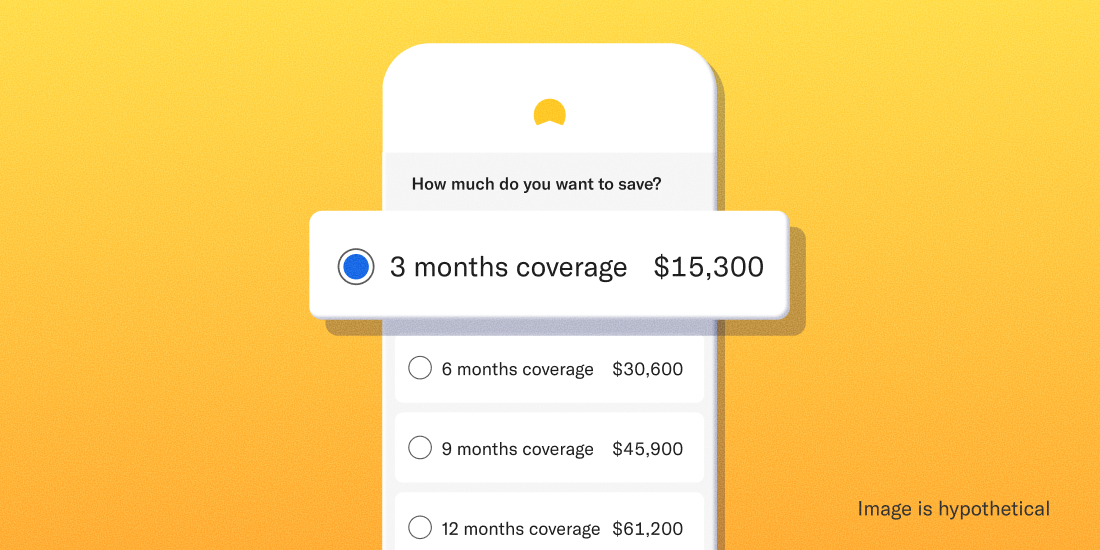
- Providing a safety net — Most advisors (including us) recommend an emergency fund with at least three months' worth of expenses ($19,500 using the average monthly spend above).
Your spending levels may differ, but for the average American, that calls for about $26,000 in cash, plus any more needed for major purchases. Saving for a home and/or car purchase, for example, will change your calculus.
If you're more risk averse, then consider adding a little more buffer. Try a six-month emergency fund. If you’re a freelancer and your income fluctuates a lot, consider nine months.
Beyond that, however, you're paying a premium for cash not earmarked for a specific purpose, and the cost is two-fold.
- Your money, as mentioned earlier, is very likely losing value each day. Not the big swings of the stock market, but a slow yet steady leak.
- You're missing out on the potential gains of the market.
And the historical difference in yields between cash and stocks is stark, to say the least. Global stocks, as represented by the MSCI World Index, have generated nearly a 9% annual return since 1988. Even the highest-yield cash accounts come nowhere near that.
So once you've identified your excess cash, where do you go from there?
Take a big leap forward on your long-term goals
And say hello to investing by way of a lump sum deposit.
It can feel like a leap of faith. Like diving into the deep end instead of slowly wading in. And it feels that way for a good reason—all investing comes with risk.
But when you have extra cash lying around, historical and simulated market data suggests that investing it all at once outperforms spreading it out, even when accounting for market volatility.
Spreading out your deposits over time is called dollar cost averaging, and it’s generally a good fit for investing your regular cash flow, not lump sums you already have on hand.
But savvy savers can employ both strategies—they dollar cost average their income as it comes in, and they invest excess dollars or cash windfalls in lump sums. Because in the end, both serve the same goal of building long-term wealth.
Consider taking the lump sum leap.
Corbin Donahue is a CERTIFIED FINANCIAL PLANNER™ who works directly with Betterment customers to help them achieve their financial goals. Corbin has several years of experience in wealth management, and is passionate about helping customers in every phase of life succeed financially.