How to hedge your bond bets in the face of oil-induced inflation
Conflict in the Middle East is causing oil prices to spike—underscoring the value of diversifying not just with bonds, but within them.Updated March 30, 2026 • 3 min read

- Oil price shocks from the war with Iran could drive inflation, keep borrowing costs elevated, and pressure stock valuations.
- Diversifying within asset classes, not just across them, can offer a crucial second layer of potential protection.
- Inflation-protected bonds, for example, are designed to hold up when other bonds don't, making them a powerful potential hedge in volatile markets.
Despite the rise of renewable energy and natural gas, oil still makes the world—and markets—go round. Roughly a third of global energy comes from the fossil fuel, much of it from the Middle East.
So while the conflict in the Middle East is less than a month old, and the Trump administration could try to unwind it sooner than later, even a temporary squeeze on the global oil supply can still impact the broader economy.
The pain is first felt at the pump. But higher oil prices also increase costs downstream and can delay or reduce interest rate cuts by the Federal Reserve, which has the potential to weigh on stock valuations over time.
All of this serves as a good reminder of why diversification matters, not just across asset classes like stocks and bonds, but within them.
Take bonds, the loans investors make to companies, governments, and other entities. We offer more than five varieties in our portfolios, and it's one sub-asset class in particular—inflation-protected bonds (aka TIPS)—that has performed well since fears of persistent inflation took hold in 2022.
TIPS are U.S. government bonds whose face value and twice-yearly interest payments rise with inflation. Crucially, they tend to perform well when other bond types don't, adding an extra layer of protection during market downturns.
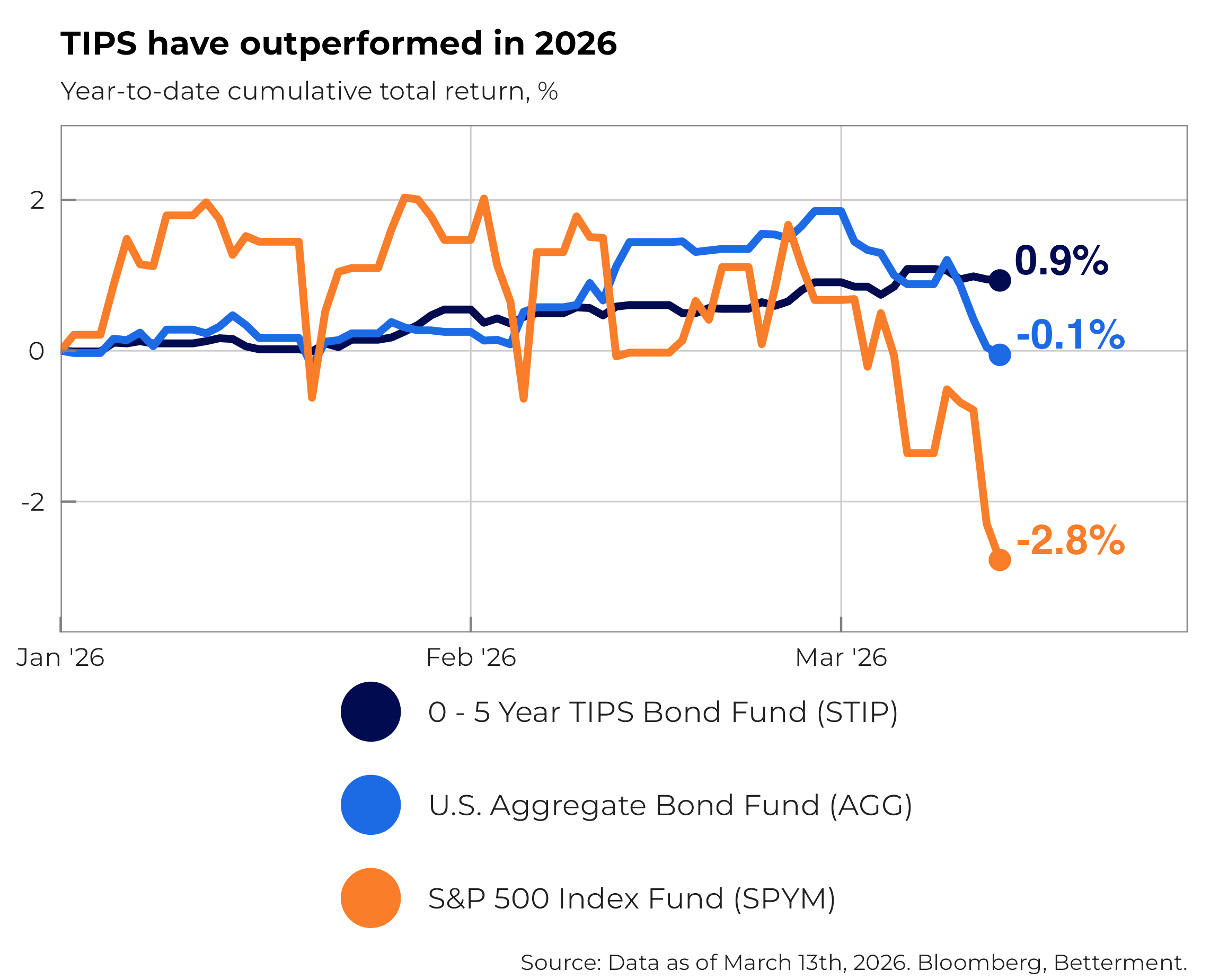
This double-layered diversification is central to our investing philosophy, and how we seek to deliver not only financial benefits to investors but psychological ones too.
It’s why most of our stock and bond portfolios include some allocation to TIPS, as high as 20% in the most conservative of cases. We also make it easy to adjust your bond allocation over time and to view your portfolio's exact holdings—so you always know where you stand.
Because when the world's most essential commodity becomes unpredictable, knowing your portfolio is built for more than one kind of storm can make all the difference.
Double down on your investing’s diversification.
Ben is a member of Betterment's Investing team in the role of Sr. Investment Strategist. Previously, he worked on the data team at GiveDirectly, a nonprofit NGO that operates cash transfer and basic income programs. Prior to GD, he worked on the Private Bank Chief Investment Officer’s team at J.P. Morgan, contributing to the team's research, analysis, and content creation. Ben studied finance and history at the University of Virginia and is a CFA® charterholder and a CERTIFIED FINANCIAL PLANNER™ professional.