Betterment Editors

Meet our writer
Betterment Editors
Betterment’s editorial team draws on decades of combined experience to bring you clear, practical points of view on personal finance, investing, and long-term wealth. Together, we demystify money decisions, help you size up options, and share the knowledge needed to build wealth with confidence and ease.
Articles by Betterment Editors
-
![]()
How to make tax-efficient withdrawals in retirement
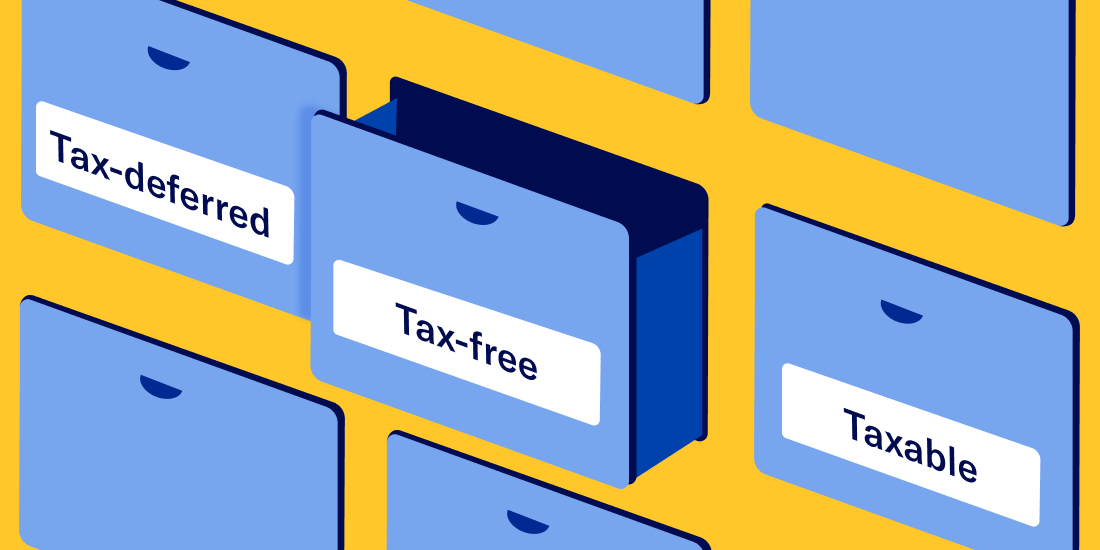
How to make tax-efficient withdrawals in retirement Aug 11, 2025, 3:59:19 PM Thoughtful planning around retirement withdrawals can help you retain more of your money, allowing for greater comfort and freedom in retirement. Table of contents: Why tax efficiency matters in retirement How brokerage, traditional, and Roth retirement accounts are taxed Choosing your withdrawal strategy: 3 options Advanced tactics for tax-optimized withdrawals Checklist: Creating your withdrawal plan Why tax efficiency matters in retirement Taxes play a critical role in determining how long your retirement savings will last. Without a tax-aware strategy, your retirement income may not last as long as it could. Here’s what you’ll need to consider for retirement: Withdrawals from traditional retirement accounts can inadvertently push you into higher income brackets A higher tax bracket can potentially trigger steeper taxes on Social Security benefits and boost your Medicare premiums. A tax-efficient plan helps delay unnecessary taxation, potentially increasing your net income. The big takeaway: Any unnecessary taxes on your retirement withdrawals can decrease your retirement income and shorten the lifespan of your savings. How brokerage, traditional, and Roth retirement accounts are taxed Most retirees hold assets across three types of accounts, each with its own tax implications. Knowing which bucket to tap—and when—is essential to optimizing after-tax income. Taxable accounts: brokerage and savings accounts Tax-deferred accounts: traditional 401(k) and traditional IRA accounts Tax-free accounts: Roth 401(k) and Roth IRA accounts The table below outlines the differences in how the three account types impact taxes from the time of contribution to the time of withdrawal. Choosing the right mix of accounts for timing withdrawals can help shape a smoother retirement income flow and potentially minimize tax consequences. Choosing your withdrawal strategy: 3 options There are three primary retirement withdrawal strategies used to balance taxes and preserve assets: Sequential “waterfall,” Proportional, and Personalized tax-bracket-aware. These are not one-size-fits-all approaches—the right strategy depends on your finances, account types, and income goals, and can change year to year. A financial planner can help you decide what’s best for you. Option 1: Sequential “waterfall” strategy The sequential “waterfall” strategy is a simple, orderly method where you take withdrawals from one account type at a time, in this order: Taxable accounts Tax-deferred accounts Tax-free accounts This approach maximizes the growth potential of tax-advantaged funds in Roth accounts but may become rigid once required distributions begin. Additionally, retirees may end up paying more in taxes in the middle of retirement during the period when they are withdrawing from tax-deferred accounts. Remember, withdrawals from traditional 401(k)s and IRAs are taxed as ordinary income. Because of this, a proportional withdrawal strategy may be a good fit for retirees with multiple account types. Option 2: Proportional withdrawal strategy A proportional withdrawal strategy is a systematic way to take money from all of your retirement accounts each year in proportion to their current balances. Instead of draining one type of account before moving to the next, you withdraw from each account type—taxable, tax-deferred, and tax-free—based on its share of your overall portfolio. In some cases, retirees may want to draw down taxable and traditional accounts proportionally, and then withdraw from Roth accounts. A proportional withdrawal strategy may provide the following benefits: Smooths taxable income: By smoothing out your taxable income throughout retirement, you can potentially pay less tax on your Social Security benefits and lower your Medicare premiums. Controls RMD impact: Potentially reduces large required minimum distributions (RMDs) later in retirement, which can push you into a higher tax bracket. Enhances longevity: If implemented properly, a proportional withdrawal strategy can make your portfolio last longer into retirement. Here’s an example, using a $1,000,000 portfolio (in reality, more details such as Social Security payments would need to be considered). The retiree would repeat this proportional withdrawal strategy every year, recalculating the ratios as balances change over time. Option 3: Personalized tax-bracket-aware strategy A personalized, tax-bracket-aware withdrawal strategy is a custom method designed to keep your taxable income within a target tax bracket each year. The goal is to make your total tax bill in retirement more predictable and potentially lower over time. Here's how it works at a high level: Fill your target bracket—don’t exceed it: Tap tax-deferred accounts like traditional IRAs or 401(k)s just enough to reach the top of your target tax bracket (e.g., 12% or 22%), then turn to taxable brokerage or Roth accounts for any additional income needed. Revisit your strategy every year: As income from sources like Social Security or RMDs changes, adjust withdrawals to stay within your target bracket. Take advantage of low-income years: After retiring but before major income sources begin, you're often in your lowest bracket. This may be an ideal time for Roth conversions or realizing capital gains at preferential rates. This strategy requires ongoing monitoring, but it may offer strong long-term tax benefits, depending on your specific situation. A tax or financial professional can help tailor it to your needs. Pros and cons of each withdrawal strategy Strategy Pros Cons Sequential “waterfall” • Preserves tax-advantaged accounts for growth • Simple to follow in most scenarios • May trigger more taxes later in retirement from RMDs • Can lead to more taxes during mid-retirement Proportional • Smooths out taxable income over time • Reduces large year-to-year tax swings • May allow savings to last longer • More complex to manage • Does not optimize tax-advantaged accounts for growth Personalized tax-bracket-aware • Keeps income predictably within a desired tax bracket • Allows for tax optimizations using Roth conversions and capital gains in low-income years • Requires regular recalibration based on annual income, Social Security, RMDs, etc • Complex and likely requires the support of a professional tax or financial advisor Advanced tactics for tax-optimized withdrawals Depending on your situation, these advanced tactics may help you reduce your tax bill in retirement. Required minimum distributions (RMD) planning: To start, estimate your future RMD amounts based on account balances and IRS life expectancy tables to avoid unexpected tax spikes. Consider spreading withdrawals across multiple years to avoid bumping into higher tax brackets. As you plan withdrawals, it’s important to coordinate them with Social Security and Medicare to minimize taxes on benefits and avoid surcharges on Medicare premiums. Roth conversions: Roth conversions let you move money from a tax-deferred account like a traditional 401(k) to a Roth 401(k), paying taxes on the converted amount now to help reduce future RMDs and gain access to tax-free withdrawals later. Qualified Charitable Distributions (QCDs): After age 70½, you can donate up to $100,000 per year from your IRA to a qualified charity. These Qualified Charitable Distributions (QCDs) count toward RMDs but aren’t taxable, helping reduce your overall retirement tax bill. Capital gains and tax-loss harvesting: By selling appreciated assets during low-income years, you can potentially pay 0% long-term capital gains rates. Conversely, with tax-loss harvesting, you can sell investments for a loss in higher-income years to offset taxable gains or ordinary income. The more retirement accounts and sources of income that you have, the more complexity is involved. As previously mentioned, working with a tax professional or a financial advisor can help you navigate tax situations that may require a deep understanding of retirement planning. Checklist: Creating your withdrawal plan Here’s a step-by-step checklist to help you build a withdrawal plan tailored to your situation: Estimate annual spending and taxable thresholds, including Social Security and RMD timing. Take stock of your account balances across taxable, deferred, and Roth accounts Choose a withdrawal strategy, working with a tax professional if needed: Sequential “waterfall” Proportional Personalized tax-bracket-aware Plan capital gains and tax-loss harvesting, respectively, for low-income and high-income years Plan Roth conversions strategically during low-income years Schedule QCDs if giving to charity and you’re RMD-eligible Set up annual reviews to adjust for changing income, tax rules, or personal goals Be intentional and plan ahead Tax-efficient withdrawals aren’t just smart, they’re essential for sustaining retirement savings over decades. Whether you prefer a straightforward order, a balanced blend, or a highly adaptive tax-driven strategy, the key is to be intentional about when and how you access your funds. Remember, it can pay off to consult with a tax professional to learn what may work best for you, especially if you have a complex situation with multiple retirement accounts. -
![]()
5 tips to plan for healthcare costs in retirement
5 tips to plan for healthcare costs in retirement Jul 7, 2025, 11:01:26 AM Retirement should be a time to enjoy life—here are five tips to ease the stress of planning for healthcare. Healthcare is one of the biggest and most unpredictable costs retirees face. While Medicare provides a foundation, it doesn't cover everything. Planning ahead can help you stay financially prepared and reduce stress later. Here are five key tips to help you plan for healthcare expenses in retirement. Tip 1: Understand how Medicare works Many people assume Medicare covers all health expenses in retirement—but that’s not the case. There are different parts to Medicare, and understanding them can help you avoid unwanted expenses. Part A covers hospital stays and is usually premium-free. Part B covers outpatient care and doctor visits. In 2025, the standard premium is $185/month—but it could be higher depending on your income. Part C (Medicare Advantage) is an all-in-one alternative offered by private insurers. Part D covers prescription drugs. Part A and B together are referred to as “Original Medicare” Medigap plans are offered by private health insurance companies that can help cover out-of-pocket expenses not covered by Original Medicare (such as copayments and deductibles) You must enroll during your initial enrollment period (3 months before and after your 65th birthday month) to avoid late penalties. You can avoid penalties by enrolling in Original Medicare (Parts A and B) during your Initial or special enrollment period (if you qualify due to certain life events)—and potentially reduce out-of-pocket costs by adding Medicare Advantage (Part C) or pairing a Medigap plan with Part D drug coverage. Also, keep in mind that Medicare premiums are based on your Modified Adjusted Gross Income (MAGI) from two years prior. Higher earners may pay significantly more. Tip 2: Estimate how much you’ll need for medical expenses Healthcare costs in retirement are much broader than just your monthly Medicare premiums—they include a wide range of expenses that can add up significantly over time. The Milliman Retiree Health Cost Index estimated that a hypothetical couple retiring in 2024 will need $395,000 to cover healthcare if they have Original Medicare plus Medigap and Part D coverage. Where does all that money go? Monthly premiums for Medicare Parts B and D (or Medicare Advantage plans), which often increase with income. Deductibles, copayments, and coinsurance, which are your share of the cost each time you receive medical care. Services not covered by Medicare, such as routine dental visits, vision exams and eyeglasses, hearing aids, and custodial long-term care (like help with bathing, eating, and dressing). Everyday health-related expenses, including over-the-counter medications, supplements, medical devices like blood pressure monitors, or home safety equipment like shower chairs or walkers. Many of these costs are easy to overlook, especially if you're healthy now. But planning for them early can help you avoid financial surprises later. A realistic healthcare budget in retirement should factor in both predictable expenses (like premiums) and variable or unexpected ones (like dental work or mobility aids). Tip 3: Plan for long-term care expenses One of the most commonly underestimated healthcare costs in retirement is long-term care. Medicare does not cover extended stays in nursing homes or full-time, in-home care if it's custodial (help with bathing, dressing, etc.). According to the Genworth 2024 Cost of Care Survey, the median cost of a private room in a nursing home is nearly $10,646 per month, and the costs of an assisted living community is $5,900 per month. To prepare, consider: Long-term care insurance, ideally purchased in your 50s or early 60s. Self-funding, by setting aside a portion of your savings for future care. Medicaid planning, if you expect to need care but may not be able to cover the full cost on your own. Tip 4: Leverage a health saving account (HSA) If you contributed to a Health Savings Account (HSA) while working, you have a valuable tool for retirement. And under certain conditions, you can still contribute in retirement (more on that below). HSAs offer a triple tax benefit: Contributions are tax-deductible Growth is tax-free Withdrawals for qualified medical expenses are tax-free Even though you can’t contribute to an HSA once you enroll in Medicare, you can use the funds tax-free to pay for a wide range of costs in retirement—like Medicare premiums, long-term care, and dental or vision expenses. Tip 5: Plan for inflation in your healthcare budget Planning for inflation is easy to forget but it can pay off, especially if costs rise even more than expected. Historically, medical care prices have generally grown faster than overall consumer prices. According to the Peterson-KKF Health System tracker: Since 2000, the cost of medical care—including doctor visits, insurance, prescription drugs, and medical equipment—has risen by 121.3%. Over that same period, the overall cost of consumer goods and services increased by just 86.1%. From 2027-2032, per capita spending growth on healthcare will increase at an average annual rate of 5.0%. As you make your healthcare budget, planning for inflation can help ensure you’re not caught off guard by rising premiums, medical bills, or care costs down the road. Plan for a brighter retirement At Betterment, we’re here to help you build the future you want. We provide financial resources to help every step of the way. Take advantage of our free educational resources to help you prepare for and navigate retirement. -
![]()
8 tips for retiring in a volatile market
8 tips for retiring in a volatile market May 27, 2025, 12:32:20 PM In this guide, we walk through what to do before and after retirement to help get the most of your retirement savings, especially in a down market. Planning for retirement during a volatile market can be overwhelming—and stressful. Working with a financial professional can ease the burden, but having a solid understanding of your own plan can empower you to have the retirement you want. In this article, we share eight ways to help you make smart retirement moves in a turbulent economic landscape. Before you retire As you near retirement, there are a few proactive steps you can take to get your financial life on solid ground. Tip 1: Reevaluate your asset allocation Market volatility is a good reminder that asset allocation matters. Too much invested in stocks, and your portfolio can be vulnerable to large losses during a downturn. Too much sitting in cash and you’ll be leaving long-term gains on the table. Portfolio allocation is about balancing your needs in retirement. Take some time to think through the following concepts: Time horizon: The length of time you expect to hold an investment before needing to access the money. When you retire, you’ll likely have immediate income needs to fund. With a shorter time horizon until you need to access your retirement portfolio, you have less time to recover from market losses. Income needs: The amount of money you require from your investments to cover living expenses and financial goals. This may or may not change once you retire, and your portfolio will likely be a main source of income. Risk tolerance: As you retire, your ability and willingness to endure fluctuations in the value of your investments may decrease. You can reduce stress by having a portfolio allocation that you are comfortable with during market ups and downs. As you near or enter retirement, it’s likely time to start reducing your stock-to-bond allocation. According to Nick Holeman, CFP®, Director of Financial Planning at Betterment, investors may want to consider lowering their ratio to about 56% stocks in early retirement.. Everyone’s situation is unique, making it wise to talk with a CERTIFIED FINANCIAL PLANNER® to find the right portfolio allocation for you as you near retirement. Tip 2: Build your emergency savings AARP reported that around 30% of Gen Xers (ages 44-59) and 16% of boomers (ages 60-78) have no emergency savings. If you’re in this age range, an emergency fund can be even more important than when you were younger, because you no longer have income from a paycheck. As you think about your emergency fund, here are some tips as you near retirement: Start (or replenish) your emergency fund: If you tap into your emergency fund, slowly rebuild it, even if you are already retired. Having at least three months of expenses can help you survive unexpected events. Already funded an emergency fund? Consider building a larger cash buffer: Planning to increase your cash position before transitioning into retirement can provide peace of mind in the case you retire during a volatile market environment. If able, you may want to consider planning to save up to 12 months' worth of expenses, sometimes more, depending on your situation. Use a liquid account: Using an account that allows easy cash withdrawals, like Betterment’s Cash Reserve, is crucial for your emergency funds. Cash Reserve offered by Betterment LLC and requires a Betterment Securities brokerage account. Betterment is not a bank. FDIC insurance provided by Program Banks, subject to certain conditions. Learn more. Next steps: See the three steps to creating your emergency fund. Tip 3: Plan your Social Security timing and make a budget Deciding when to start receiving Social Security is one of the most important retirement choices, as it impacts your monthly budget for years to come. For your budget, start by figuring out what your retirement lifestyle will realistically look like and what it will cost. It helps to draw up a budget that separates “must-have” expenses (needs) from “nice-to-have” expenses (wants). Once you have an idea of your expenses, working with a financial advisor can help you plan ahead to understand your sources of income, including: Social Security payments Dividends and/or interest payments The amount of withdrawals your retirement portfolio can support over your lifetime Other forms of income (part-time work, pension income, rental income, etc) You can claim Social Security as early as age 62, but your monthly benefit will be permanently reduced. If you wait until full retirement age (~66–67) or even up to age 70, your benefit will be significantly larger. Tip 4: Stress-test your retirement plan Finally, before you step into retirement, it’s wise to give your investing plan a “stress test” to see how it may perform. A simple exercise is to simulate a market downturn right before or after you retire. For example, let’s say your plan was to retire with $2 million and withdraw 4% each month, for a total of about $80,000 per year. Now, imagine the market declines, and your portfolio is down 10%, leaving you with $1.8 million. At a 4% withdrawal rate, you’d now only have about $72,000. Playing out different scenarios of market declines can help you determine how “safe” your retirement portfolio is from volatility, especially if you are relying on it for a certain level of income. Make scenario planning easier. The Betterment app does the math for you, letting you test potential outcomes of different financial situations. And if you need more hands-on advice, our CFPs® can be your guide. Tip 5: Consider delaying your retirement date or earning part-time income If you're concerned about meeting your long-term financial needs, delaying retirement by even 6–12 months can make a meaningful difference—especially in a down market. Extra time working means: More contributions to your retirement plan More time for your investments to grow and recover in a downturn Less time in retirement that you have to fund with your savings When possible, we are trying to avoid what’s called “sequence-of-returns risk”—the danger of experiencing poor market returns early in retirement, which can drastically affect your nest egg’s longevity. By delaying retirement in a downturn, you reduce this risk. After you retire You’ve made it: Retirement. Congrats! Now, here are three tips to help you get the most out of your savings. Tip 1: Stick to your plan and don’t panic-sell during volatility When stocks are tumbling, it’s natural to feel worried. But one of the worst things a recent retiree can do is panic-sell. All it will do is lock in your losses and rob you of any chance for your portfolio to rebound. Research shows that “doing nothing” is generally your best bet during a volatile market. Dating back to 1988, if you decided to invest on any given trading day, 65% of those days would have resulted in a positive investment return over the following month. The share of days with positive returns goes up as that trailing holding period extends. Historically, no matter when an investment was made between 1988 and 2009, the market was higher 100% of the time just 15. You likely have decades ahead of you in retirement. If you planned ahead and have a well-diversified investing portfolio, your best bet is to stay the course. Tip 2: Have a tax-optimized withdrawal strategy Tax planning doesn’t stop when paychecks stop—in fact, it can become even more important in retirement. One key tip to plan for is to withdraw from your account in a tax-efficient order. Generally, tax-efficient withdrawals follow this order: Taxable accounts (Brokerage) Tax-deferred account (Traditional 401k/IRA) Tax-free accounts (Roth) Why? Using taxable investment accounts first allows your tax-advantaged accounts to keep growing sheltered from taxes. Moreover, when you sell assets from a taxable brokerage account, any long-term capital gains are taxed at a lower tax rate (0%, 15%, or 20%) as opposed to IRA withdrawals, which are taxed as ordinary income. Also, things like stock dividends and bond interest in taxable brokerage accounts are being taxed annually anyway. If you spend that cash instead of reinvesting it, you’re not incurring additional tax—you’re simply using what would be taxed regardless. That said, you may experience years of lower taxable income, during which it could make sense to prioritize withdrawals from tax-deferred accounts or consider Roth conversions to fill up lower tax brackets.. When the market is down, converting during a dip means you pay taxes on a smaller balance, and any rebound growth afterward happens tax-free in the Roth account. To understand how a Roth conversion may impact your personal financial situation, we strongly recommend consulting a tax advisor and IRS Publication 590. Tip 3: Be prepared for required minimum distributions Required minimum distributions (RMDs) are the minimum amounts you must withdraw from your retirement accounts each year. According to the IRS, you generally must start taking withdrawals from your traditional IRA, SEP IRA, SIMPLE IRA, and retirement plan accounts when you reach age 73. (For more info, see the IRS’s Official RMD FAQs.) So, why are RMDs important to plan for? Simply put: RMDs can raise your taxable income. A sudden spike in income from mandatory RMDs can increase your taxable income, bumping you into a new tax bracket. Without careful planning, a higher tax bracket can potentially result in: Raising your Medicare premiums More taxes paid on Social Security and investment income Shrinking your savings faster than intended Thoughtful tax planning—such as managing withdrawals early, considering Roth conversions, and coordinating Social Security timing—helps spread out taxable income more evenly over retirement and preserves more of your wealth. Plan for a brighter retirement—with an expert At Betterment, we’re here to help you build the future you want. We provide resources and experts to help every step of the way. Education resources: See our library of articles on preparing for retirement. Talk to an expert: Partner with our team of experts for hands-on guidance backed by Betterment’s technology. -
![]()
How employer 401(k) matching works and why it matters
How employer 401(k) matching works and why it matters Dec 5, 2024, 2:03:08 PM Learn how employer 401(k) matching can boost retirement savings, and why this benefit is essential for a secure financial future. A 401(k) match is one of the most valuable benefits employers offer—yet many employees don’t really understand how it works, or how to take advantage of it. In 2025, 79% of U.S. employees surveyed in our Retirement Readiness Report received a 401(k) match—of those who didn’t, a whopping 92% named it as the benefit they’d most like to receive. So, what makes a 401(k) match so enticing? Below, we’ll explore: Different types of 401(k) matches How to make the most of a 401(k) match Vesting schedules How Betterment can help you take advantage of your employer match What is a 401(k) match? A 401(k) match is when employers contribute to your 401(k), matching a percentage of your salary—to help grow your retirement savings. But not all matches are created equal. Knowing what kind of match your employer offers is important, and there are a few variations, including: Dollar-for-Dollar Match: The employer matches each dollar contributed to the 401(k), up to a specified percentage. This amount varies by employer but typically ranges from 3-6% of the employee's salary. Here’s an example: Jack makes $80,000/ year, and puts $8,000 annually into his 401(k), which is 10% of his salary. His employer contributes up to 3% of his salary, or $2,400. Jack’s total contribution for the year, with the employer match, is: $10,400. Partial Match: The employer matches a percentage of the employee’s contributions. For example, the employer might match 50% of contributions, up to 6% of the employee’s salary. Let’s take a look, using Jack’s $80,000 salary: Jack contributes 10% of his salary, or $8,000. 6% of his salary is $4,800. If his employer contributes 50% up to 6% of his salary, the employer contribution is: $2,400/ year. Jack’s total contribution, with the employer match, is: $10,400. Tiered Match: The employer matches a percentage of contributions up to a limit, then offers a different percentage above that threshold. For example, the employer might match 100% up to 3% of the employee's salary, and then 50% on the next 3%. Jack contributes 10% of his $80,000 salary to his 401(k), which is $8,000 per year. His employer matches 100% of the first 3%, which is $2,400, plus 50% on the next 3%, which is $1,200. The employer contribution is $3,600 for the year. Jack’s total contribution, with the employer match, is $11,600. 401(k) Match on Student Loan Payments: With new SECURE 2.0 legislation, employers can now make 401(k) contributions based on qualified student loan payments. This means your student loan payments can unlock retirement savings—even if you’re not contributing directly to your 401(k). Over the last decade, student loan debt has increased by 56%, making it harder for many to save for retirement. If Jack earns $80,000 per year and pays $500 per month toward his student loans, totaling $6,000 annually. His employer offers a 100% match on contributions up to 4% of his salary—whether he allocates contributions solely to student loan payments or splits them between student loan payments and 401(k) contributions. Based on Jack’s payments, his employer will contribute $3,200 per year directly to his retirement plan. How to maximize your employer match Once you’ve determined what type of 401(k) match your employer offers, you’ll want to make sure you’re getting the most out of it. Here are some things to keep in mind: Get started as soon as possible: First, you’ll need to claim your 401(k) if you haven’t already. The sooner you start saving, the longer your contributions will have to grow, compounding over time (think of it as a snowball rolling downhill). Contribute enough to get the full 401(k) match: Don’t leave money on the table. Although some experts recommend contributing 10–15% of your paycheck, you can start smaller, increasing when it works for you. Pro tip: If you get a raise, you might want to consider increasing your contributions. Review vesting schedules: Some employers require you to stay with the company for a certain time before the matched funds are completely yours. We’ll dig into more on that below. Traditional vs. Roth 401(k) contributions with a 401(k) match If your employer offers a traditional 401(k) and a Roth 401(k), you can choose where to put your money. With Betterment, employer matching contributions go into a traditional 401(k), but this can vary with other plan providers. These contributions are tax-deferred. You won’t have to pay taxes on them until you withdraw the funds in retirement. Understanding vesting schedules You’ll want to read up on your company’s vesting schedule, so you know when you fully “own” your employer’s contributions to your 401(k). Immediate vesting means there is no waiting period. Once the employer contributions land in your account, they are fully yours. If you leave the company, you can take 100% of the matched contributions with you. With graded vesting, you gradually gain “ownership” over the employer match contributions. For example, you might get 25% after the first year, 50% after the second, and so on. Understanding your company’s vesting schedule is critical for making long-term career decisions. If your employer contributes to your 401(k), Betterment can help you track contributions, optimize your saving strategy, and ensure you’re making the most of your match. Ready to get started? Claim your account at betterment.com/accountaccess. Want to check to see if your employer offers a match? Log in to review your account. -
![]()
How to pick a 401(k) contribution rate
How to pick a 401(k) contribution rate Nov 4, 2024, 9:00:00 AM Your 401(k) contribution rate - also known as a deferral rate or savings rate - is a key part of a successful retirement strategy. You’ve taken that first step and have set up your Betterment 401(k) account - well done! One important piece to consider next is your contribution rate - how much from each paycheck will go into your account? With your Betterment 401(k), you could use a percentage or a fixed dollar amount, whichever you prefer. Here are a few other things to consider: Were you automatically enrolled? Many employers choose to automatically enroll their employees in the plan with a default contribution rate of 3% – if you're not sure, please check with your employer or take a look in your Retirement goal. Keep in mind, whatever the default contribution rate is, it’s just a starting point. You can (and probably should) increase that contribution rate at any time in your account. At least a decade without a paycheck Most experts recommend contributing 10%–15% of your paycheck to have enough to last you through retirement - which could be 20-30 years considering how long people are living! If you retire at age 65, with a healthy lifestyle and no major risk factors, you could live well into your 80s or 90s. That means you'll want to set yourself up for living off your personal savings and investments for about 20 years! Starting small is better than nothing If 10-15% of your paycheck sounds absurd to you right now - deep breath, think of that as something to aim for. You can start with something smaller, maybe 5 or 6%, and slowly but surely increase your savings rate every year – your birthday? Give yourself a gift and increase it by 1%. Your work anniversary? Cheers to you, bump it up again. And those 1% increases can actually be a big deal. Go for the max Because of its tax benefits, the IRS sets a limit on how much you can put into your 401(k) every year. So you could aim to contribute as much as the IRS allows! For people 50 and over, the limit is higher, which is referred to as “catch-up contributions.” And if you really want to be an over-achiever, you can also contribute to an IRA, an individual retirement account, to save even more. Tax considerations With your Betterment 401(k), you can make contributions into a traditional 401(k) account and/or a Roth 401(k). There are tax benefits to both: Traditional 401(k): Contributions are deducted from your paycheck before taxes are withheld, which can lower your taxable income. Both your contributions and investment earnings are “tax-deferred,” meaning you won’t pay taxes on what you contributed to the account as well as any earnings until you withdraw the money at retirement. In other words, save on taxes now, pay taxes later. Roth 401(k): Contributions are made with after-tax dollars so your withdrawals—both the contributions and earnings—are tax-free once you decide to retire (minimum age, 59½), and as long as you’ve held the Roth account for at least five years. In other words, pay taxes now, no taxes later. Remember that you can use both! Say you want to contribute 10% towards your retirement? You can put 5% into a traditional 401(k) and 5% into the Roth 401(k). This is one way you can balance your tax exposure. If you already have your account set up, log in today to adjust your contribution rate or reassess your traditional and Roth contributions. Haven’t started saving in your Betterment 401(k) yet? Check your email for an access link from Betterment, or get in touch: Send us an email: support@betterment.com Give us a call: (718) 400-6898, Monday through Friday, 9:00am-6:00pm ET -
![]()
How to turn your retirement savings into retirement income
How to turn your retirement savings into retirement income Aug 16, 2024, 11:52:34 AM An income strategy during retirement can help make your portfolio last longer, while also easing potential tax burdens. Retirement planning doesn’t end when you retire. To have the retirement you’ve been dreaming of, you need to ensure your savings will last. And how much you withdraw each month isn’t all that matters. In this guide we’ll cover: What a retirement income plan is How much to withdraw each year Which accounts you should withdraw from first Why changes in the market affect you differently in retirement How to handle a market downturn when you’re nearing retirement How Betterment helps take the guesswork out of your retirement income What is retirement income planning? You’ll likely spend decades saving and investing for retirement. But when that big moment comes, what happens next? If you’ve been diligently setting aside cash, you might have upwards of a million dollars to manage. That’s certainly something to be proud of: It puts you in a great position—and also comes with new responsibilities. Think of it this way: You’ve been getting a paycheck from your employer regularly for 30 to 40 years. Now you’re the one cutting those checks. So,how do you make the most of your assets? What is the best way to turn them into a stream of sustainable income that will, hopefully, last you through retirement? “Retirement income planning” is a broad phrase to help you think about how to prepare for the “spend down” years (as opposed to the “saving up” years). Financial professionals used to refer to the “three-legged stool” of retirement income planning: Social Security, a pension, and personal savings. Considering that pensions are hardly used anymore, and the future of Social Security is murky, we’re more-or-less down to one leg: personal savings. But in today’s world, personal savings can incorporate a few different cash streams – personal investment accounts, Individual Retirement Accounts (IRAs), and of course – a 401(k). All of which can play a role in your retirement income plan. Why changes in the market affect you differently in retirement Stock markets can swing up or down at any time. They’re volatile. When you’re saving for a distant retirement, you usually don’t have to worry as much about temporary dips. But during retirement, market volatility can have a greater effect on your savings. An investment account is a collection of individual assets. When you make a withdrawal from your retirement account, you’re selling off assets to equal the amount you want to withdraw. So say the market is going through a temporary dip. Since you’re retired, you have to continue making withdrawals in order to maintain your income. During the dip, your investment assets may have less value, so you have to sell more of them to equal the same amount of money. When the market goes back up, you have fewer assets that benefit from the rebound. The opposite is true, too. When the market is up, you don’t have to sell as many of your assets to maintain your income. There will always be good years and bad years in the market. How your withdrawals line up with the market’s volatility is called the “sequence of returns.” Unfortunately, you can’t control it. In many ways, it’s the luck of the withdrawal. Still, there are ways to help decrease the potential impact of a bad sequence of returns. How to limit bad timing from ruining your retirement The last thing you want is to retire and then lose your savings to market volatility. Consider taking some steps to try and protect your retirement from a bad sequence of returns. Adjust your level of risk As you near or enter retirement, it’s likely time to start dialing down your stock-to-bond allocation. Invest too heavily in stocks, and your retirement savings could tank right when you need them. Betterment generally recommends turning down your ratio to about 56% stocks in early retirement, then gradually decreasing to about 30% toward the end of retirement. Rebalance your portfolio During retirement, the two most common cash flows in/out of your investment accounts will likely be dividends you earn and withdrawals you make. If you’re strategic, you can use these cash flows as opportunities to rebalance your portfolio. For example, if stocks are down at the moment, you likely want to withdraw from your bonds instead. This can help prevent you from selling stocks at a loss. Alternatively, if stocks are rallying, you may want to reinvest your dividends into bonds (instead of cashing them out) in order to bring your portfolio back into balance with your preferred ratio of stocks to bonds. Keep an emergency fund Even in retirement, it’s important to have an emergency fund. If you keep a separate account in your portfolio with enough money to cover three to six months of expenses, you can likely cushion—or ride out altogether—the blow of a bad sequence of returns. Supplement your income Hopefully, you’ll have enough retirement savings to produce a steady income from withdrawals. But it’s nice to have other income sources, too, to minimize your reliance on investment withdrawals in the first place. While there still is Social Security—it’s future is murky. Maybe you have a pension you can withdraw from, too. Or a part-time job. Or rental properties. Along with the other precautions above, these additional income sources can help counter bad returns early in retirement. While you can’t control your sequence of returns, you can control the order you withdraw from your accounts. And that’s important, too. How much should you withdraw each year Deciding how much to withdraw annually from your 401(k) once you’re retired involves balancing anticipated expenses with available savings. You’ll want to consider tax implications, market fluctuations, inflation, health/longevity, and additional income streams (more on this below). A good place to start is with the 4% rule, which entails withdrawing 4% of your retirement savings in the first year, then adjusting the amount annually for inflation. Keep in mind: the 4% rule typically assumes your portfolio is split almost evenly between stocks and bonds, and that your funds are held in a tax-deferred account, such as a traditional IRA or 401(k), where withdrawals are taxable. Although the 4% rule has been popular for decades, it's applicability has been challenged in recent years. Longer lifespans, healthcare costs, inflation rates, and additional income streams have all changed the economic landscape. Ultimately, there is no one-size-fits-all answer to how much you should withdraw annually in retirement. A financial advisor can help you create a roadmap that’s right for you in retirement. Which accounts to withdraw from first In retirement, taxes are usually one of your biggest expenses. They’re right up there with healthcare costs. When it comes to your retirement savings, there are three “tax pools” your accounts can fall under: Taxable accounts: individual accounts, joint accounts, and trusts. Tax-deferred accounts: individual retirement accounts (IRAs), 401(k)s, 403(b)s, and Thrift Savings Plans Tax-free accounts: Roth IRAs, Roth 401(k)s Each of these account types (taxable, tax-deferred, and tax-free) are taxed differently—and that’s important to understand when you start making withdrawals. When you have funds in all three tax pools, this is known as “tax diversification.” This strategy can create some unique opportunities for managing your retirement income. For example, when you withdraw from your taxable accounts, you only pay taxes on the capital gains, not the full amount you withdraw. With a tax-deferred account like a Traditional 401(k), you usually pay taxes on the full amount you withdraw, so with each withdrawal, taxes take more away from your portfolio’s future earning potential. Since you don’t have to pay taxes on withdrawals from your tax-free accounts, it’s typically best to save these for last. You want as much tax-free money as possible, right? So, while we’re not a tax advisor, and none of this information should be considered advice for your specific situation, the ideal withdrawal order generally-speaking is: Taxable accounts Tax-deferred accounts Tax-free accounts But there are a few exceptions. Incorporating minimum distributions Once you reach a certain age, you must generally begin taking required minimum distributions (RMDs) from your tax-deferred accounts. Failure to do so results in a steep penalty on the amount you were supposed to take. This changes things—but only slightly. At this point, you may want to consider following a new order: Withdraw your RMDs. If you still need more, then pull from taxable accounts. When there’s nothing left in those, start withdrawing from your tax-deferred accounts. Pull money from tax-free accounts. Smoothing out bumps in your tax bracket In retirement, you’ll likely have multiple sources of non-investment income, coming from Social Security, defined benefit pensions, rental income, part-time work, and/or RMDs. Since these income streams vary from year to year, your tax bracket may fluctuate throughout retirement. With a little extra planning, you can sometimes use these fluctuations to your advantage. For years where you’re in a lower bracket than usual–say, if you’re retiring before you plan on claiming Social Security benefits–it may make sense to fill these low brackets with withdrawals from tax-deferred accounts before touching your taxable accounts, and possibly consider Roth conversions. For years where you’re in a higher tax bracket, like if you sell a home and end up with large capital gains–it may make sense to pull from tax-free accounts first to minimize the effect of higher tax rates. Remember, higher taxes mean larger withdrawals and less money staying invested. How Betterment helps take the guesswork out of your retirement income If all of the above sounds confusing, you’re not alone. It’s why we developed a dynamic income solution specifically for retirees. Our expert-built technology factors in the unique goal details that you provide when creating your retirement account to help advise you on the optimal amount for withdrawal over the coming year, with the intention of fostering year-to-year income consistency. And it’s all managed through our existing platform, making for a seamless process. You can even set up automatic withdrawals from your Betterment account to your checking account, helping you maintain a personalized payment schedule. -
![]()
How to invest during market highs
How to invest during market highs Jul 25, 2024, 8:29:52 PM Betterment experts weigh in on how to override anxiety, and be invested when the market climbs. While we invest for our own reasons, we get into the market to take advantage of potential price appreciation and income produced by financial assets. But anxiety can get the best of even the most eager investors. What if I buy when the market peaks, and then immediately declines? Sound familiar? As any investor knows, psychological aspects can cloud one’s judgment when it comes to money. We’re encouraged to minimize risk and maximize returns, whenever possible. So, a market that’s going up-up-up, can leave some investors feeling hesitant about paying premium prices—instead of opting for undervalued stocks, or lower price points. So how do we override the Fear of Purchasing at All-time Highs (or FOPAH, for short)? Is it best to dive in, or wait for a potential pullback? Our investment experts believe one of the best things you can do is face your fear, wading into the market. In practice, it can take a long time before that pullback comes, during which there may be further positive market returns. For instance, between 2012 and 2017, the S&P 500 did not experience a pullback greater than 12%. Oftentimes when a pullback does arrive, it’s not heralded as a positive outcome—but an ominous event, accompanied by scary headlines that spark new fears of further downturn. This can all lead to additional hesitancy around buying stocks. While there's no "perfect" time to invest, we can still be confident that choosing a diversified portfolio of investments is a smart way to help achieve long-term financial goals. To ease your fears, work out approximately how much time you’ll need to save up for your own goals. Long-term goals, like saving for college or a deposit on a house, can take time. And that’s a good thing! The longer your time horizon (the period of time you plan to keep your savings invested in the market), the more confident you can be that your money will grow by the point you want to withdraw it. Even if the market has already recently run up when you go to invest, a prolonged time horizon should help quell a pullback in the nearterm. Despite volatility, the stock market tends to trend upwards over longer periods. By maintaining a long-term perspective, you can position yourself to benefit from the market's long-term growth potential, which can outweigh short-term losses. Dating back to 1988, if you decided to invest on any given trading day, 65% of those days would have resulted in a positive investment return over the following month. The share of days with positive returns goes up as that trailing holding period extends. Historically, no matter when an investment was made between 1988 and 2009, the market was higher 100% the time just 15 years later. Short-term goals, like saving for a vacation or a home reno, have a shorter time horizon—meaning your money has less time to grow in the market. However, it's worth remembering that historically, investing at all-time highs has not resulted in lower future returns compared to investing on any other given day. After the S&P 500 reaches an all-time high, average returns tend to be slightly higher than during periods when the index has not soared so high. Practical steps to help ease your anxiety: Set up recurring deposits: When you commit to investing a fixed amount of money at set intervals over time, your losses could potentially be smaller if the market does dive in the near term. Plus, you will still have cash ready to buy at lower prices. While this comes with the risk of later buying at higher prices, it can help override the emotional pressure of trying to time the market. Diversify: Consider adding other asset classes, regions, and company sizes in your portfolio (as we do at Betterment). Our automated portfolio rebalancing is designed to maintain your investment portfolio's target asset allocation over time. Betterment continuously monitors your portfolio to see if the current allocation deviates from your target allocation—due to market fluctuations or changes in the value of your investments. Our auto-adjust feature can also help right-size the risk level of your portfolio by reducing the share of the portfolio allocated to more volatile stocks, and increasing the share allocated to bonds as your time horizon shortens. -
![]()
How an IRA can fit into your retirement strategy
How an IRA can fit into your retirement strategy Jul 23, 2024, 11:15:03 AM You already have access to a Betterment 401(k) through your employer. But if you’re not sure what the difference is between your 401(k) and IRA, we’ll lay it all out for you here. An Individual Retirement Account (IRA) is a type of investment account with tax advantages that helps you prepare for retirement. Depending on the type of IRA you invest in, you can make tax-free withdrawals when you retire, earn tax-free interest, or put off paying taxes until retirement. The sooner you start investing in an IRA, the more time you have for the earnings on your investment to compound before you reach retirement age. If you’re planning for retirement, it’s important to understand your options and learn how to maximize your tax benefits. Your employer already offers a 401(k) through Betterment—nice! But you may also want to have an IRA too, for a more robust plan. In this article, we’ll walk you through: What makes an IRA different from a 401(k) The types of IRAs How to choose between a Roth IRA and a Traditional IRA Timing your IRA contributions IRA recharacterizations Roth IRA conversions Let’s start by looking at what makes an Individual Retirement Account different from a 401(k). How is an IRA different from a 401(k)? When it comes to retirement planning, the two most common investment accounts people talk about are IRAs and 401(k)s. 401(k)s offer similar tax advantages to IRAs, but just about anyone can open an IRA. A 401(k) is what’s known as an employer-sponsored retirement plan: It’s only available through an employer. Other differences between these two types of accounts are that: Employers may offer a matching contribution into your 401(k) account, based on what you contribute 401(k) contributions come right out of your paycheck 401(k) contribution limits are significantly higher If your employer matches contributions to a 401(k), they’re basically giving you free money you wouldn’t otherwise receive. It’s typically wise to take advantage of this match before looking to an IRA. With an IRA, you determine exactly when and how to make contributions. You can put money into an IRA at any time over the course of the year, whereas a 401(k) almost always has to come from your paycheck. Note that annual IRA contributions can be made up until that year’s tax filing deadline, whereas the contribution deadline for 401(k)s is at the end of each calendar year. Every year, you’re only allowed to put a fixed amount of money into a retirement account, and the exact amount often changes year-to-year. For an IRA, the contribution limit for 2024 is $7,000 if you’re under 50, or $8,000 if you’re 50 or older. For a 401(k), the contribution limit for 2024 is $23,000 if you’re under 50, or $30,500 if you’re 50 or older. These contribution limits are separate, so it’s not uncommon for investors to have both a 401(k) and an IRA. What are the types of IRAs? The challenge for most people looking into IRAs is understanding which kind of IRA is most advantageous for them. For many, this boils down to Roth and/or Traditional. The advantages of each can shift over time as tax laws and your income level changes, so this is a common question for even advanced investors. As a side note, there are other IRA options suited for the self-employed or small business owner, such as the SEP IRA, but we won’t go into those here. As mentioned in the section above, IRA contributions are not made directly from your paycheck. That means that the money you are contributing to an IRA has already been taxed. When you contribute to a Traditional IRA, your contribution may be tax-deductible. Whether you are eligible to take a full, partial, or any deduction at all depends on if you or your spouse is covered by an employer retirement plan (i.e. a 401(k)) and your income level (more on these limitations later). Once funds are in your Traditional IRA, you will not pay any income taxes on investment earnings until you begin to withdraw from the account. This means that you benefit from “tax-deferred” growth. If you were able to deduct your contributions, you will pay income tax on the contributions as well as earnings at the time of withdrawal. If you were not eligible to take a deduction on your contributions, then you generally will only pay taxes on the earnings at the time of withdrawal. This is done on a “pro-rata” basis. Comparatively, contributions to a Roth IRA are not tax deductible. When it comes time to withdraw from your Roth IRA in retirement, your withdrawals will generally be tax free—even the interest you’ve accumulated. How to choose between a Roth IRA and a Traditional IRA For most people, choosing an IRA is a matter of deciding between a Roth IRA and a Traditional IRA. Neither option is inherently better: it depends on your income and your tax bracket now—and in retirement. Your income determines whether you can contribute to a Roth IRA, and also whether you are eligible to deduct contributions made to a Traditional IRA. However, the IRS doesn’t use your gross income; they look at your modified adjusted gross income, which can be different from taxable income. With Roth IRAs, your ability to contribute is phased out when your modified adjusted gross income (MAGI) reaches a certain level. If you’re eligible for both types of IRAs, the choice often comes down to what tax bracket you’re in now, and what tax bracket you think you’ll be in when you retire. If you think you’ll be in a lower tax bracket when you retire, postponing taxes with a Traditional IRA will likely result in you keeping more of your money. If you expect to be in a higher tax bracket when you retire, using a Roth IRA to pay taxes now may be the better choice. The best type of account for you may change over time, but making a choice now doesn’t lock you into one option forever. So as you start retirement planning, focus on where you are now and where you’d like to be then. It’s healthy to re-evaluate your position periodically, especially when you go through major financial transitions such as getting a new job, losing a job, receiving a promotion, or creating an additional revenue stream. Timing IRA contributions: Why earlier is better Regardless of which type of IRA you select, it helps to understand how the timing of your contributions impacts your investment returns. It’s your choice to either make a maximum contribution early in the year, contribute over time, or wait until the deadline. By timing your contribution to be as early as possible, you can maximize your time in the market, which could help you achieve greater returns over time. Consider the difference between making a maximum contribution on January 1 and making it on December 1 each year. Then suppose, hypothetically, that your annual growth rate is 10%. Here’s what the difference could look like between an IRA with early contributions and an IRA with late contributions: This figure represents the scenarios mentioned above.‘Deposit Early’ indicates depositing $6,000 on January 1 of each calendar year, whereas ‘Deposit Late’ indicates depositing $6,000 on December 1 of the same calendar year, both every year for a ten-year period. Calculations assume a hypothetical growth rate of 10% annually. The hypothetical growth rate is not based on, and should not be interpreted to reflect, any Betterment portfolio, or any other investment or portfolio, and is purely an arbitrary number. Further, the results are solely based on the calculations mentioned in the preceding sentences. These figures do not take into account any dividend reinvestment, taxes, market changes, or any fees charged. The illustration does not reflect the chance for loss or gain, and actual returns can vary from those above. What’s an IRA recharacterization? You might contribute to an IRA before you have started filing your taxes and may not know exactly what your Modified Adjusted Gross Income will be for that year. Therefore, you may not know whether you will be eligible to contribute to a Roth IRA, or if you will be able to deduct your contributions to a Traditional IRA. In some cases, the IRS allows you to reclassify your IRA contributions. A recharacterization changes your contributions (plus the gains or minus the losses attributed to them) from a Traditional IRA to a Roth IRA, or, from a Roth IRA to a Traditional IRA. It’s most common to recharacterize a Roth IRA to a Traditional IRA. Generally, there are no taxes associated with a recharacterization if the amount you recharacterize includes gains or excludes dollars lost. Here are three instances where a recharacterization may be right for you: If you made a Roth contribution during the year but discovered later that your income was high enough to reduce the amount you were allowed to contribute—or prohibit you from contributing at all. If you contributed to a Traditional IRA because you thought your income would be above the allowed limits for a Roth IRA contribution, but your income ended up lower than you’d expected. If you contributed to a Roth IRA, but while preparing your tax return, you realize that you’d benefit more from the immediate tax deduction a Traditional IRA contribution would potentially provide. Additionally, we have listed a few methods that can be used to correct an over-contribution to an IRA in this FAQ resource. You cannot recharacterize an amount that’s more than your allowable maximum annual contribution. You have until each year’s tax filing deadline to recharacterize—unless you file for an extension or you file an amended tax return. What’s a Roth conversion? A Roth conversion is a one-way street. It’s a potentially taxable event where funds are transferred from a Traditional IRA to a Roth IRA. There is no such thing as a Roth to Traditional conversion. It is different from a recharacterization because you are not changing the type of IRA that you contributed to for that particular year. There is no cap on the amount that’s eligible to be converted, so the sky’s the limit for those that choose to convert. We go into Roth conversions in more detail in our Help Center. So what’s right for you? Since your employer offers a 401(k) through Betterment, it’s typically best to start there. Some employers auto-enroll new hires, meaning that paycheck contributions start automatically. Whether your employer auto-enrolls or not, you’ll need to start by claiming your 401(k) account. Once you claim your account, you can set or adjust the contribution rate. Get started here: betterment.com/accountaccess. After you’ve got your 401(k) up and running, you might want to consider contributing to an IRA as well. On your dashboard, select “Add new” in the left-hand navigation, then choose: IRA. Follow the prompts to select which type of IRA you want, and sync a bank account to contribute from. You’ll have access to the same investment options available in your 401(k). Retirement can feel hard to plan for, but Betterment has plenty of investing options to make it easy to save for. We’re here to help you work towards for the retirement of your dreams.