Debt doesn't have to keep you caged—here's how to save your way out
Updated June 8, 2026 • 5 min read

Paying down debt and building your savings aren't mutually exclusive—here's a simple framework for juggling both at once.
- Getting your financial footing early in your career has never been easy, but today’s high-debt, low-hire job economy adds to the struggles.
- But you don't need to be debt-free before you start saving. They can run on parallel tracks.
- Some debt can sit on the backburner while you put your money to work elsewhere. It all hinges on how high of an interest rate a loan carries.
- Quick number crunching beats a high-maintenance budget. Size up your cash flow, then direct your discretionary spending with a few guiding principles.
Between college, cars, and credit cards, debt is a simple fact of life for a lot of us, especially those early in their careers.
But waiting until you’re debt-free to start saving means missing out on one of your biggest advantages as a saver: time.
So let’s reset expectations. With a clearer picture of your cash flow, you can chip away at debt, find your financial footing, and start enjoying some meaningful financial freedoms all at the same time
First: Figure out what you're working with
Do you really need a budget? We’d say yes, but it doesn’t need to be a detailed spreadsheet or elaborate app. Crunch a few numbers, then get on with it. Because before you can decide where your money goes, you need to know how much you have to direct in the first place.
Start with your take-home pay, what lands in your account after taxes. Then subtract bare necessities like:
- Housing — your total costs will vary depending on whether you rent or own
- Utilities — electricity, internet, phone, etc.
- Transportation — car payment, insurance, gas, or transit
- Groceries — actual at-home food spending, not delivery
- Health insurance — assuming you're not on a parent's plan
What's left is your discretionary income. For a lot of people in their 20s, that number is smaller than they'd like. That's okay. Even a little is enough to get started.
From there, split what's left into two buckets:
- Freedom fund — for saving, debt paydown, and building toward bigger goals (more on this below)
- Fun fund — for shame-free spending like going out, trips, whatever makes your life feel like your life
If you have a decent chunk of discretionary spending to work with, a 50/50 split between these two buckets is a solid starting point. If things are tight, lean toward the freedom fund for now.
This is your money's first real job—not just covering expenses, but starting to build something.
Then: Build your freedom fund
Financial freedom comes in many shapes and sizes, but the most impactful aren't always the most exciting. So when setting up your freedom fund, it’s often best to focus first on preventing backsliding.
1. Cover your minimum payments and capture any employer match
Missing minimum debt payments can lead to late fees, credit score dings, and balances that quickly balloon—small problems that become expensive ones quickly.
If your employer offers a 401(k) match, contribute enough to get it. That match is treated as part of your total compensation. Leaving it on the table is like giving yourself a pay cut.
2. Attack high-interest debt while building a starter emergency fund
Not all debts are created equal. Those with higher interest rates—roughly 8% or higher based on the current rate environment and market forecasts—can snowball fast. So paying them down aggressively is often the higher-ROI move.
Lower-interest debt, on the other hand, is less of an emergency. You don't need to pour every available dollar into paying it off. Steady, on-time payments can be enough while you work toward other goals.
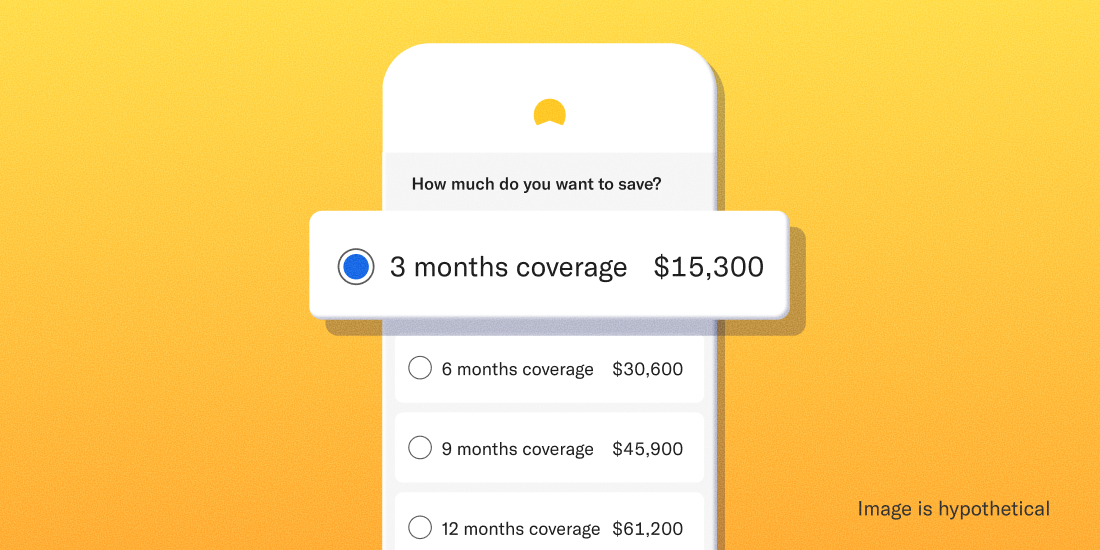
At the same time, consider building a small cash cushion as you go. Without one, a single surprise bill can send you right back to square one. Even $500 in a high-yield cash account makes a meaningful difference.
Cash Reserve offered by Betterment LLC and requires a Betterment Securities brokerage account. Betterment is not a bank. FDIC insurance provided by Program Banks, subject to certain conditions. Learn more.
3. Start designing the life you want
This is where the line between your freedom and fun funds starts to blur. You’ve laid the foundation with the previous two steps, now you can dream big with moves that make sense a few years out or beyond. Sometimes that’s a literal move—to your own place, or a new city—or stepping away from work for a while for your mental wellbeing.
Eventually, it can mean working less for the money, and more for the meaning. Because as your nest egg grows, you may very well feel empowered to pass on jobs that don’t align with your values.
Either way, these types of long-term goals are better-suited for low-cost, globally-diversified investing, and apps like Betterment make it easier than ever to get started.
A good-enough system beats the perfect plan
When you’re just starting out, you’re often working with less than you’d like. But you can still build momentum by starting small and staying consistent.
You don't need to have it all figured out. You just need a clear enough picture of your cash flow and a few sensible priorities to work from. Cover your minimums. Build a small cushion. And put what's left to work. The rest will follow.
Hanna partners with individuals and families to align their money with their goals, whether that means preparing for retirement, navigating equity-based compensation, or balancing multiple priorities at once. Before joining Betterment, she was a financial planner at RS Crum, a Newport Beach–based RIA, where she guided high-net-worth families through comprehensive planning and investment management. Financial planning is about more than numbers to Hanna—it’s about people, values, and creating peace of mind.