Surviving the waiting room of wealth-building
Compound growth is real and it's powerful—but waiting years to see it isn't easy. Here's an honest look at what to expect, and how to make the wait more bearable.Updated June 8, 2026 • 4 min read

- It can take a while before you notice results when investing. Money invested now could double in roughly a decade assuming historical stock market returns.
- But things get exponential when that amount doubles again. The math starts working in powerful ways that our brains simply aren’t wired to fully appreciate.
- Each decade of compounding growth matters tremendously. It’s one of the biggest advantages for investors in their 20s and 30s.
- You also don't have to do the heavy lifting alone. Over long stretches, compound growth could grow to outweigh your own contributions.
Compound growth is arguably the key ingredient to building wealth, but it takes a while for momentum to build. And waiting years to see meaningful returns on your investments is genuinely hard. It's a leap of faith that lasts longer than a lot of our relationships.
So before we dive into the math, it's worth acknowledging the psychological ask here is real. This isn't a pep talk. It's more an honest look at how your ROI actually works, why it's worth the wait, and a few ways to pass the time more easily.
The honest timeline (and how to survive it)
How long it takes to see results when investing depends largely on timing. Markets naturally swing between phases of expansion and contraction. Start investing during a downturn, and it’ll take longer to see your returns start stacking.
Your actual market returns will vary, of course, and investing always involves risk. But as a rough illustration, money invested in the stock market at-large has historically taken a decade to double.
A decade. That's a long time to wait for a payoff you can be proud of. So it can help to redefine what "progress" looks like early on. A better gauge of success isn't "How much have my investments grown?" but "How consistently am I contributing?"
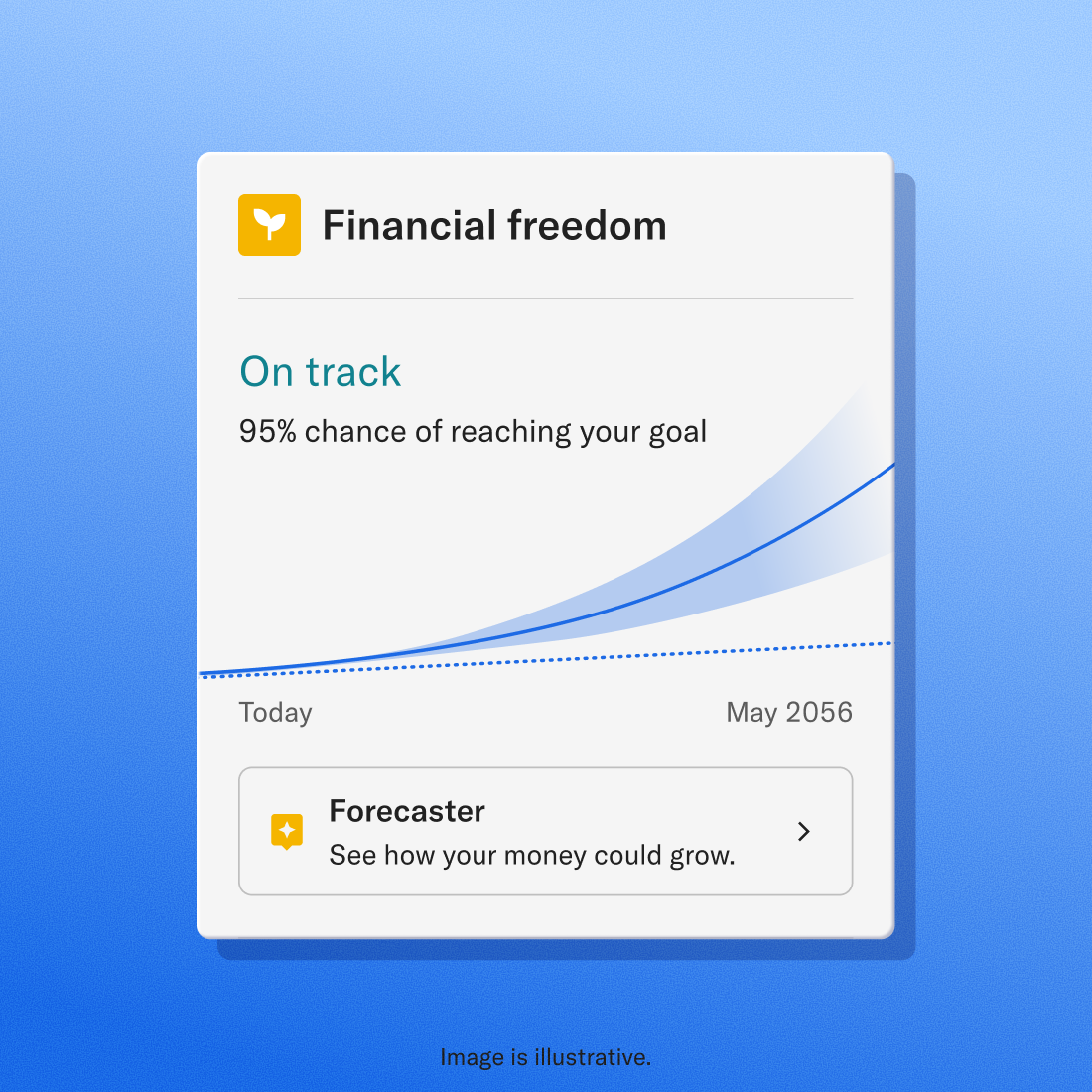
When the moments of doubt hit—and they will—you can use our Forecaster tool to make the future feel real. Seeing a range of possible outcomes can help turn that leap of faith into a plan you can stick with.
Last but not least, celebrate smaller milestones deliberately. Your first $1,000 invested. Your first $5,000. These moments won't make any headlines, but they're meaningful markers that you’re moving in the right direction and compound growth is taking root.
Your brain isn't built for what happens next
Humans are pretty good at thinking linearly—1, 2, 3, and so on—but we’re genuinely bad at wrapping our heads around exponential growth. MIT professors can patiently explain how one penny, doubled each day, becomes $21 million in just a month, and we’re mystified. The prof might as well be Oz the Mentalist.
But that’s basically how it works. Doubling on doubling. Layer on your regular investing contributions, and the charts can quickly move into hockey stick territory. The point isn't any eye-popping numbers, however. It's that the potential growth you experience in your 20s pales in comparison to your 30s and onward. A lot of people quit (or don’t even start) before the math has a chance to show up.

Similar to redefining success, another reframe can help here: saving isn’t a solo climb. Compound growth is the world’s best climbing partner, and over a long enough ascent, it can even do the majority of the work for you.
That changes the calculus on saving up a large sum of money. You're not trying to sweat and toil all the way to the finish line. You're trying to get enough in the ground, early enough, that time and compounding can take over.
The one advantage worth more than market conditions
Baby boomers hold the bulk of wealth right now, but their window for compounding is closing.
Yours isn't.
It can be hard to keep that in mind early on. Not if your economic prospects seem so uncertain. Not when your balance seems stuck in slow motion. But that doesn’t mean you’re doing it wrong. Assuming you’re investing consistently, it means you're in the early—and most important—stages of building wealth.
Your decades of potential double-ups start today.
Hanna partners with individuals and families to align their money with their goals, whether that means preparing for retirement, navigating equity-based compensation, or balancing multiple priorities at once. Before joining Betterment, she was a financial planner at RS Crum, a Newport Beach–based RIA, where she guided high-net-worth families through comprehensive planning and investment management. Financial planning is about more than numbers to Hanna—it’s about people, values, and creating peace of mind.