Insight #1
There’s an unexpected financial paradox
among today’s workforce
Financial anxiety has reached a record high, with 90% of full-time employees feeling stressed about their finances. Yet at the same time, 71% remain confident they’ll have enough saved for the future.
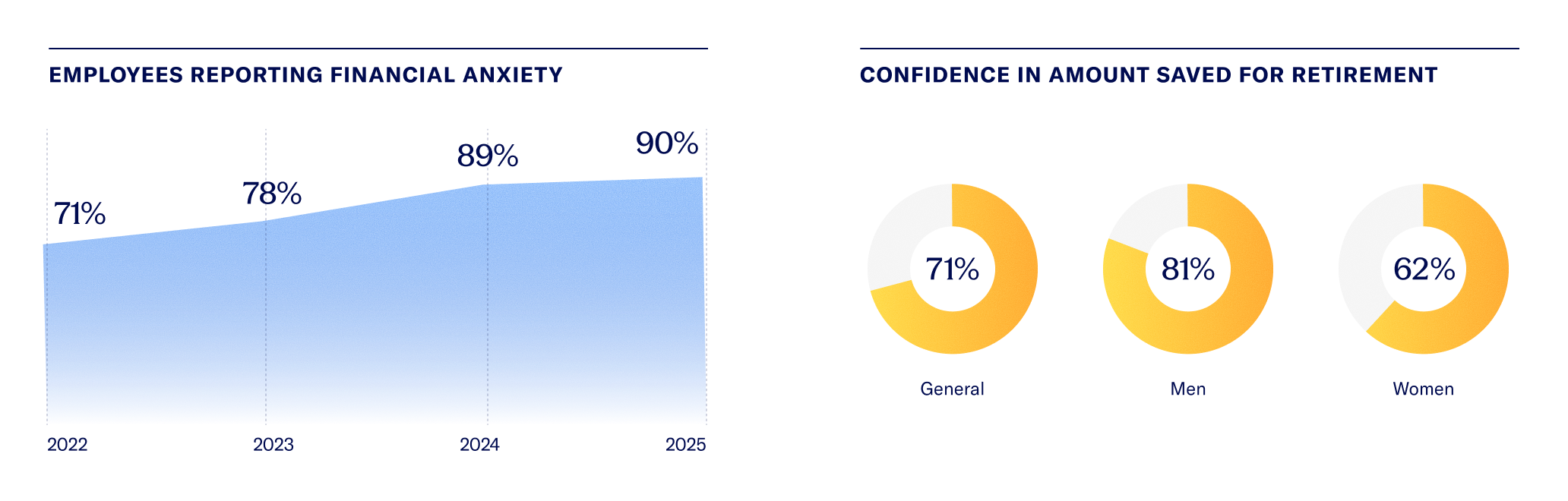
What does it mean? Today’s workforce is juggling the realities of daily financial stress while still holding onto long-term optimism. For those guiding others on their financial journey, it’s a reminder that steady support can make all the difference.
INSIGHT #2
The magic number for retirement is higher
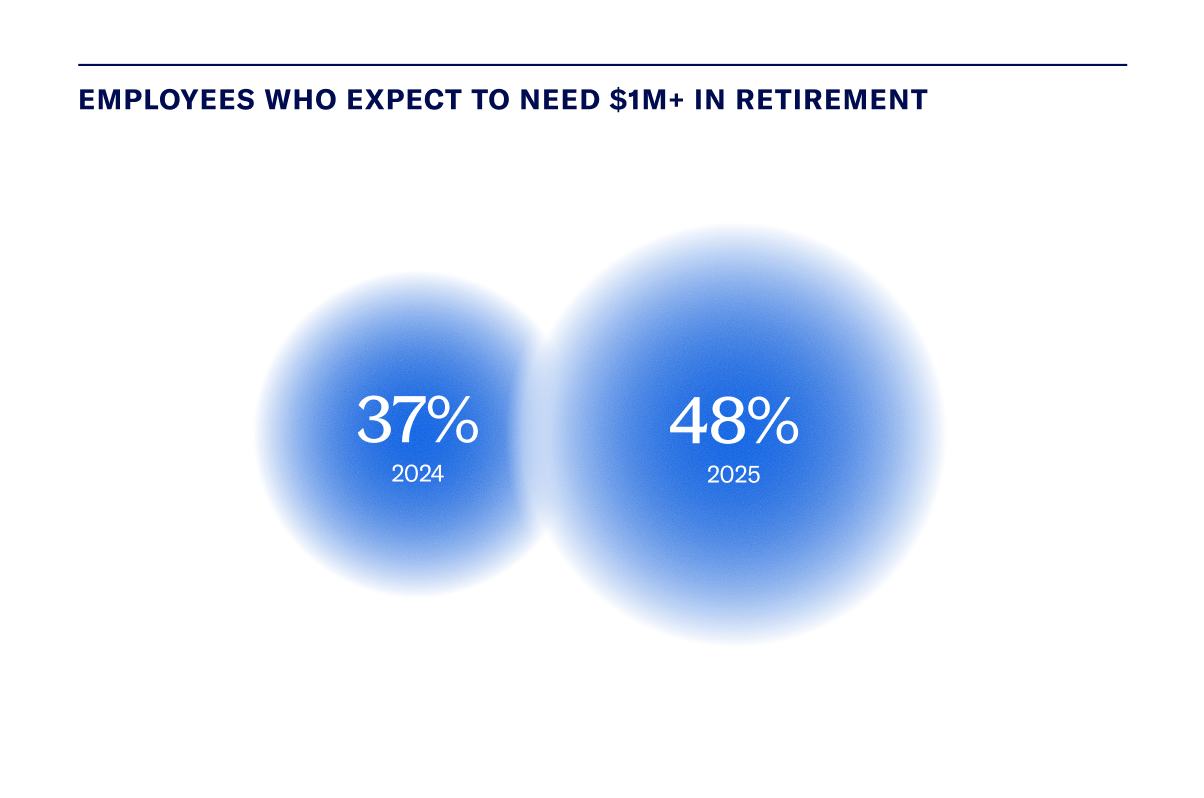
48% of employees expect to need $1M+ in retirement, up from 37% in 2024.
INSIGHT #3
More employers are offering a match
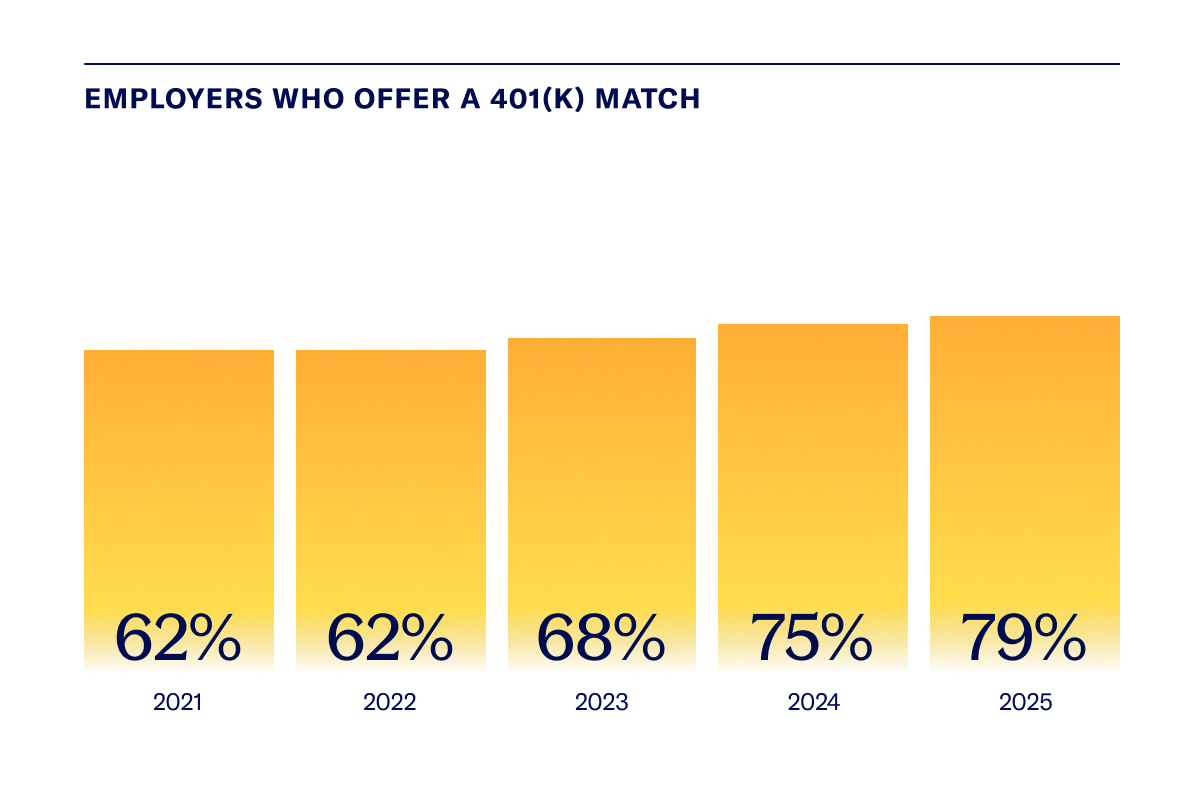
Today, 79% of employers offer a 401(k) match, up from 62% in 2021—a shift likely accelerated by the SECURE Act.
INSIGHT #4
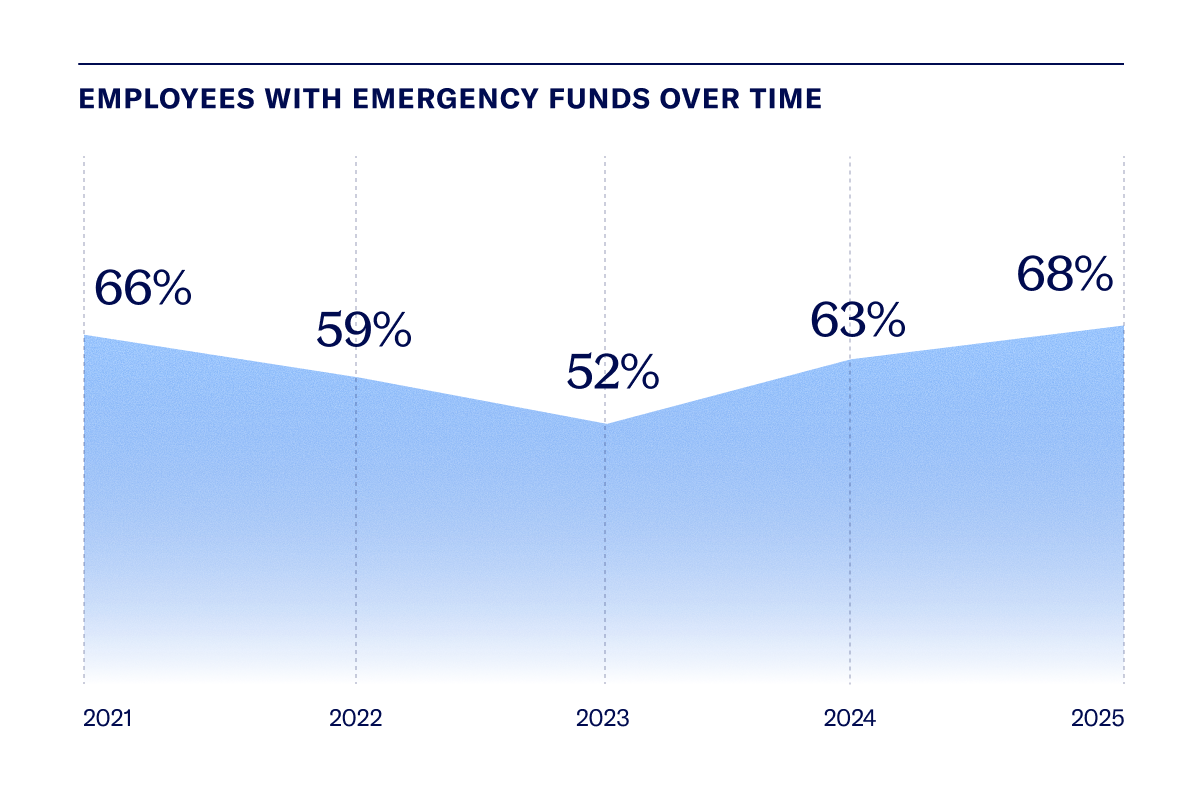
Emergency funds are trending and highly sought after
68% of employees report having an emergency fund, marking a five-year high and signaling growing interest in short-term financial stability.
INSIGHT #5
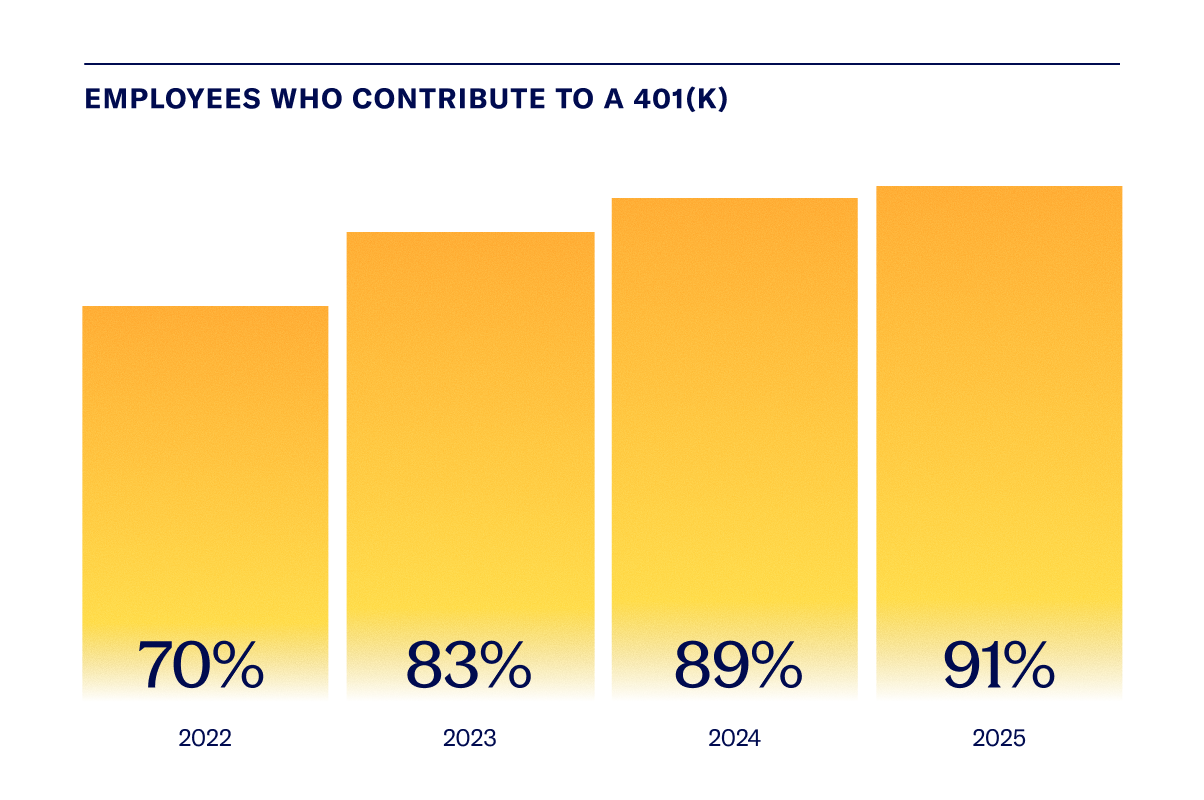
Retirement participation continues to rise
91% of employees now contribute to a 401(k), signaling heightened expectations for employer support.
INSIGHT #6
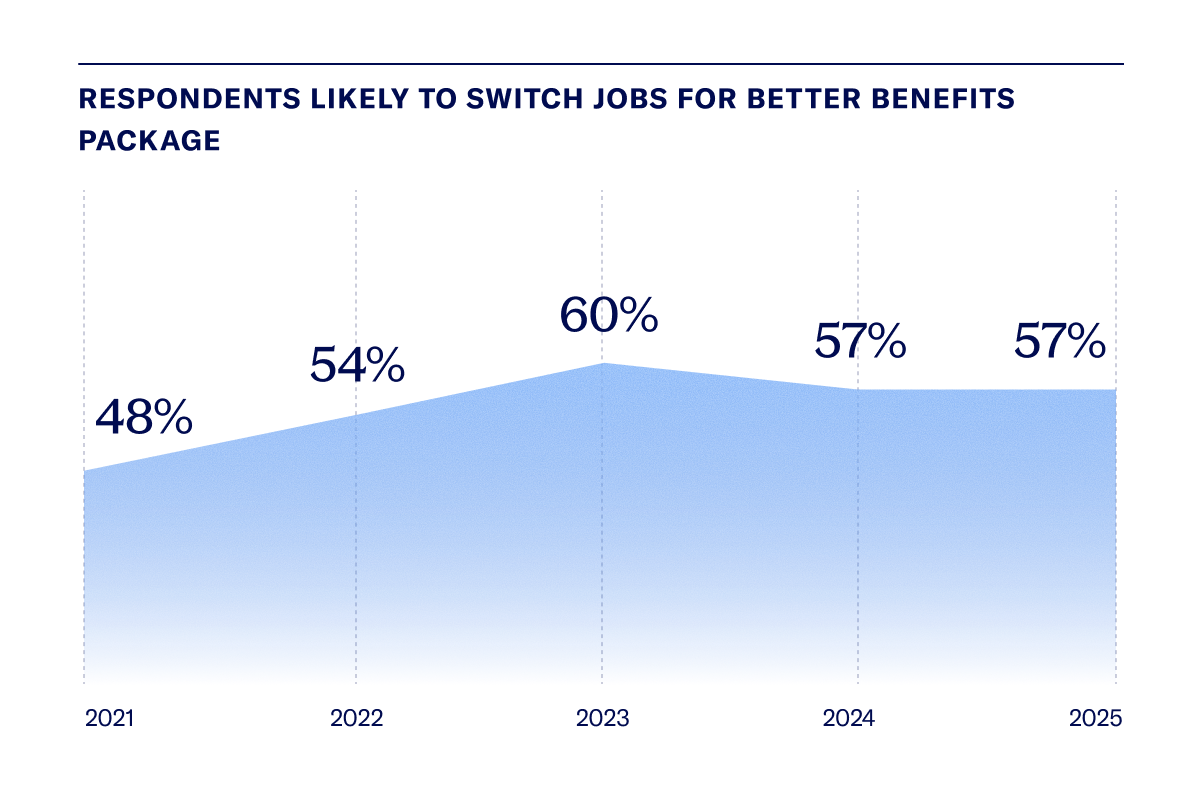
Strong financial benefits are in high demand
More than half of all respondents (57%) say better financial benefits beyond salary—such as 401(k) matching, student loan payment support, and financial advising—would entice them to leave their current job.
INSIGHT #7
Gen Z is leading in retirement confidence


INSIGHT #7
88% of Gen Z feel confident they’ll have enough saved for retirement, the highest of any generation.
INSIGHT #9
Gen X is sounding the alarm on retirement preparedness

INSIGHT #9
Only 61% of Gen X feel confident they’ll have enough saved, and 54% have considered delaying retirement—the clearest warning signal among any generation.
INSIGHT #8
Millennials are likely to move for better benefits

INSIGHT #8
64% percent of Millennials say they would switch jobs for stronger financial benefits, showing how responsive they are to benefit quality.
INSIGHT #10
Boomers are delaying retirement amid rising volatility concerns

INSIGHT #10
As they near retirement, 28% of Boomers rank market volatility among their top financial stressors, heightening the need for clear guidance and employer support.
INSIGHT #11
A retirement knowledge gap is emerging among remote workers
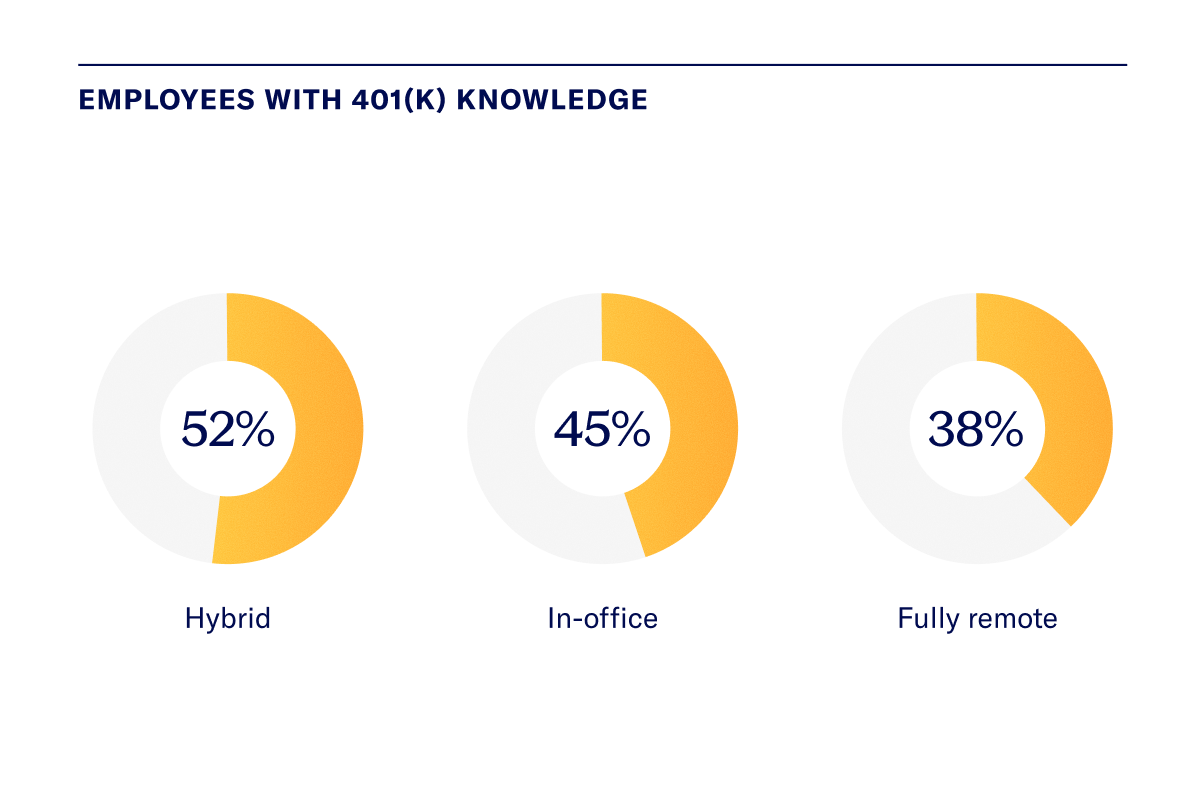
Hybrid employees show the strongest 401(k) knowledge at 52%, followed by in-office workers at 45%. Fully remote employees lag at 38%, suggesting reduced exposure to HR-led benefits education.