Market update: Rising bond yields, AI, and what’s ahead
Higher yields are reshaping markets as inflation, fiscal policy, and AI investment collide. Here’s what advisors should be watching.Updated September 29, 2026 • 4 min read

- Long-term government bond yields are rising globally, increasing borrowing costs and putting pressure on asset valuations.
- Inflation, fiscal policy, and growing debt issuance are all contributing to higher yields, making the current rate environment more complex than any single factor.
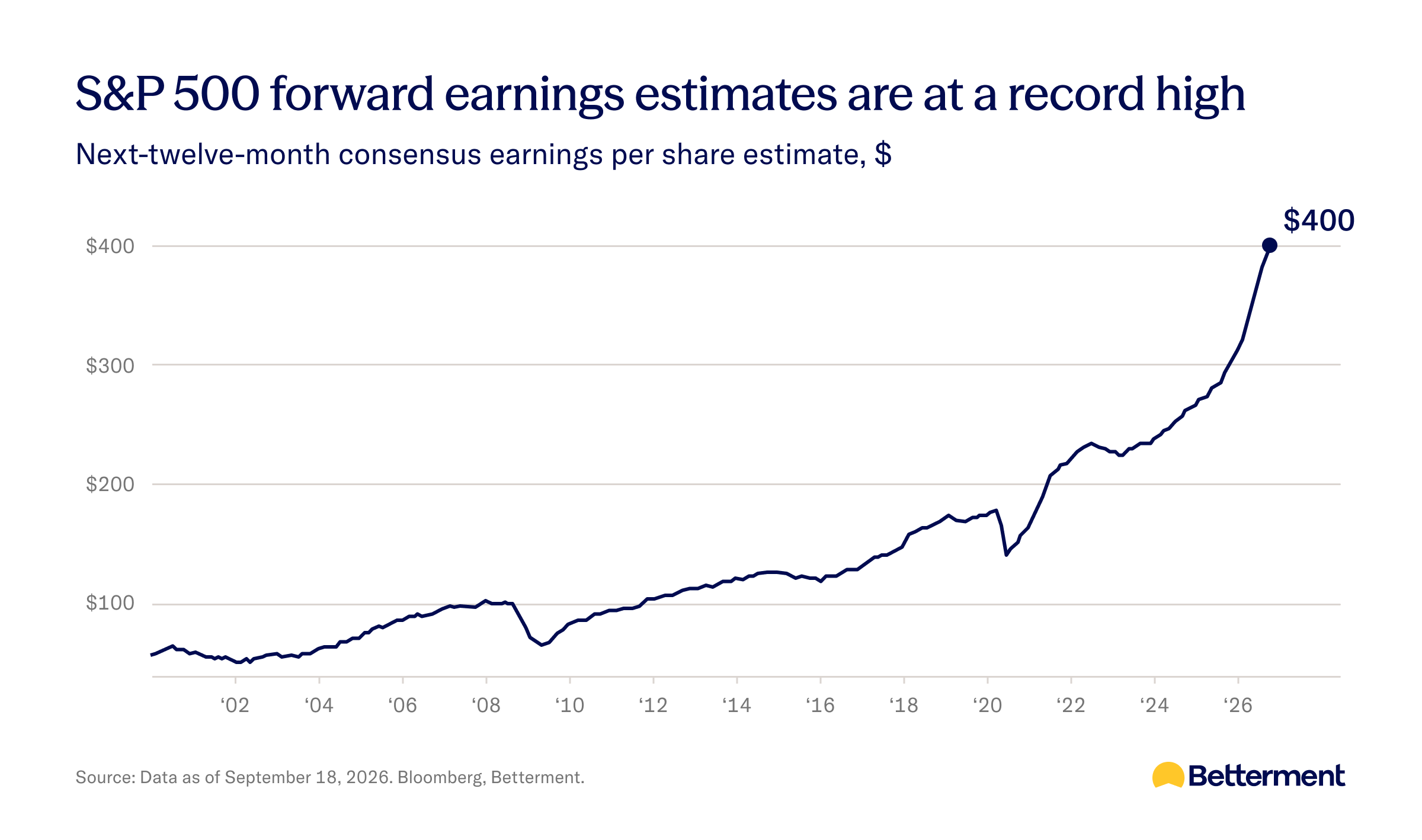
- Stocks have remained resilient despite higher rates, supported in part by stronger corporate earnings expectations tied to AI investment.
- Higher yields create both risks and opportunities for portfolios, weighing on bond prices while increasing potential income from fixed income.
- AI investment could be a key market driver heading into Q4, as investors weigh tech debt issuance, potential IPOs, and whether earnings growth can justify expectations.
An analysis:
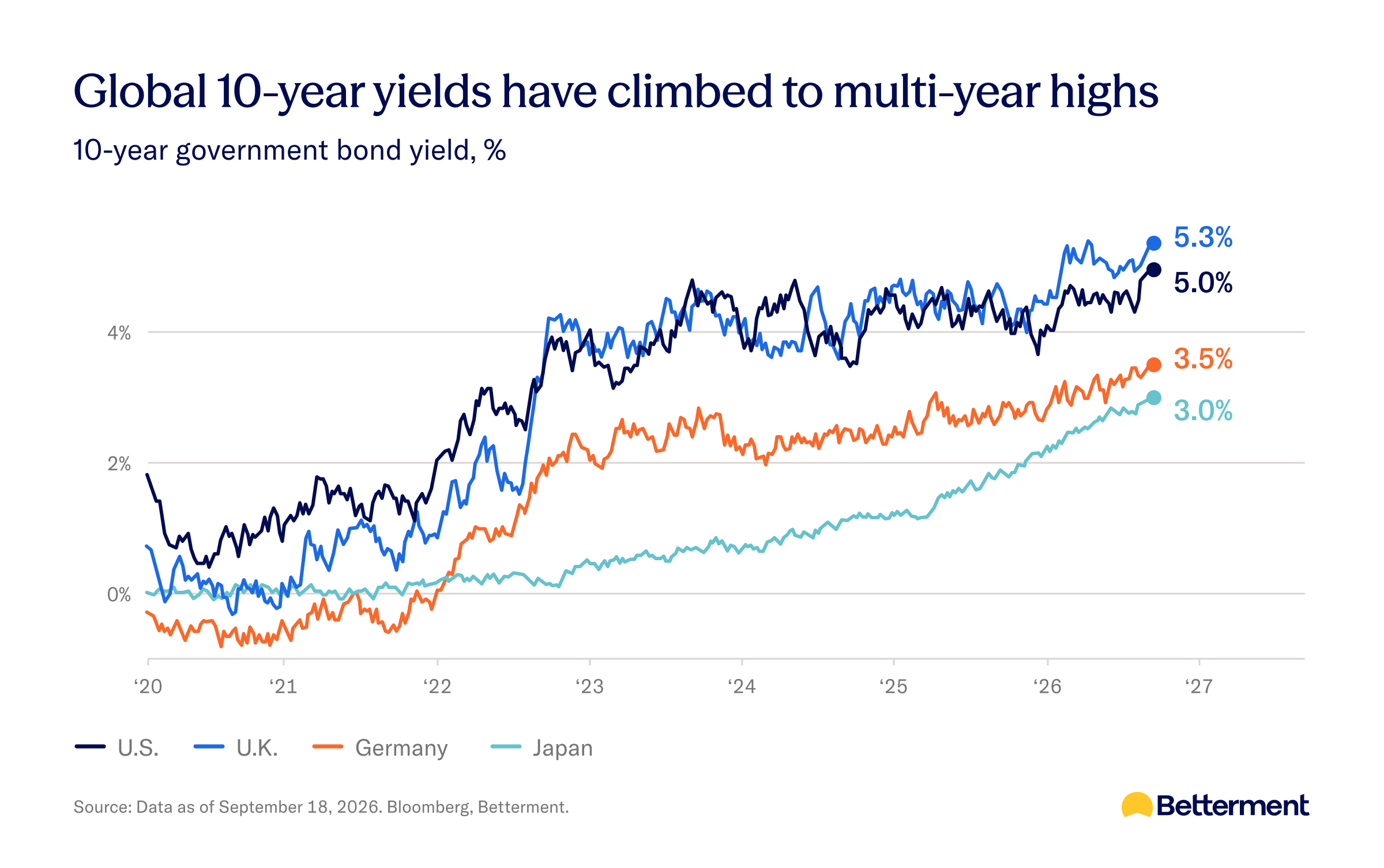
For cocktail partygoers with a penchant for opining on interest rates, the current action in government bond yields is catnip. Long-term rates continue to climb higher across the globe with potentially massive effects in store for the economy. Rarely have so many forces competed to drive yields higher, stirring up a debate over whether recent asset price swings are healthy.
Sovereign yields represent the cost of borrowing for national governments, but they also serve as a benchmark for borrowing costs across businesses and households. Higher rates on government bonds, especially at maturities of 10 years and beyond, can have a cooling effect on the economy, increasing the cost of financing for things like mortgages, auto loans, and corporate bond issues. In asset valuation, elevated yields on safe assets raise the discount rate applied to future cash flows, implying a lower present value—or stock price—than otherwise.
What’s causing rates to surge?
Naturally, there exists an impulse to attribute market moves to a single development. However, within the complex systems of the global economy and financial markets, a mosaic of causes produces an array of effects. Today’s contributors to gravity-defying yields likely include:
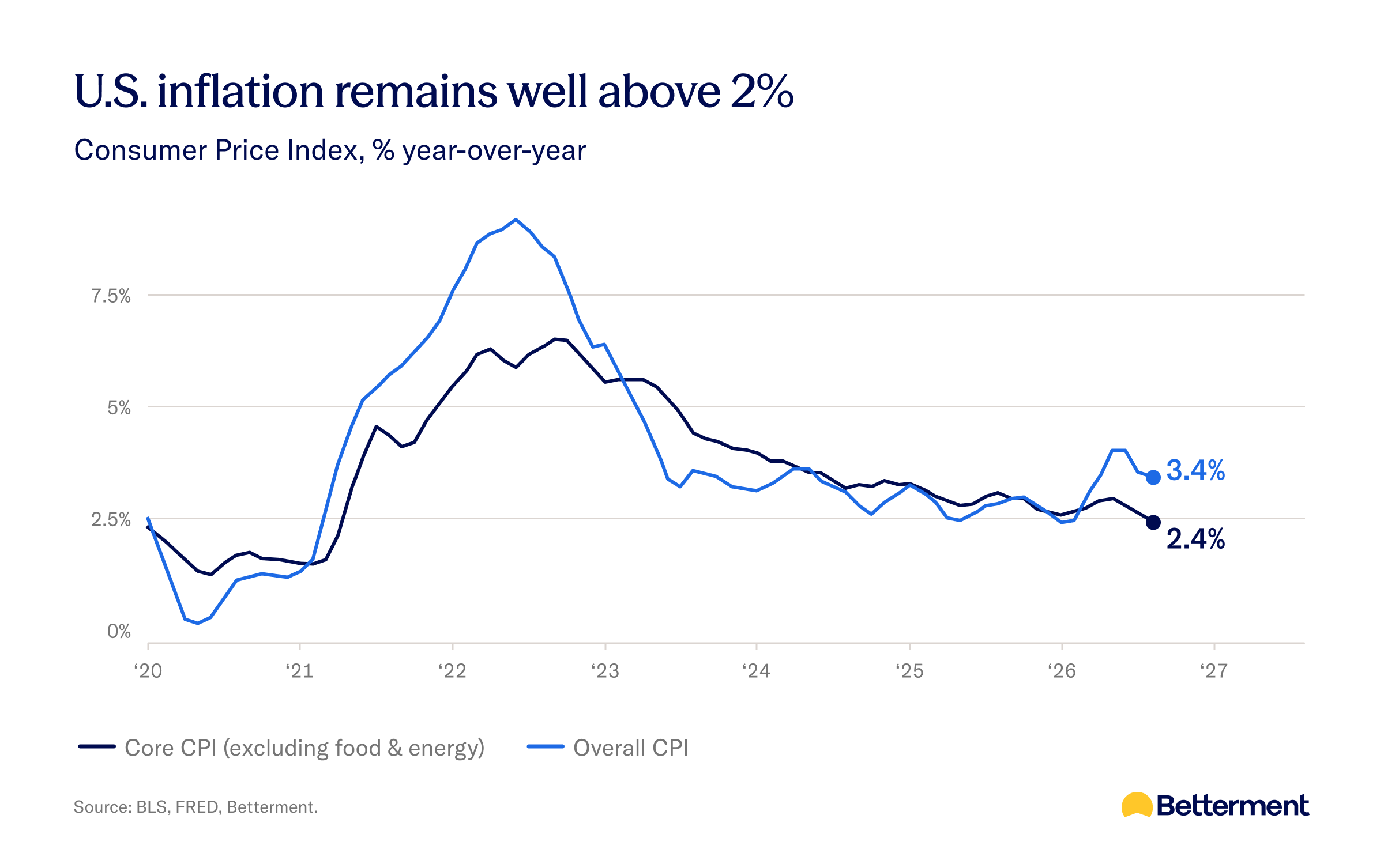
- Rising energy prices from the Iran war have pushed inflation rates higher around the world, driving central banks, like the Federal Reserve, to hike short-term policy rates.
- The U.S. is running a large fiscal deficit on top of an already significant national debt burden. That combination may spur questions around the sustainability of its fiscal path and reduced demand for U.S. safe assets.
- Japan has also become more fiscally aggressive, with inflation running hotter than its historically tepid pace, placing upward pressure on rates that in turn cascades to other global bond markets affected by their relative valuation.
- Large tech companies, issuing record-amounts of investment-grade debt in the AI infrastructure boom, are likely crowding out demand for other long-term debt securities. That extra supply pushes bond prices down and yields up.
Can the stock market withstand higher rates?
When long-term government bond yields rise, investors in risky assets like stocks often become more cautious. Markets are always forward-looking, so investors worry that higher borrowing costs could slow economic activity and corporate earnings growth. The Fed is often seen as a main factor, restraining economic expansion and stock market booms, as it uses monetary policy tools to increase rates across the yield curve.
Despite the jump in rates this year, stocks have broadly delivered solid returns (as seen in the graph below). This doesn’t mean the relationship described above is any less true. It’s likely that a major trend is offsetting the dampening effects of higher interest rates. Namely, that analyst expectations of corporate earnings growth have accelerated sharply amidst the AI investment boom.
Higher rates could be seen as appropriate, incentivizing savings to be put to work as investment, while discouraging unproductive projects that make more sense in a low-rate environment. Though bond returns have detracted from portfolio performance amid this year’s leap in rates, bond allocations now offer more attractive income opportunities and could serve as a buffer in the event thatlofty earnings expectations roll over and drive a pullback in stocks.
Taken together, today’s rate environment reflects a market still working through several forces at once: Fiscal policy, inflation, and the pricing of the AI investment boom.
That last piece could come into sharper focus in the fourth quarter. Anthropic is reportedly moving ahead with plans to go public, potentially as soon as November, while OpenAI has signaled that a public listing isn’t part of its near-term plans. For advisors, the bigger question is what happens as AI enthusiasm meets the discipline of public markets.
Heading into Q4, we’ll keep an eye on how investors respond to AI-native IPO pricing, whether credit markets can continue absorbing heavy tech issuance, and whether earnings growth can keep outpacing the drag of higher rates. Together, those signals could offer a clearer read on where yields, and more broadly markets, go from here.
You might also like


Ben is a member of Betterment's Investing team in the role of Sr. Investment Strategist. Previously, he worked on the data team at GiveDirectly, a nonprofit NGO that operates cash transfer and basic income programs. Prior to GD, he worked on the Private Bank Chief Investment Officer’s team at J.P. Morgan, contributing to the team's research, analysis, and content creation. Ben studied finance and history at the University of Virginia and is a CFA® charterholder and a CERTIFIED FINANCIAL PLANNER™ professional.