-
What’s new from Betterment Advisor Solutions
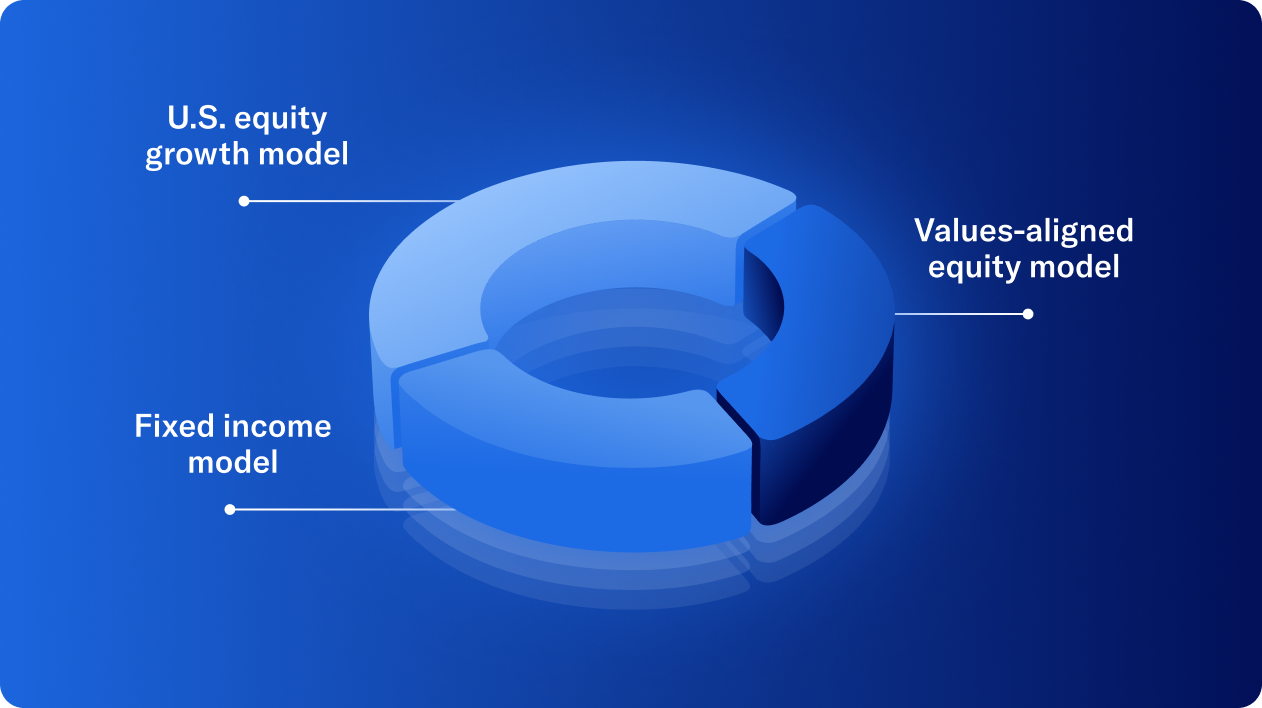
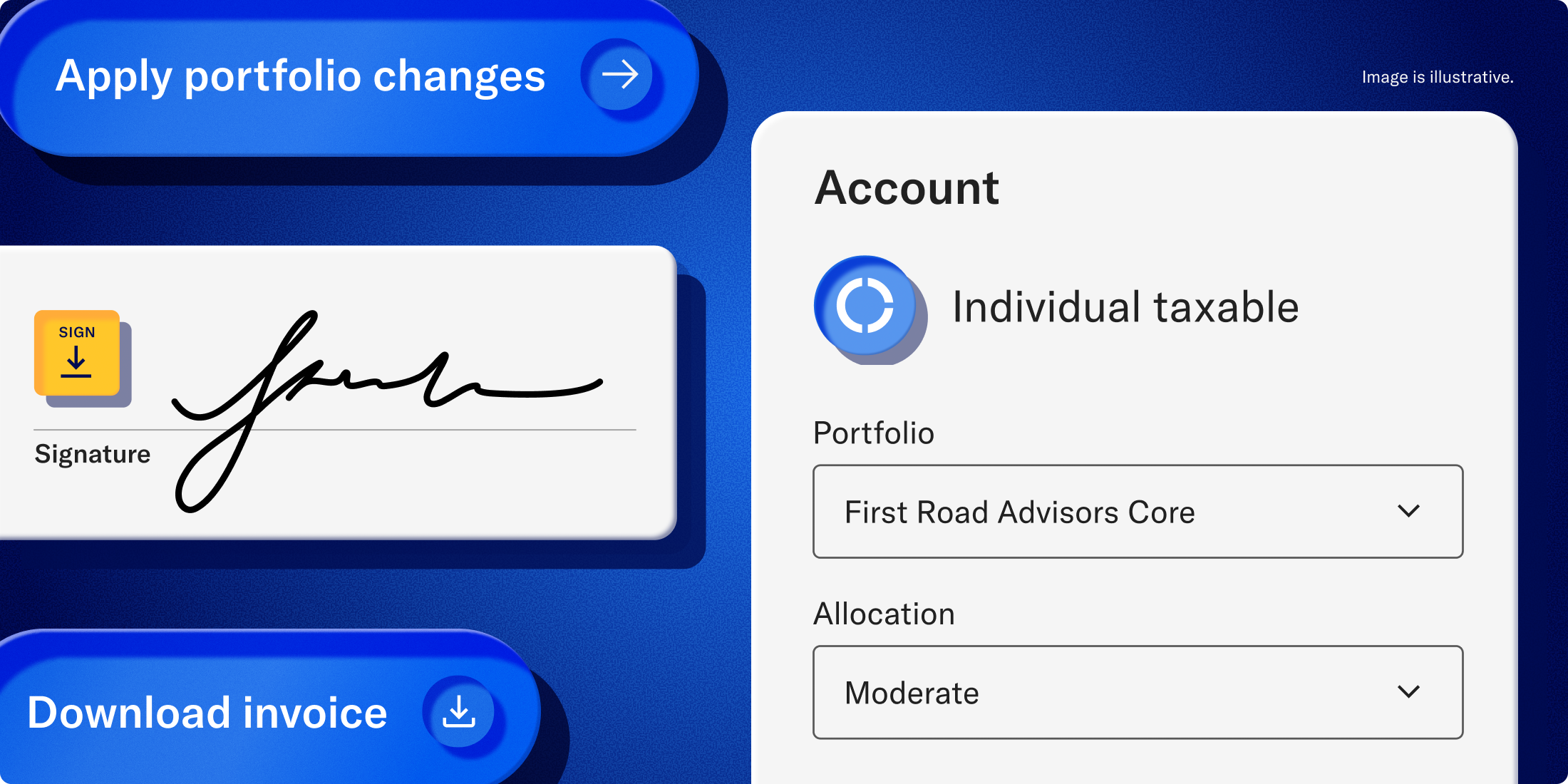
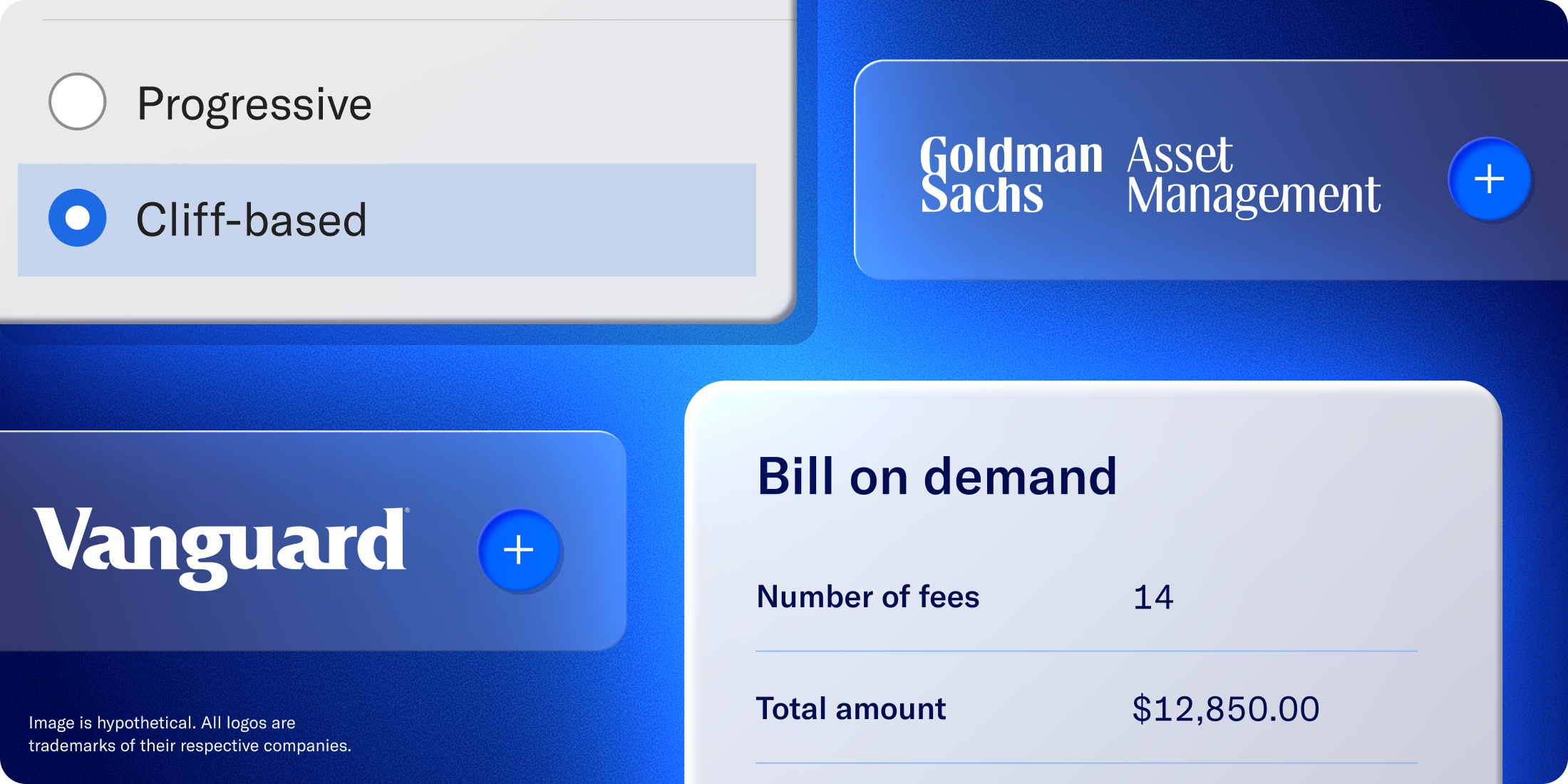
What’s new from Betterment Advisor Solutions More advisor control and automation across onboarding, portfolio management, and billing with smarter allocations, migration insights, and streamlined invoicing. Get more control and automation at every step of the client experience. Now you can onboard clients with smarter initial allocations, migrate accounts with deeper portfolio insights, and enable itemized invoices at every fee assessment. Table of contents Portfolio management Smarter initial allocation Increased visibility on portfolio changes Upcoming: Fully Paid Securities Lending Program Billing New: Client invoices Onboarding Docusign on client agreements Integrations Slant Greenboard Retirement AI plan benchmarking How Defining Wealth built a retirement practice from scratch using our platform Top content How a former Dimensional VP kept his investment philosophy and now runs a lean, modern practice on Betterment Tax-smart charitable giving for your clients Launching soon: AI-powered onboarding, direct indexing & unified managed accounts Smarter initial allocation Select a portfolio strategy and Betterment will assign an appropriate starting risk level based on account type, goal, and time horizon. You can always override it, but the initial allocation work is done for you. Clients’ accounts land in a smarter starting default, and you can deliver consistency across your entire book. Increased visibility into bulk portfolio migrations Get a clear view of how portfolio changes will affect clients at scale before execution. The bulk migrations flow now surfaces expanded details on your selected migration strategy, including rebalancing status, gains allowance remaining, and the number and types of accounts impacted. Log in to explore now You can now enroll clients in our Securities Lending Program Your clients will be able to earn additional income on eligible shares they already hold through our upcoming Fully Paid Securities Lending (FPSL) Program. Through FPSL, clients can lend fully paid stocks and ETFs from their Betterment account to institutional borrowers. Your clients will share the income generated from these loans, while maintaining economic ownership of their investments including the ability to sell their shares at any time. Enrollment is open now; lending and payouts will begin once the program launches, with Betterment facilitating the process, making it easier for both clients and advisors. Learn more Automated client invoices Starting in July, you can automatically generate and deliver itemized client invoices at the time of every fee assessment, so you can focus on your clients—not your compliance checklist. Each invoice includes billing period dates, total fees assessed, fee formula, AUM basis, and itemized Betterment and advisor fees. Invoices are published in your dashboard and in your client’s documents tab with optional email notification, helping ensure consistent delivery of required billing details. Explore billing Client agreements with Docusign Docusign is now integrated into client onboarding and account opening. You can send client agreements for electronic signature, capturing the client's name, initial, email and the date signed. You can also maintain multiple versions of your client agreement, designating one as the firm default and selecting the right version for each household at onboarding. Through the new Client packages tab, you’ll have access to all of your households’ signed agreements, with the ability to review timestamps, and download individual or bulk pdfs. Each package includes client agreements plus key Betterment documents such as Form ADV, Form CRS, and the privacy policy. Explore our client agreement automation Two new integrations that help you streamline manual tasks Slant: Get a clearer view of what needs your attention. Slant combines CRM, AI note-taking, data enrichment, and project management in one platform. You can interact with client records, automate workflows, and surface next steps without manual CRM upkeep. Greenboard: Simplify compliance monitoring with the ability to access Betterment data. Greenboard pulls account information through the ByAllAccounts feed at no additional cost, helping reduce manual oversight and streamline compliance workflows. View all integrations AI-powered benchmarking With our new AI-powered benchmarking tool, you can easily contextualize how a plan's participation and contribution rates stack up against national benchmarks. The refreshed plan sponsor dashboard brings everything else into focus too, putting priority tasks, plan insights, and payroll status in one place, so sponsors and advisors can quickly see what needs attention. How Defining Wealth expanded into 401(k)s without growing headcount Jacob Gardner, co-founder of Defining Wealth—an RIA serving Millennial and Gen Z entrepreneurs in Nashville—needed a 401(k) solution for his business-owner clients but lacked retirement plan infrastructure and a team already stretched to capacity. That’s when he turned to a platform he was already familiar with. With Betterment, he launched three plans without adding headcount. The setup was straightforward. Jacob stepped into the 3(38) investment manager role, taking full discretionary authority over plan investments, while Betterment handled compliance and day-to-day operations as the 3(16) partner. That meant he could expand into retirement services without hiring a specialist, building new infrastructure, or disrupting what was already working. Learn more about our 401(k) solution One custodian, no excess overhead When Massimiliano De Santis, a former vice president at Dimensional Fund Advisors, launched his own RIA, he set out to find a partner that could keep the practice lean without compromising his investment approach. He chose Betterment Advisor Solutions as his sole custodian, a platform uniquely suited to his clientele that took on the day-to-day execution of investment management, compliance recordkeeping, reporting, and back office operations, while the investment thinking remained entirely his own. The result was a self-sustaining practice that freed him to focus on what matters most, building client relationships and driving growth. Take a look inside his practice What's next for our portfolio management suite Portfolio management is entering a new phase. For years, advisors have had to choose between automation and control, stitching together different systems to get the flexibility, tax optimization, and customization they needed. What we demoed live earlier this month represents one built-in system where high-growth firms can thrive — new advisor controls, expanded portfolio construction capabilities, and deeper tax-smart automation designed to help firms personalize more without sacrificing scalability. Here's what's live, what's launching soon, and why it adds up to something advisors don't want to miss: AI-powered onboarding, direct indexing, unified managed accounts, and new tax simulation tools. Watch a preview Why charitable giving may be your most underutilized client conversation Bring tax-smart charitable giving into client conversations with Daffy, a modern donor-advised fund platform available on Betterment that helps advisors integrate giving into broader planning strategies. In a recent webinar, Betterment sat down with Adam Nash, CEO and co-founder of Daffy, to discuss the case for DAFs in today’s tax landscape. They covered real client scenarios, including tax-efficient rebalancing, contribution bunching, and high-income year planning. The session also provided an overview of Daffy’s platform and how advisors can incorporate charitable giving into their planning conversations. Watch the webinar Log in to explore what’s new, or reach out to your relationship manager if you’d like to take a closer look at any of these features. If you’d like to take a look around with someone from our team, book a demo.
-
What breakaway advisors experience when they start up with Betterment
What breakaway advisors experience when they start up with Betterment A practical guide for breakaway advisors on how to launch the right way—and what to expect when you do. Going independent is one of the biggest professional decisions an advisor can make. The planning phase—after you've decided but before you've made the move—is where the foundation gets built. The platform you choose, the technology you set up, and the client transition process you design will shape your first year and beyond. For breakaway advisors facing hundreds of tech decisions with limited operational experience, the goal is to find a foundation that doesn't require you to stitch tools together—and a custodial partner invested in your success from day one. With Betterment Advisor Solutions, advisors don't just get infrastructure—they get a partner that brings dedicated service and support and built-in tax optimization to every client interaction, from the moment of onboarding through every growth phase ahead. We sat down with our Platform Solutions team to find out what it’s really like to transition to Betterment. What does the onboarding process look like when you first join Betterment Advisor Solutions, and how long does it take to get up and running? We can have a new firm set up in about 15 minutes. Once an advisor signs up, and we review their ADV and filings, the account will be activated and they can log in. Setting up an account involves a few steps: The advisor uploads their business logo, gets their agreements in place, sets up billing preferences, and starts building their firm’s custom portfolios (if desired). With a bit of planning, a firm-specific setup could happen in an hour. For advisors who have just completed registration and are racing to onboard their first clients, that speed is meaningful. You're not waiting weeks to get operational. How does Betterment support the client transition process, from account opening to ACATS transfers? The transition process is one of the things I'd highlight as a real differentiator with Betterment. Everything is digital. For many advisors, that alone is a departure from the paper-heavy processes they're used to. Account opening takes just a few minutes, and we have a paperless ACATS workflow that makes moving assets over pretty straightforward. The platform supports a wide range of ETFs, mutual funds, and stocks. Our team will help create a custom migration plan based on the portfolio strategies you plan to use for your client. What I think advisors really appreciate is what happens after the assets land. You choose a tax-aware migration strategy and set a gains allowance for each client, and the system transitions accounts accordingly. Smart tax lot selection is embedded in automated rebalancing transactions, so it avoids short-term capital gains and only triggers long-term gains up to the budget you’ve set. Before anything gets sent to the client, you get a full review. At that point, you can update settings, check the transfer details, and only then send the request over. You're always in control of what goes out, and it’s all completely digital and easy for the client to authorize with a few clicks. The same logic applies when you're updating a portfolio strategy on an existing goal. You can review and edit rebalancing settings the same way. What does day-to-day practice management look like on the platform once you're live with clients? Once you're live, day-to-day management all runs through Co-Pilot, which is essentially your command center for tracking client activity and anything that needs your attention, all in one place. The experience is fully digital and vertically-integrated, so you're not bouncing between systems. You can act on individual accounts or work in bulk with scaled tools, depending on what the day calls for. The biggest difference with Betterment is automation. When you're building a firm from scratch, often with a lean team, automation isn't just nice to have. It's what makes the economics of a new independent practice actually work. Say a client calls and wants to put $5,000 into their IRA. Instead of your team needing to log in and invest the cash by manually buying securities, the deposit is automatically invested according to the portfolio strategy and allocation you’ve selected for the client. Fee calculations, account rebalancing, the ongoing maintenance work—it's all handled. But the key is that it’s flexible. You can customize the automation, break things into manual processes when you want more control, or turn it off entirely. It's really the best of both worlds. How does automated rebalancing work, and how much time does it save advisors on portfolio maintenance? Automated rebalancing is one piece of a broader suite of tax-smart portfolio management tools that all work together behind the scenes. Betterment offers both reactive rebalancing (using deposits, withdrawals, and dividend reinvestments to minimize drift) and proactive rebalancing (based on drift triggers you can customize as needed). It even handles complex situations like concentrated stock positions or inherited portfolios. Multiply that across a full book of clients, and the time savings—plus the after-tax performance impact—are significant. For a firm without a large operations team, this is the infrastructure that lets you manage a full book of clients without proportional headcount. What does the tax-smart transition process look like from the advisor's perspective, and how do you communicate it to clients? From the advisor side, you're never doing this alone—you have a dedicated Platform Solutions manager guiding the transition, plus relationship management and customer support as backup. The tax-smart tooling itself is comprehensive, and included with the platform fee: tax-loss harvesting, asset location, smart tax lot selection, gains allowances, sell-only substitutes, and rebalancing, all working together. This isn't a bolt-on feature set—tax-efficient investing has been part of how Betterment was built from the beginning, which means advisors can deliver genuinely personalized, tax-aware advice at scale. On the client communication side, we've found that clients who receive clear, thoughtful comms ahead of a transition are rarely upset by the process. They actually appreciate it. We give advisors the resources to make that easy: onboarding videos, communication templates, and plenty of lead time to address questions before they come up. When clients see how carefully the transition has been planned, it builds trust right from the start. What level of human support is available to advisors, and how quickly can you reach someone when you need help? Going independent doesn't mean going it alone. On average, it takes about a minute to answer your call, and under one business hour to answer emails.* You have a dedicated Platform Solutions manager guiding the transition, plus relationship management and customer support as backup. How does the platform integrate with the tools advisors are already using, like their CRM, financial planning, and compliance software? Betterment is a vertically-integrated custodian. Our platform is built to fit into the workflows you already have rather than replace them. Our integrations automatically connect Betterment accounts to your existing CRM, financial planning software, and compliance tools, so client information, investment holdings, and account activity all show up in your dashboards without extra legwork. The great thing about the platform is that it has all you need to launch or transition your existing practice, with the ease and sophistication of Betterment’s technology as the foundation. What does the client-facing experience look like, and how do clients typically respond to the new experience during a transition? The client experience is honestly one of Betterment's biggest differentiators for advisors. Betterment was built as a consumer platform first, so the app and web experiences have always been at the forefront of what we do. Clients can also sign up, link their accounts, and start navigating on their own without needing to call anyone for help, which takes routine onboarding tasks off your team’s plate so they can focus on what clients are really paying for: advice. As for moving clients onto the platform, the main concerns are usually: how long will this take, and will my clients push back against the change? But we’ve found when advisors communicate clearly and confidently, clients tend to follow their lead. What does a compliant transition actually require? A compliant transition typically unfolds over 90 days—reviewing your employer agreement, forming your entity, getting registered, and building out the business infrastructure you need to operate. For a full step-by-step breakdown, see our guide. *Based on Betterment internal data October 2025 - March 2026.
-
What better portfolio management looks like for high-growth RIAs
What better portfolio management looks like for high-growth RIAs One platform for custody, onboarding, portfolio management, and billing—built for advisory firms that are scaling fast. Portfolio management is entering a new phase. For years, advisors have had to choose between automation and control, stitching together different systems to get the flexibility, tax optimization, and customization they needed. What we demoed live on June 9 represents one built-in system where high-growth firms can thrive: New advisor controls, expanded portfolio construction capabilities, and deeper tax-smart automation designed to help firms personalize more without sacrificing scalability. Our goal is simple: to build the only portfolio management system high-growth advisory firms need—one that gives advisors the freedom to manage portfolios their way, with powerful tax-smart automation always within reach. We covered a lot of ground. Here's what's live, what's launching soon, and why it adds up to something advisors don’t want to miss: Onboarding is critical to lasting client relationships Automation and control aren't in conflict Direct indexing is coming, without minimums or extra fees Tax tools are already embedded—and more precise than most advisors realize Coming soon: More control, more automation, more AI If you want to see it in action, you can watch the webinar here. Onboarding is critical to lasting client relationships Most platforms treat onboarding and portfolio management as separate problems. We don't. In the demo, we walked through a new AI-powered onboarding flow. Advisors can upload a client's brokerage statement, and our document reader extracts account data, holdings, and transfer information automatically. It pre-populates the client invitation instead of requiring manual entry at every step. Asset transfers are bundled directly into that invitation, so the move from new client to assets on the way happens in one flow instead of two. The system also surfaces holdings that fall outside the target portfolio before anything is transferred. Advisors can choose to liquidate before the transfer, bring holdings over with rebalancing disabled, or let automation handle it. The platform is transparent about what is going to happen before it happens. "We want to remove friction from the advisor workflow. So that's where we're taking our first pass, improving asset transfers, because we know that the work to onboard a client can be incredibly labor-intensive and operationally expensive." —LT Hardy, Product Manager, Betterment Advisor Solutions For firms onboarding clients at scale, reducing that operational weight at the front end can really compound across every new relationship. Automation and control aren't opposites, and you shouldn't have to choose This was probably the clearest through-line of the entire demo, and it's worth saying directly: "You have things that you want to automate, and you have things that you want to control. But really, it's not about living at one end of the spectrum or the other."—Devon Klumb, Director of Sales, Betterment Advisor Solutions In practice, that means a portfolio management suite that spans from fully automated to fully manual. On the automated end, our model marketplace offers expert-built models with tax-loss harvesting, rebalancing, and tax coordination available across third-party and Betterment managed options. For advisors who prefer hands-on execution, we're expanding trading controls later this year. In between sits the unified managed account experience that will launch early this fall. Advisors will be able to blend first-party models, third-party models from the marketplace, proprietary firm models, and direct indexing sleeves into a single client portfolio. They will also be able to build around existing holdings, manage around legacy positions with embedded gains, and preview the full tax impact of a rebalance before trades execute. Crucially, the platform's tax tools—tax-loss harvesting, drift controls, fractional shares, automated rebalancing—run across the full spectrum. Your clients get the same infrastructure regardless of where their portfolio sits on it. Direct indexing is coming, without minimums or extra fees We previewed direct indexing to pull back the curtain and show you what’s coming before the solution is available later this year. Betterment's direct indexing will offer three sleeves covering the U.S. market to start, available to drop into any client portfolio in any combination. There are no minimum asset sizes for advised accounts, and direct indexing is included in the platform fee—no add-on cost. The feature that makes it genuinely useful for complex client situations: security exclusions. If a client is an officer of a public company, holds concentrated exposure elsewhere, or simply doesn't want dollars in a particular name, advisors can provide that instruction directly and the system will minimize tracking error around it. Exclusions aren't an edge case—they're built into how the offering works. The system will take a sampling-based approach, aiming to find the most efficient number of positions at a given dollar threshold. No unwieldy index replicas. No noise cluttering a client's account. Tax tools are already embedded—and more precise than most advisors realize Tax efficiency has always been central to how Betterment's platform works. What the team walked through is how much granular control advisors already have over it, and how many of those tools are already running for their clients today. The gains allowance feature lets advisors set a per-household or per-account cap on realized gains for the calendar year. Every automated rebalancing decision the platform makes gets evaluated against that number. Before any trade executes, advisors will soon be able to see exactly what will be sold, what will be purchased, what the after-trade drift will look like, and how the transaction tracks against the gains budget—with the ability to switch lot selection methodology and watch the numbers update in real time. For advisors managing a long tail of clients who deserve sophisticated tax management but can't justify fully custom treatment for every account, this is what scalable personalization actually looks like in practice. The platform applies the same rigor at $50,000 that it applies at $5 million. Coming soon: More control, more automation, more AI In the webinar, we focused on what's available today, but several meaningful additions are on the way. Direct indexing is launching later this year, with three sleeves covering the U.S. market. Advisors will be able to drop any combination into a client portfolio, with no minimum asset sizes and no add-on cost. Security exclusions are built in from the start, so advisors can account for concentrated positions, restricted securities, or client preferences — and the system is built to minimize tracking error around those instructions automatically. Manual mode is also coming, giving advisors direct trade control for situations where automation should step aside. Buy or sell specific positions, choose a tax lot strategy, and route proceeds to cash or a linked bank account. Beyond onboarding, AI is being built into more of the advisor workflow. Performance reporting, meeting prep, and client proposals tools are all areas where AI features are in development — with the goal of putting more of the platform's data to work for advisors before, during, and after client meetings. And in the second half of this year, new advisor-facing controls over money movement are coming. Deposits, withdrawals, and transfers between accounts are all getting new tooling. The "sell directly to withdraw" flow shown in the demo is the first among other updates in our ambitious product roadmap to meet the needs of advisors. Watch the full recording to learn more, or explore the platform.