Why breakaway advisors are looking past legacy custodians as launch partners
Updated August 26, 2026 • 7 min read

A practical comparison of Betterment Advisor Solutions, Schwab, and Fidelity to help RIAs evaluate custody partners for their independent firms.
Going independent is hard work, and so is choosing the technology stack that runs your new firm. Your first instinct may be to start with the same custodian your previous firm used. But that can be a mistake, especially for lean, growing RIAs. Going independent is a key moment where you can carefully select the technology that is the best fit to help your firm grow.
This guide compares three RIA custodians that breakaway advisors often consider:
- Betterment Advisor Solutions
- Schwab
- Fidelity
We look at how each platform is designed, who they tend to work best for, and the questions worth asking before you commit.
The custodian you used at your old firm may not be the right fit for your new one
Inside a wirehouse or large independent broker-dealer, the custody platform you used was probably chosen for you, and various teams handled onboarding, compliance, portfolio management, and billing in the background. When you go independent, those teams and infrastructure are no longer there. The platform itself has to absorb much of that administrative work for you.
When you go independent, keep in mind these two important details:
- You are personally responsible for everything: compliance, fiduciary support, and back-office work.
- You likely want your custodian to integrate with the rest of your wealth management practice, not run on a separate island.
How legacy providers are designed and who they work best for
Legacy providers like Schwab and Fidelity have both served the RIA market for decades and support a wide range of advisors. But with their longevity comes complexity. Both have elaborate, layered systems to navigate when deciding if they’ll fit your needs. And overall, the advisor and client tech experience isn’t the most modern option.
When you compare custodians, Schwab and Fidelity work differently from a bundled platform like Betterment. (See the full Betterment Advisor Solutions vs. Fidelity and Schwab breakdown.)
- Neither Schwab nor Fidelity offers an all-in-one custodial platform under a single transparent platform fee.
- Advisors usually piece together separate solutions for portfolio management, tax optimization, billing, planning, defined contribution plan management, and reporting. Even then, none of it may be automatable.
The takeaway: Breakaway RIAs at Schwab or Fidelity can build a full custodial tech stack for their firm—just with more vendors, contracts, and integration work to manage.
Who legacy platforms tend to work best for
Legacy providers like Schwab and Fidelity tend to be a better fit for:
- Advisors who have a need for manual-first portfolio management.
- Practices comfortable coordinating across separate recordkeepers and TPAs.
- Advisors who want access to Fidelity's or Schwab's proprietary investment lineups and research.
For breakaway advisors, the size and complexity of legacy providers may be overwhelming compared to a more streamlined, automated provider.
How Betterment Advisor Solutions is built differently
Betterment Advisor Solutions was designed for independent RIAs, with an operating model that’s distinct from the legacy providers.
Five areas set Betterment Advisor Solutions apart from legacy custodians for breakaway advisors:
Client onboarding
With fully digital onboarding at Betterment, it takes zero paperwork and two minutes to open an account. You can open as many different accounts as you need and clients will sign off on all new accounts in one step. When it comes to money movement, whether you use ACH, ACATs, direct rollover, or wire transfers, account funding is easy. Simply link bank accounts to initiate ACH transfers.
Portfolio management at scale
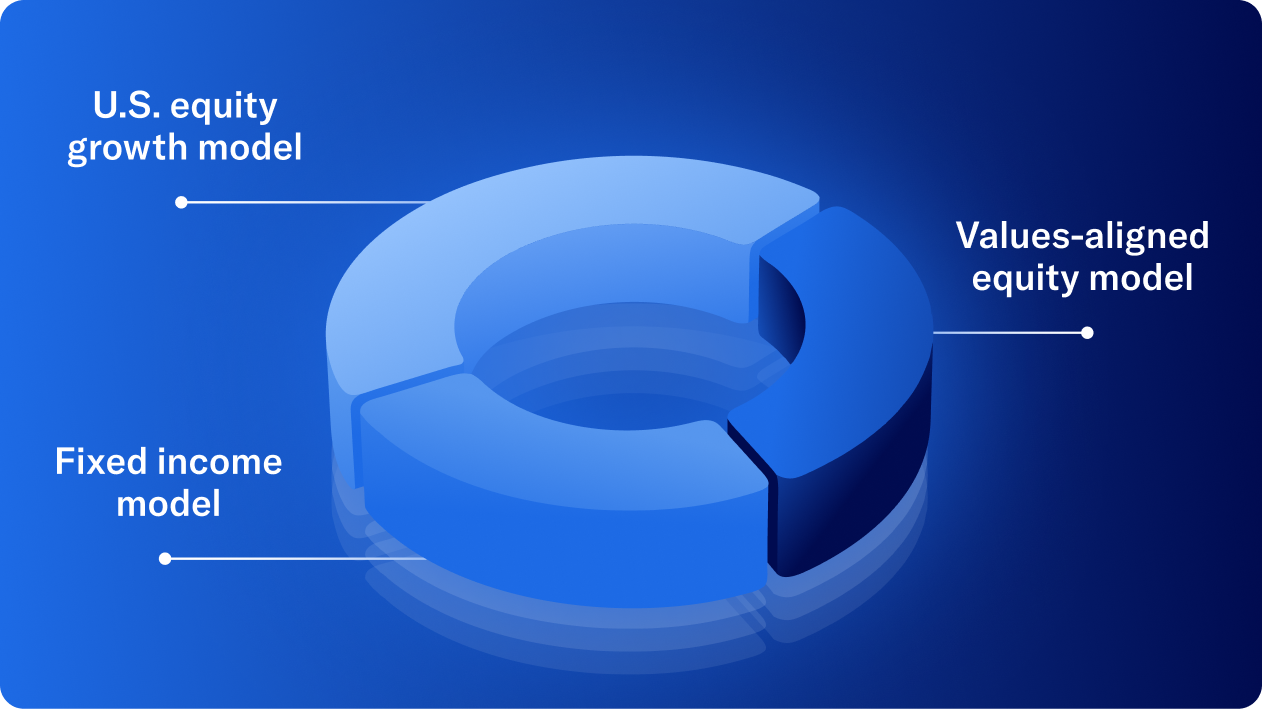
Betterment's platform automates custom drift-based rebalancing and tax-aware trading across client accounts, whether advisors want to select from Betterment's ever-growing marketplace of leading model portfolios or build their own from scratch. For a breakaway firm without a dedicated trading desk, that automation can free up time for client relationships and growth.
Built-in tax optimization
Tax management is part of the core platform, not a separate add-on. Betterment's tax tools include:
- Automated tax-loss harvesting across taxable accounts.
- Tax-smart portfolio transitions that let advisors move legacy positions to target models with a tax budget they control.
- Automated asset location across multiple account types.
- Optimized tax-lot selection to help reduce tax drag on sales.
Each of these is described on Betterment's tax management page.
Simplified back-office operations
Betterment Advisor Solutions combines custody with essential practice management software. This all-in-one approach simplifies your administrative tasks such as onboarding, account setup, billing, reporting, and compliance. We also integrate with industry-leading platforms across software categories to help ensure your practice runs smoothly (see all integrations).
Dedicated advisor support and service
How a platform handles support is one of the most concrete differences between providers.
Betterment advisors get a dedicated Relationship Manager for strategic guidance, a Platform Solutions Team for onboarding and bulk transitions, and a responsive Support Team for day-to-day questions.
Schwab and Fidelity both offer extensive support, though the structure is fragmented.
- Schwab offers a 1-800 phone number for questions, and new breakaway advisors can work with a Business Development Officer for support. Additionally, Schwab Advisor ProDirect™ is a fee-based subscription with dedicated consultants, transition phases, and networking for $50M–$300M firms.
- Initially, Fidelity provides advisors 1-800 numbers to call and directs advisors to log in to their accounts for assigned contacts. Additionally, they offer Advisor Concierge for advisors who meet certain business criteria—a higher-touch tier with a dedicated single point of contact, training support, and referral-network inclusion.
Neither model is inherently wrong—large practices often have the staff and process to navigate a multi-team structure. But a lean breakaway firm may benefit from a single accountable point of contact rather than triangulating between multiple teams or calling 1-800 numbers.
Plus, Betterment provides flexible 401(k) service models
The final dimension for breakaway advisors is how the 401(k) platform adapts to your firm rather than the other way around.
Betterment supports two service models on 401(k) plans:
- Advisors can serve as the 3(38) or 3(21) investment advisor and use Betterment to host a customized fund lineup. Learn more.
- Or let Betterment serve as the 3(38) investment manager with managed ETF portfolios, a flexible portfolio option, or a mutual fund lineup.
That means you can keep your existing investment process or offload it—on a plan-by-plan basis.
Beyond the 401(k), Betterment Advisor Solutions is positioned as an all-in-one platform across wealth and retirement, where advisors can use platform tools to convert plan participants into wealth management clients. For a breakaway firm focused on organic growth, that pipeline can matter.
Schwab and Fidelity, by design, are typically organized into distinct business lines, each with its own systems, contacts, and processes. For firms with the staff to navigate that structure, it works. For lean independent shops, it can add friction.
Why Betterment Advisor Solutions?
Betterment Advisor Solutions is built for independent RIAs, prioritizing the flexibility to automate, an integrated techstack, and an accountable partner in a single offering. Betterment combines custody, automated portfolio management, tax optimization, simplified back office, billing, dedicated support, digital client onboarding, and a unified wealth-plus-retirement dashboard in one platform.
Ready to go independent? Explore Betterment Advisor Solutions.
Kelly Chambers is a finance writer with two decades of leadership experience in the financial services industry. Along with Betterment, his work has included collaborations with leading financial brands such as Goldman Sachs, BlackRock, and Prudential.